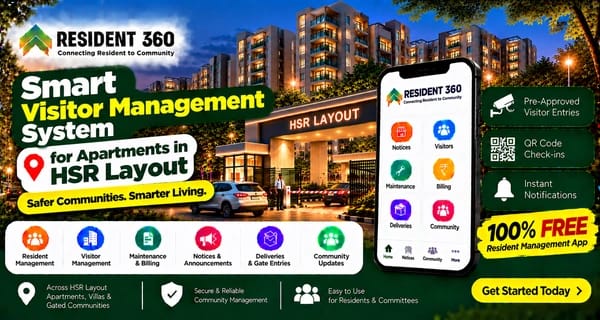
HSR Layout is home to apartment communities, gated residences, and RWAs that manage a steady flow of guests, delivery personnel, domestic workers, technicians, and service providers. A visitor management system helps organize these daily movements without relying only on paper registers or informal calls. It gives residents, security teams, and society committees a clearer process for visitor verification, entry approval, exit tracking, and record keeping. For communities in Karnataka, a structured approach can also reduce confusion at the gate and support better coordination during busy periods.
The right process does not need to be complicated. It should help security staff collect useful visitor information, contact residents when confirmation is needed, and maintain an accessible record of entries and exits.
Why HSR Layout Societies Need Visitor Management
Residential communities in HSR Layout may receive visitors throughout the day, including guests, couriers, cab drivers, repair technicians, domestic staff, and facility service providers. Managing every entry manually can place pressure on security personnel, especially when several people arrive at the same time or a resident is unavailable to answer a call.
An organized visitor management process helps create a consistent method for checking who is entering, whom they are visiting, and when they leave. It can also support communication between residents and security teams when an unexpected guest arrives. Regular visitors can be handled with clearer information, while temporary guests can be recorded for the duration of their visit.
A digital process may be useful for societies that want to move beyond paper registers. A Visitor Management System can support better gate coordination, organized visitor details, and more reliable information for society committees reviewing residential security processes.
Common Visitor Management Problems Faced by Societies in HSR Layout
Even well-managed communities can face recurring visitor-related issues when information is spread across registers, phone calls, and messaging groups. Common challenges include:
- Manual visitor entry that takes time and creates incomplete records.
- Long queues at the security gate during peak delivery or visitor hours.
- Difficulty verifying an unfamiliar guest before allowing entry.
- Delayed resident confirmation when calls are missed or numbers are outdated.
- Unorganized records that make it difficult to review past visitor activity.
- Delivery personnel waiting at the gate without clear instructions.
- Service providers and domestic staff arriving without coordinated information.
- Communication gaps between security guards, residents, and society staff.
- Difficulty tracking visitor exit times after entry is approved.
- Visitor-related complaints without enough information for follow-up.
A Visitor Management System can give societies a more structured way to address these routine concerns. The goal is not to create unnecessary delays, but to make visitor information easier to capture, confirm, and review.
How Visitor Management Solves These Problems
A visitor management system can bring the main steps of guest handling into one organized process. At the gate, security staff can record relevant visitor details and identify the resident or unit being visited. The resident can then provide confirmation according to the community's established procedure.
For example, if a guest arrives at a high-rise in HSR Layout, security staff need a clear way to identify the destination, contact the resident, and note the entry. Once the guest leaves, the exit information can be updated so the community has a more complete record. This is more useful than depending on memory or a register with inconsistent entries.
The same process can be applied to deliveries and service personnel. Delivery information, visitor purpose, and entry status can be organized for easier gate coordination. Residents can receive relevant notifications, while security teams can refer to available visitor information when handling recurring or unexpected arrivals.
Societies that already use a society management app may find it useful to connect visitor-related coordination with broader resident communication and maintenance workflows. However, visitor entry, verification, and records should remain the central focus of the process.
Visitor Entry, Security, Delivery, and Complaint Management
Visitor Entry Management
A clear entry process helps security teams handle guests consistently. It may include recording the visitor's name, contact information where appropriate, purpose of the visit, destination unit, approval status, and entry time. The exact information collected should match the society's rules and privacy expectations.
For recurring guests, residents and security teams can follow an agreed process instead of repeating the same explanations at every visit. For unexpected visitors, confirmation can be requested before entry. This reduces uncertainty while allowing security staff to focus on the gate.
Security Management
Security teams need organized visitor information to coordinate entries and respond to questions from residents or committee members. A visitor management system can support a consistent record of who entered, whom they visited, and whether the visit was completed.
The process should be practical for guards working at the entrance. Clear instructions, simple data entry, and defined escalation steps can help reduce communication gaps. Societies should also decide how security staff will handle visitors when a resident does not respond or when the visitor's details do not match the expected information.
Delivery Management
Delivery personnel often arrive in large numbers during meal times, weekends, and promotional periods. A society can define where deliveries are received, whether couriers may proceed to individual units, and how residents are informed about arrivals.
Using maintenance management software for broader society operations does not replace the need for a clear delivery process. Visitor management should help the security desk identify delivery personnel, coordinate with residents, and maintain suitable entry or handover records without creating avoidable congestion.
Complaint Management
Visitor-related concerns may involve unauthorized entry attempts, delivery disputes, waiting times, noise, parking, or conduct within common areas. Organized visitor information gives the committee a clearer starting point for reviewing what happened and identifying the people or units involved.
A society can also define a simple complaint process that records the issue, date, location, people involved, action taken, and follow-up status. This supports fairer communication and reduces reliance on incomplete verbal accounts.
Resident Communication, Staff, Facility, and Record Management
Resident Communication
Residents need timely information when guests, couriers, or service personnel arrive. A Resident communication app may support broader community communication, while visitor management focuses on entry-related updates and confirmation.
Societies should define which visitor events require resident notification and how security teams should communicate when there is no response. Clear instructions can help residents avoid missed visitors and help guards manage the gate without repeated calls.
Staff Management
Visitor coordination involves more than guards. Housekeeping supervisors, facility staff, society office personnel, and committee members may need to know about approved service providers, recurring staff, or contractor visits. A Maintenance management system may support related maintenance workflows, while visitor records can provide context for people arriving to perform that work.
Roles should be clearly assigned. Security staff can manage gate checks, residents can confirm guests, and society staff can review recurring access requirements or unresolved concerns. This division helps avoid confusion at busy entrances.
Facility Management
Visitors may access clubhouses, meeting rooms, sports areas, parking zones, or other common facilities. Communities can set rules for guest access, booking-related visitors, and service personnel entering these spaces.
A visitor management process can help facility teams understand who is expected, which resident or activity is connected to the visit, and whether access should be limited to a particular time or area. These rules should be communicated clearly to residents and security personnel.
Record Management
Visitor records are useful when they are accurate, organized, and accessible to authorized people. Records may include entry and exit times, visitor purpose, resident confirmation, delivery details, and notes about unusual incidents.
Societies should decide how long records are retained, who can review them, and how personal information is handled. A rwa management software platform may support wider administrative work, but visitor record practices should still follow the community's own policies and applicable requirements.
Visitor Management System for Small Societies and Gated Communities
Visitor requirements vary according to the size and layout of a community. A small society may have one gate, a limited number of security staff, and a manageable visitor volume. Its process can focus on quick resident confirmation, basic entry details, and clear exit tracking.
A large gated community may need to coordinate several gates, multiple blocks, different visitor categories, and shifting security duties. High-rise and multi-block communities may also need to ensure that visitors are directed to the correct tower or entrance. In these settings, consistent information sharing is particularly useful.
Communities with multiple security gates should define how visitor data is shared between entrances and how an exit is recorded if it occurs at a different gate. The process should be tested during busy periods and explained to security teams before implementation.
A society maintenance app can be relevant for broader operational tasks, but visitor management should be configured around real gate activity. The best approach depends on the community's size, staff availability, layout, visitor volume, and rules for guests, deliveries, and service personnel.
For communities comparing local processes, these related resources may offer additional context: Visitor Management System in Kudlu Gate, Visitor Management System in Electronic City, and Visitor Management System in Sarjapur Road.
How Resident360app Simplifies Visitor Management
Resident360app can be considered by societies and residential communities looking for a more organized approach to visitor management and related coordination. The supplied information positions it for residential community use, so committees can evaluate whether its approach fits their visitor entry, resident communication, record-keeping, and society administration needs.
Before adopting any system, the society should map its current gate process and identify where delays or information gaps occur. The committee can then assess how Resident360app may fit into those processes, including coordination between residents, security teams, facility staff, and the wider management team.
A practical evaluation should remain focused on the community's actual requirements. Societies should confirm how the system supports their preferred visitor categories, approval procedures, delivery handling, staff coordination, and access to relevant records before making a decision.
How to Choose the Right Visitor Management System
A society should assess a visitor management system against its daily operations rather than selecting it only because it includes a long feature list. The following factors can help committees and facility managers compare options:
- Ease of use for residents, security guards, and society staff.
- A visitor entry process that is clear during busy periods.
- Simple visitor verification and resident confirmation procedures.
- Usable records for entry, exit, deliveries, and service visits.
- Support for different visitor categories and recurring visitors.
- Practical communication between residents and the security desk.
- A clear method for handling visitor-related complaints.
- Suitability for one gate, multiple gates, high-rises, or several blocks.
- Appropriate access to visitor information for authorized users.
- Fit with existing society maintenance management software and processes.
- Clear handling of community rules, privacy expectations, and record retention.
Committees should also involve security personnel in the evaluation. A system that appears suitable to administrators may be difficult to use at the gate if the process is not clear or takes too long. Resident feedback can help identify whether notifications and guest confirmation steps are convenient in everyday situations. Visitor Management System in Kudlu Gate, Visitor Management System in Electronic City, Visitor Management System in Sarjapur Road.
Conclusion
For societies in HSR Layout, organized visitor handling can make daily gate operations clearer and more accountable. A visitor management system helps communities coordinate guests, deliveries, service personnel, resident confirmation, security communication, and entry records through a defined process. Before choosing a solution, committees should review their layout, visitor volume, staff responsibilities, and record needs. A practical system can support safer, better-organized residential operations without adding unnecessary complexity.
Get Started with Resident360 Today
Resident360app can be considered by societies and residential communities looking for a more organized approach to visitor management. To learn more, visit Resident360app.
Download the Resident360app Today