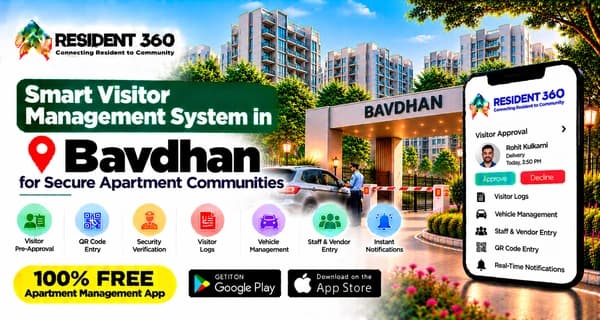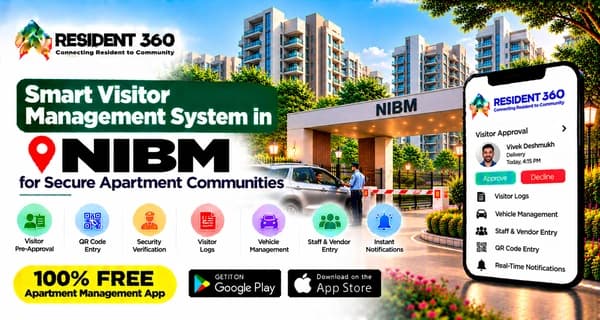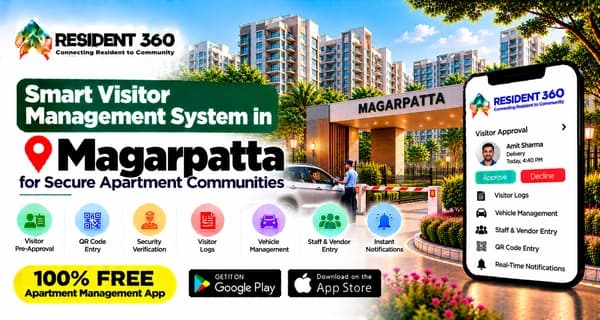
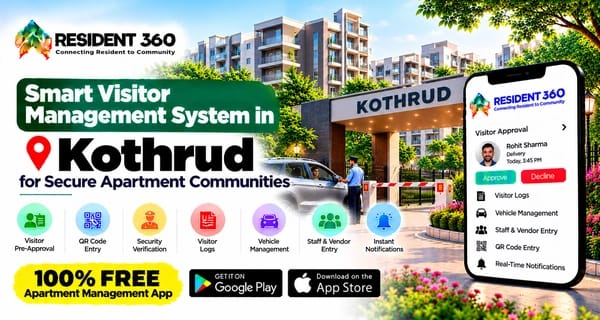
A Visitor Management System can help residential societies in Kothrud organize visitor entry, resident approvals, security coordination, delivery handling, and entry records in a more structured way. As apartment communities manage residents, guests, domestic staff, technicians, and courier personnel throughout the day, gate teams often need a clear process that supports both convenience and oversight. A digital approach may reduce confusion at busy entry points while helping residents and security personnel communicate more effectively.
For committees and facility managers, the goal is not simply to replace a paper register. It is to create a consistent visitor process that is easier to follow, review, and improve as the needs of the community change.
Why Kothrud Societies Need More Organized Visitor Management
Kothrud has a mix of apartment buildings, established housing societies, and gated communities with different visitor patterns. A society may receive school transport, food deliveries, domestic help, technicians, guests, and service personnel within the same few hours. During mornings, evenings, weekends, or community events, the gate can become a point of delay if visitor information is incomplete or communication is fragmented.
A structured Visitor Management process can help communities define how guests are recorded, how residents are contacted, and how security staff handle entry and exit. It may also support a clearer distinction between expected guests, recurring service personnel, delivery workers, and unknown visitors. This can make daily gate operations easier to coordinate without assuming that every community requires the same process.
The local context also matters. Some Kothrud societies may have one entry point, while others may manage multiple gates, parking areas, towers, or blocks. A suitable approach should therefore be practical for the community’s layout, visitor volume, staffing arrangements, and resident expectations.
Common Visitor Management Problems in Kothrud Societies
Many communities begin with a paper register and verbal instructions. That may work for a small number of visitors, but gaps can appear as the number of residents, staff members, and service requests grows. Common challenges include:
- Manual registers that are difficult to read, search, or review later.
- Delays when security staff must call residents repeatedly for approval.
- Incomplete visitor details, including unclear names, purposes, or entry times.
- Difficulty confirming whether a guest has entered, exited, or remained inside the community.
- Delivery personnel waiting at the gate while residents are unavailable.
- Confusion when domestic staff, drivers, technicians, and vendors arrive during busy periods.
- Inconsistent instructions between different security shifts.
- Limited visibility for the committee when reviewing recurring gate-related concerns.
- Poor communication when a resident changes plans or declines an expected visitor.
- Challenges in maintaining a dependable record without adding unnecessary work for security staff.
These issues do not always indicate a serious security incident. Often, they reflect a process that depends too heavily on memory, handwritten notes, phone calls, and informal messages. A more organized workflow can help the society handle routine situations with greater consistency.
How a Visitor Management System Can Address These Challenges
A Visitor Management System can bring the main steps of gate coordination into a defined workflow. When a guest arrives, security personnel can record the relevant details, contact the resident through the available process, and note whether entry was approved or declined. The same approach can be applied to deliveries and service personnel, with suitable instructions for each category.
For example, a resident expecting a plumber may inform the security team in advance through the society’s chosen communication process. When the person arrives, the guard can check the expected information rather than starting the process from scratch. If an unexpected visitor arrives, the resident can be contacted before entry is allowed, helping the gate team follow a consistent approval process.
A digital visitor process may also make it easier to review entry and exit information when the committee needs to understand a recurring issue. It does not remove the need for alert security staff or sensible community rules. Instead, it can provide a clearer record and support better coordination between residents, guards, and the committee. Communities evaluating a visitor management system can compare workflows based on their gate structure, visitor categories, and approval requirements.
Four Core Areas of Visitor Management in a Residential Society
Visitor Entry and Verification
The first step is to establish a consistent entry process for guests, vendors, domestic workers, technicians, and delivery personnel. Security staff need clear instructions about what information to record and when a resident’s confirmation is required.
- Record the visitor’s name, purpose, and relevant arrival details.
- Separate expected visitors from unplanned arrivals.
- Follow the same basic process across security shifts.
A process for visitor management system planning can help a committee document these steps before selecting or implementing a solution.
Resident Approval
Resident approval is central to visitor coordination. A guest may be known to one household but unfamiliar to the gate team, so the society needs a practical method for contacting the resident and recording the outcome.
- Allow residents to confirm or decline an unexpected visit.
- Keep approval instructions simple for guards and residents.
- Provide a clear approach for cases where the resident does not respond.
The objective is not to create unnecessary delays. It is to make sure entry decisions follow an understood community process.
Security Coordination
Security staff manage the visitor process in real time, often while handling vehicles, deliveries, resident requests, and other gate duties. A clear workflow can help them coordinate with residents and supervisors without relying only on verbal instructions.
- Define how guards should handle guests, deliveries, and service personnel.
- Maintain consistent instructions between shifts.
- Give the committee a way to review process gaps and recurring concerns.
A management team can support this by documenting responsibilities and discussing practical improvements with the security staff.
Visitor Records
Entry and exit records can help a society understand visitor movement and investigate questions about a particular visit. Records are more useful when they are complete, organized, and created as part of the normal gate process rather than reconstructed later.
- Track entry and exit details where the community process requires it.
- Review recurring visitor categories and peak periods.
- Avoid collecting information that is not needed for the society’s defined process.
A record-based approach may also help the committee identify where residents need clearer instructions or where guards require additional support.
Supporting Society Operations Around Visitor Management
Delivery Coordination
Food, grocery, courier, and other deliveries can create frequent interruptions at the gate. A defined process can help security staff identify the delivery, contact the resident when necessary, and direct the person according to community rules.
- Separate delivery handling from guest approval where appropriate.
- Clarify whether delivery personnel may enter the premises.
- Reduce repeated calls by communicating building or tower details clearly.
Delivery coordination should remain practical. Rules that are difficult to follow may create more confusion for residents and security teams.
Service Personnel and Domestic Staff
Electricians, plumbers, drivers, cleaners, tutors, and domestic workers may visit regularly. Their recurring presence can make manual verification inconsistent, especially when different guards work across shifts.
- Maintain clear resident-provided information for recurring visitors.
- Review access instructions when a service arrangement changes.
- Ensure guards know how to handle an individual who is not expected that day.
The process should support resident convenience while retaining a clear approval and record-keeping approach.
Resident Communication
Visitor workflows depend on timely communication. Residents need to know when a guest, delivery person, or technician is waiting, while guards need a dependable way to confirm the next step. A Resident communication app may help centralize relevant updates instead of spreading them across informal messages.
- Share visitor-related instructions through an agreed channel.
- Make approval or rejection information clear.
- Communicate temporary changes, such as event-day entry arrangements.
Better communication can reduce repeated calls and help residents understand why the society follows particular gate procedures.
Complaints and Service Requests
Visitor-related complaints may concern delays, unclear approvals, delivery access, or inconsistent treatment at the gate. A structured method for recording a complaint can help the committee separate isolated misunderstandings from recurring process issues.
- Record the concern, date, location, and people involved where relevant.
- Review whether the issue came from unclear instructions or execution.
- Communicate the resolution without sharing unnecessary personal details.
This approach can make follow-up more objective and reduce dependence on fragmented conversations.
Visitor Management for Different Residential Communities
A small society in Kothrud may have fewer daily visitors but still benefit from a consistent approval and record process. In such communities, the solution should be simple enough for residents and guards to use without creating unnecessary administrative work. The committee may focus on expected guests, deliveries, recurring staff, and basic entry records.
Apartment communities with multiple buildings may need clearer coordination between towers, security points, and resident households. A visitor expected at one building should not create confusion at another gate. The community may also need practical instructions for intercom calls, parking access, service personnel, and event-related visitors.
Larger or gated communities may experience higher visitor volume and more varied movement during evenings, weekends, and community activities. In these settings, the committee can review whether the process supports multiple gates, visitor categories, resident approvals, and exit tracking without making the gate experience unnecessarily slow.
RWAs may coordinate visitor policies across several buildings or residential clusters. Their focus can include consistent communication, shared security expectations, resident records, and a clear way for individual associations or facility teams to handle daily gate operations. Communities considering Visitor Management System in Aundh can also use that local page as a related reference when comparing how similar residential settings may approach visitor coordination.
The right process depends on the community’s layout, staffing, visitor volume, and internal rules. A system should support those realities rather than force every society into an identical operating model.
How Resident360app Can Support Visitor Management in Kothrud
Resident360app can be considered by societies looking for a more organized approach to resident and community coordination. For a visitor-focused workflow, relevant capabilities may include visitor and security coordination, resident communication, resident and apartment records, complaints and service requests, and related society operations.
A committee may use a broader Society Management App approach when visitor activity needs to be coordinated with maintenance, resident updates, complaints, or facility responsibilities. This can be useful when gate operations are not isolated from the rest of the society’s daily administration.
Where maintenance teams, residents, and security staff need to exchange information, a Society Maintenance App may provide supporting context for connecting visitor coordination with other society tasks. Similarly, an Society Management App can be evaluated when the committee wants a centralized approach to apartment records and community operations.
Resident360app may also support conversations around maintenance management software, rwa management software, and a Maintenance management system when the society wants visitor processes to sit alongside maintenance and administrative coordination. These references should be assessed according to the community’s actual requirements rather than assumed to solve every operational issue.
For Kothrud societies, the practical starting point is to document how visitors currently arrive, how residents approve entry, how security staff record activity, and where communication breaks down. Resident360app can then be considered as part of a broader effort to make those processes more organized.
How to Evaluate a Visitor Management System for Kothrud
A society should begin by mapping its current visitor journey instead of choosing a solution based only on a feature list. The committee can observe what happens when a guest arrives, how a resident is contacted, how a delivery is handled, and how the entry is recorded. This helps reveal whether the main need is approval, record keeping, security communication, or coordination across multiple gates.
Important evaluation questions may include:
- Can the process support expected and unexpected visitors?
- Is resident approval clear and practical for daily use?
- Can security staff follow the workflow across different shifts?
- Are delivery personnel and service providers handled appropriately?
- Can the society review entry and exit records when needed?
- Does the process work for the community’s number of gates and buildings?
- Can residents understand the instructions without extensive training?
- Does the solution support communication without creating duplicate channels?
- Can the committee update procedures when community rules change?
A society may also review how the solution fits with related records. For example, committees often need access to organized payment information for broader society administration, even though payment records are separate from visitor entry. Understanding this distinction helps prevent a visitor-focused process from becoming overloaded with unrelated functions.
Cost and adoption should not be evaluated through assumptions or unsupported promises. Instead, the committee can consider the clarity of the workflow, the effort required from security staff, the usefulness of the records, and the ease with which residents can follow approval procedures. A short internal trial or process review, where appropriate, may help the society identify practical gaps before wider adoption.
A related local reference such as Visitor Management System in Aundh can help committees compare the questions they should ask about visitor volume, resident approvals, gate coordination, and records. Another Visitor Management System in Aundh reference can be useful when discussing how visitor workflows may differ between communities, while a broader guide to the Visitor Management System in Aundh topic can support local content planning and internal discussion.
The most suitable choice is the one that matches the society’s actual operating conditions. A clear process, realistic resident participation, and consistent security coordination matter more than a long list of features that the community may not use.
Conclusion
For Kothrud societies, a Visitor Management System can bring greater structure to guest entry, resident approval, delivery handling, security coordination, and visitor records. The right approach should reflect the community’s layout, visitor volume, gate process, and communication needs. By reviewing these requirements carefully, committees can choose a practical workflow that supports residents and security teams without relying entirely on manual registers.
Get Started with Resident360 Today
Resident360app can be considered by societies and residential communities looking for a more organized approach to society management. To learn more, visit Resident360app.
Download the Resident360app Today