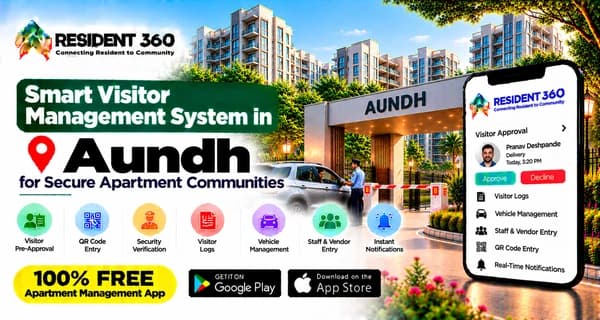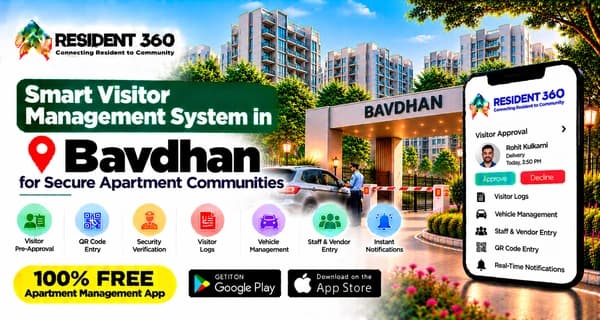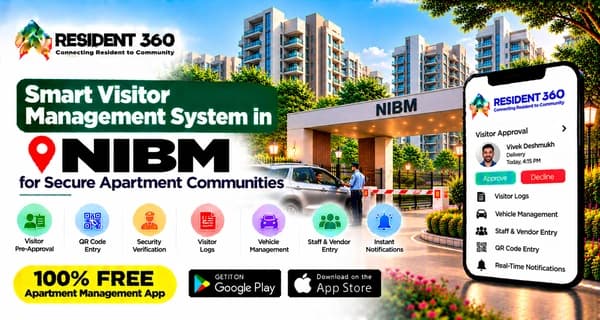
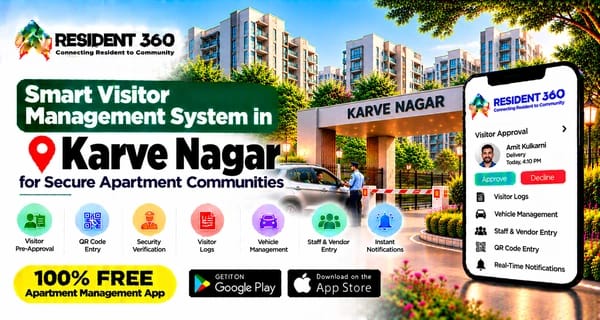
A visitor management system can help residential societies in Karve Nagar organise gate operations, verify visitors, coordinate resident approvals, and maintain clearer entry and exit records. In busy apartment communities, security teams often manage residents, guests, delivery workers, domestic staff, technicians, and service providers at the same time. A structured visitor process can reduce confusion at the gate while helping residents and committee members stay informed. The right approach should support practical daily operations without making entry unnecessarily difficult for genuine visitors.
Karve Nagar societies have different layouts, gate arrangements, resident preferences, and visitor volumes. A process that works for a small apartment building may need adjustment in a larger gated community. Digital records, consistent verification, and clear communication can give security teams and residents a more organised way to handle regular and unexpected visits.
Why Karve Nagar Societies Need Better Visitor Management
Residential communities in Karve Nagar may experience frequent movement throughout the day. Residents receive deliveries, guests arrive for social visits, domestic help enters at regular times, and technicians may need temporary access for repairs. When these activities are recorded only in a paper register or communicated through scattered messages, security staff may find it difficult to confirm details quickly.
A visitor management process can help create a clear connection between the gate, the resident, and the committee. It may also make it easier to review who entered the premises, when the visit occurred, and whether the visitor was approved. The goal is not to make residential access complicated. It is to support a consistent process that respects both convenience and security.
For societies in Karve Nagar, a practical system can help with:
- Recording visitor details in a more organised manner
- Confirming whether a resident expects a guest or service provider
- Coordinating entry approvals between security staff and residents
- Handling deliveries without repeated calls and confusion
- Tracking entry and exit information for later reference
- Communicating visitor-related updates with the appropriate resident
- Supporting a consistent process across different shifts
- Reducing dependence on incomplete or difficult-to-read registers
Common Visitor Management Problems at Society Gates
Many visitor-related issues are operational rather than technical. They arise when responsibilities are unclear, information is not available at the right time, or the same details must be written and communicated repeatedly. A society should first understand these gaps before selecting a digital solution.
Common problems include:
- Manual registers with missing, unclear, or inconsistent visitor details
- Security staff being unable to confirm whether a resident is expecting someone
- Delays when residents do not respond to approval requests promptly
- Delivery personnel waiting at the gate while guards try to contact residents
- Difficulty identifying regular domestic staff or recurring service personnel
- No simple way to review when a visitor entered or left the property
- Different guards following different visitor verification practices
- Residents receiving incomplete information about guests or deliveries
- Service technicians entering without clear instructions about the destination
- Committee members having limited visibility into repeated gate-related issues
These challenges can become more noticeable during busy hours, weekends, society events, or shift changes. A digital process cannot replace alert security personnel, but it can support them with better information and more consistent coordination.
How a Visitor Management System Can Organise Gate Operations
A visitor management system can connect visitor registration, resident approval, security coordination, and records in one process. When a guest arrives, the security team can collect the relevant details and seek confirmation from the resident. Once the visit is approved, the entry can be recorded in a manner that is easier to review than a handwritten register.
For example, a delivery worker may arrive for a particular flat while the resident is unavailable by phone. A structured process can help the gate team communicate the visit clearly, follow the society’s chosen approval procedure, and record the outcome. Similarly, a technician visiting for a repair can be identified, linked to the relevant home, and monitored through entry and exit information.
Societies evaluating a broader visitor management system should consider how the process fits actual gate operations. Useful questions include whether security staff can follow it during busy periods, whether residents receive understandable updates, and whether the information remains organised for committee review.
The process may include these stages:
- Visitor details are recorded when the person arrives.
- The visitor’s purpose and destination are clarified.
- The resident is contacted for approval where required.
- Security staff allow entry according to society procedures.
- Exit details are recorded when the visitor leaves.
- Relevant records remain available for authorised review.
Four Core Areas of Effective Visitor Management
A visitor process works better when its main responsibilities are defined clearly. The following four areas are especially relevant for Karve Nagar societies managing daily guest, delivery, and service movement.
Visitor Entry and Verification
The gate team needs a consistent way to identify visitors and understand why they are entering. Verification should be practical enough to follow during busy periods while still collecting the information the society considers necessary.
- Record the visitor’s name, purpose, and destination where appropriate
- Distinguish between guests, deliveries, domestic staff, and technicians
- Follow the same basic process across security shifts
A Society Management App may provide a wider digital context for coordinating visitor activity with other society operations. The exact process should reflect the community’s access rules and staffing arrangements.
Resident Approval
Residents should have a clear role in confirming expected visitors. Approval requests need to be understandable and timely so that security staff are not left waiting without direction. For recurring visitors, the society may also establish a practical process that avoids unnecessary repetition while retaining appropriate oversight.
- Send clear visitor information to the relevant resident
- Record whether access was approved, declined, or could not be confirmed
- Provide a consistent approach for expected and unexpected guests
Security Coordination
Security personnel handle the physical gate process, so any system must support their work rather than create extra confusion. Shift handovers, delivery peaks, and urgent service visits all require clear communication between the gate and residents.
- Keep visitor instructions easy for guards to understand
- Support consistent communication during shift changes
- Clarify how delivery and service personnel should be handled
A Society Maintenance App can also be relevant when a visitor is entering for a repair, inspection, or maintenance-related task. Visitor coordination and maintenance communication may overlap in everyday society operations.
Visitor Records
Records can help the committee review recurring issues, confirm past visits, and understand whether gate procedures are being followed. They may also help resolve questions about delivery timing or service access without relying entirely on memory.
- Maintain organised entry and exit details
- Review records when a society-related query arises
- Limit access to information according to the society’s internal process
Related Society Operations That Support Safer Visitor Coordination
Visitor handling does not operate in isolation. It is connected to resident information, service requests, staff coordination, and communication. A society can improve gate operations by considering these related activities together.
Resident Records
Accurate apartment and resident records can make it easier for security staff to identify the correct home and contact the appropriate person. Changes such as new occupants, rented apartments, or updated contact details should be handled through an organised administrative process.
- Keep apartment and resident information structured
- Make relevant contact details easier for authorised teams to locate
- Reduce confusion between similarly named residents or units
The Society Management App page represents a broader apartment-management context that can support discussions about centralised community records and coordination.
Delivery Coordination
Deliveries are among the most frequent reasons for gate movement. Clear communication can help residents know when a delivery has arrived and help security teams understand whether the item should be directed to a particular building, lobby, or apartment.
- Separate delivery activity from guest visits where practical
- Share essential information with the resident
- Avoid repeated calls when the delivery details are already clear
Service and Staff Coordination
Domestic staff, cleaners, drivers, technicians, and contractors may visit regularly or for specific tasks. A society can define how recurring personnel and one-time workers are recorded, verified, and communicated to residents.
- Maintain clear information about recurring service personnel
- Record the purpose of one-time technical visits
- Coordinate access instructions with the relevant resident or facility team
A broader maintenance management software approach may help connect repair-related requests with the people who need temporary access to the property.
Resident Communication and Complaints
Visitor concerns often become communication issues. A resident may want to know why an entry was delayed, while a security team may need clarification about an expected guest. A central Resident communication app can support clearer updates when visitor-related information needs to reach residents.
- Share society-wide visitor process updates
- Communicate changes to gate procedures
- Record a complaint when a recurring issue needs committee attention
Using Visitor Management Across Different Residential Communities
The right visitor process depends on the size, layout, and operating style of a community. A small society in Karve Nagar may have one gate and a limited number of daily visitors. Its priority may be a simple approval and record-keeping process that guards can follow without delay.
An apartment community with several buildings may need clearer destination information. Security staff may need to direct guests, deliveries, and technicians to different blocks or entrances. In such settings, organised resident records and consistent communication can reduce repeated questions at the gate.
Larger gated communities may experience higher visitor volume, more delivery activity, and multiple security shifts. They may need clearer procedures for:
- Managing more than one entry or exit point
- Coordinating visitor information across shifts
- Handling deliveries during peak hours
- Recording service personnel and recurring staff
- Reviewing gate-related concerns with the committee
RWAs may also need to document agreed visitor procedures and communicate them to residents, guards, and facility staff. A process should be practical for the people using it every day. A community should avoid choosing a system based only on a feature list without considering gate layout, staffing, resident participation, and the type of visitors it receives.
How Resident360app Can Support Visitor Coordination
Resident360app can be considered by societies looking for a more organised approach to visitor and security coordination. Based on the community’s operating process, it may help bring visitor-related communication, resident information, and other society activities into a more structured workflow.
For Karve Nagar societies, relevant areas may include coordinating visitor information with residents, supporting communication about deliveries or service visits, and maintaining clearer records for authorised review. This can make it easier for the management team to understand recurring issues and discuss practical changes with security personnel.
Resident360app may also be relevant when visitor activity overlaps with maintenance or service requests. For example, a technician may need access because a resident has reported a repair issue. Connecting the visitor context with a Maintenance management system can support a more organised approach to related information, without requiring committee members to depend entirely on separate handwritten notes.
Societies should evaluate how the available capabilities fit their own procedures. Resident participation, security staff training, record access, and internal approval practices remain important. A digital tool can support coordination, but the society still needs clear rules and responsible people to manage day-to-day gate operations.
How to Evaluate a Visitor Management Solution
Before selecting a solution, committee members and facility managers should map the visitor journey from arrival to exit. This helps reveal whether the proposed process addresses real gate problems rather than adding unnecessary steps. It is also useful to involve security staff and a small group of residents during evaluation.
Consider the following areas:
- Visitor entry: Can guards record essential details without creating delays?
- Verification: Does the process help distinguish guests, deliveries, and service personnel?
- Resident approval: Are residents given clear information and a practical way to respond?
- Security coordination: Can the process work across shifts and during busy periods?
- Entry and exit records: Can authorised people review information when a question arises?
- Delivery handling: Does the approach support frequent delivery activity?
- Staff and technician access: Can recurring and one-time service visits be handled sensibly?
- Resident communication: Can the society explain process changes and important updates clearly?
- Ease of adoption: Is the workflow understandable for residents, guards, and committee members?
It may also help to compare visitor operations with other society workflows. For example, the society may review how a rwa management software approach could support committee coordination, while keeping the immediate evaluation focused on visitor entry and security needs. If residents also need access to payment information or maintenance updates, those requirements should be considered separately rather than allowed to obscure the primary visitor-management objective.
A practical evaluation should ask what information is necessary, who can view it, how long the society needs to retain it, and how corrections are handled. The committee should also confirm how security teams will be introduced to the process and how residents will be informed about their role. These details often influence adoption as much as the software itself.
Conclusion
A visitor management system in Karve Nagar can help societies create a clearer process for visitor entry, resident approval, delivery coordination, security communication, and entry and exit records. The most useful approach is one that fits the community’s gate layout, visitor volume, staffing, and resident expectations. With defined procedures and organised information, societies can make daily visitor handling more consistent without losing sight of convenience.
Get Started with Resident360 Today
Resident360app can be considered by societies and residential communities looking for a more organized approach to society management. To learn more, visit Resident360app.
Download the Resident360app Today