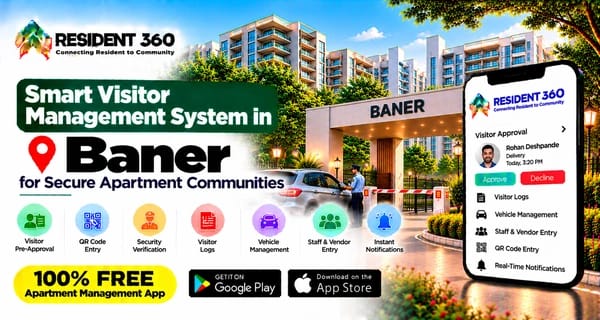
Visitor Management in Baner societies involves more than recording a guest's name at the gate. Security teams may need to verify visitors, contact residents, manage deliveries, coordinate service personnel, and maintain clear entry and exit information. With busy residential communities and frequent movement through shared gates, a visitor management system can help create a more organized process without relying entirely on paper registers or informal phone calls. The right approach should support residents, security staff, committee members, and facility teams in their daily responsibilities.
For societies in Baner, a structured visitor process can make gate operations easier to coordinate while giving residents a clearer role in approving expected visitors and service personnel.
Why Baner Societies Need More Organised Visitor Management
Baner has a mix of apartment buildings, gated communities, working professionals, families, tenants, domestic staff, delivery personnel, and service providers. This creates a steady flow of people through society entrances at different times of the day. A clear visitor process can help security teams manage this movement while allowing residents to remain informed about people seeking access.
In a smaller society, a manual register may appear manageable, but repeated entries, unclear handwriting, and missed calls can still create confusion. In larger communities, multiple gates, delivery activity, and service visits may require better coordination between residents, guards, and the management team. A digital visitor process can provide a more consistent way to handle these daily situations.
Common Visitor Management Problems in Residential Communities
Visitor-related challenges often arise because information is recorded or shared in different ways. When residents, guards, and committee members do not have a common process, even routine entries can take longer than necessary.
- Manual registers may contain incomplete or difficult-to-read visitor details.
- Security staff may need to make repeated calls before allowing a visitor inside.
- Residents may not receive clear information about an expected guest or service worker.
- Delivery personnel can arrive at busy times when the gate is already handling several entries.
- Entry and exit times may not be recorded consistently.
- Temporary workers, domestic staff, and technicians may be difficult to coordinate.
- Guards may have limited visibility into whether a visitor has resident approval.
- Committee members may find it difficult to review visitor information when records are scattered.
- Shift changes can lead to gaps in communication between security personnel.
- Emergency or urgent visitor situations may be delayed by an unclear approval process.
How a Visitor Management System Can Improve Gate Operations
A visitor management system can address these issues by giving the gate team and residents a more structured process. Instead of depending only on a paper register or individual phone calls, the society can organise visitor information around entry, approval, and record-keeping steps.
For example, when a guest arrives, security staff can record the relevant details and seek resident confirmation through the society's chosen process. The resident can then decide whether access should be permitted. Similar steps can support delivery personnel, technicians, domestic workers, and other service visitors, depending on the community's operating rules.
A society may also use a visitor management system as part of a wider digital approach. This does not remove the need for trained security staff or clear society policies. Instead, it can help the people responsible for gate operations follow the same process more consistently.
Core Visitor Management Areas for Baner Societies
Visitor Entry and Verification
The first stage is capturing useful information when a person reaches the gate. A consistent entry process can help security staff identify the visitor's purpose and the resident or apartment they intend to visit.
- Record visitor details in an organised manner.
- Separate guest, delivery, and service-personnel entries where practical.
- Give security staff a clear process to follow during busy periods.
Resident Approval
Resident confirmation is central to visitor access. A structured approval process can reduce confusion about whether an unexpected guest, technician, or delivery person should be allowed to proceed.
- Help residents respond to visitor requests in a timely way.
- Make the approval status easier for security staff to understand.
- Support different handling for expected and unplanned visitors.
Security Coordination
Security teams work across shifts and often manage several responsibilities at once. A shared process can help guards communicate more clearly and reduce reliance on verbal instructions that may not reach the next shift.
- Keep gate instructions consistent across security shifts.
- Support coordination between entry points where applicable.
- Make it easier for committee members to clarify operating procedures.
Visitor Records and Exit Tracking
Entry information becomes more useful when it is maintained as an organised record. Exit tracking can also help the society understand whether visitors have left and whether records are complete.
- Maintain accessible entry and exit information.
- Support follow-up when an entry record appears incomplete.
- Help the society review recurring visitor-management concerns.
A broader society management app may also bring visitor coordination closer to other residential operations, helping committee members avoid maintaining separate informal systems.
Related Society Operations That Support Visitor Management
Delivery Coordination
Online orders, food deliveries, courier parcels, and other drop-offs are common in apartment communities. A clear process can help residents and security teams distinguish delivery activity from guest visits and decide whether the item should be handed over at the gate or taken inside.
- Record delivery-related activity clearly.
- Reduce repeated calls for routine deliveries.
- Share relevant instructions with security staff and residents.
Service Personnel Management
Electricians, plumbers, appliance technicians, domestic workers, and maintenance contractors may visit regularly. Their access needs can differ from those of one-time guests, so societies may benefit from a process that supports recurring or purpose-based visits.
- Identify the resident or facility request connected to the visit.
- Keep service-personnel information more organised.
- Help guards follow society access instructions.
Resident Communication
Visitor operations depend on timely communication. Residents may need updates about gate procedures, delivery rules, restricted access, or temporary changes during society events and maintenance work. A Resident communication app can support clearer sharing of such information when used appropriately.
- Publish gate-related notices in one recognised channel.
- Reduce dependence on multiple informal resident groups.
- Help residents understand changes to visitor procedures.
Complaints and Service Requests
Residents may report delayed approvals, unverified entries, delivery concerns, or issues with security coordination. A structured complaint process can help the society record the concern, assign follow-up, and communicate the status more clearly.
- Capture the issue with relevant details.
- Route security-related concerns to the responsible person.
- Maintain a clearer record of follow-up actions.
Applying Visitor Management Across Different Community Types
Visitor requirements vary according to the size, layout, and daily activity of a residential community. A small society in Baner may need a simple approval and recording process for one gate. The focus may be on reducing calls, keeping the register organised, and helping a small security team follow consistent steps.
An apartment community with several buildings may handle a larger mix of residents, guests, deliveries, and domestic workers. In that setting, clear apartment references and resident approval can help reduce confusion at the entrance. A gated community with more than one access point may also need consistent communication between guards and different entry areas.
Larger communities may experience heavier visitor volumes during evenings, weekends, festivals, or community activities. Their process may need stronger coordination around delivery movement, service personnel, and shift handovers. The goal is not to apply the same workflow everywhere, but to select a process that reflects the community's actual gate operations.
RWAs may also use a structured visitor process as part of wider administrative coordination. Alongside rwa management software, visitor records can sit within a broader view of resident information, society operations, complaints, and communication. The exact workflow should be decided by the RWA or society committee according to its responsibilities and internal policies.
How Resident360app Can Support Visitor Coordination
Resident360app can be considered by societies that want a more organised approach to visitor and security coordination. Based on the needs of the community, it can support the sharing of relevant visitor information between residents, security teams, and the people responsible for society operations.
Its role can be considered alongside related residential processes rather than as an isolated gate tool. For example, societies may also need resident records, maintenance communication, service requests, and facility coordination. A Society Maintenance App can support maintenance-related work, while visitor coordination remains focused on access and security processes.
Resident360app may also be evaluated as an apartment management app when a community wants to connect visitor activity with broader apartment administration. The value of such an approach depends on how well the society defines responsibilities, trains users, and communicates its process to residents and security staff.
For societies that want to organise related records, a maintenance management software approach may help with facility requests and recurring operational work. Visitor management should still retain its own clear rules for resident approval, gate verification, delivery handling, and entry records.
Choosing a Visitor Management System for a Baner Society
Before selecting a visitor management solution, committee members should consider how the system fits the society's actual gate workflow. A solution should be understandable to residents and practical for security personnel who may use it during busy periods or across different shifts.
Consider the following areas:
- Entry process: Check whether visitor details can be recorded in a clear and consistent way.
- Resident approval: Understand how residents are expected to respond to guest, delivery, and service requests.
- Security usability: Consider whether guards can follow the process without unnecessary complexity.
- Records: Review how entry and exit details may be organised for responsible society representatives.
- Communication: Look for a process that supports clear updates about gate rules and changes.
- Community fit: Consider whether the approach suits the number of gates, buildings, residents, and visitors.
- Related operations: Evaluate whether visitor coordination can work alongside a Maintenance management system, resident records, and service requests.
- Resident adoption: Explain the process clearly so residents know when and how to approve visitors.
Societies should also define who reviews records, who handles exceptions, and how security teams communicate during shift changes. A digital tool can support organisation, but clear operating instructions remain necessary. It may also help to document how visitor information is collected, used, and retained according to the society's own policies.
Payment or facility-related discussions may require residents to access accurate payment information through the appropriate channel, while visitor operations should remain focused on entry and security coordination. Similarly, a designated management team can help clarify who handles approvals, complaints, and follow-up when an issue is raised.
Conclusion
A visitor management system can help Baner societies organise entry verification, resident approval, delivery coordination, security communication, and visitor records in a more consistent way. The right process should match the community's size, gate activity, and operating rules while remaining practical for residents and security teams. Resident360app can be considered as part of a broader, organised approach to visitor and society coordination.
Get Started with Resident360 Today
Resident360app can be considered by societies and residential communities looking for a more organized approach to society management. To learn more, visit Resident360app.
Download the Resident360app Today