
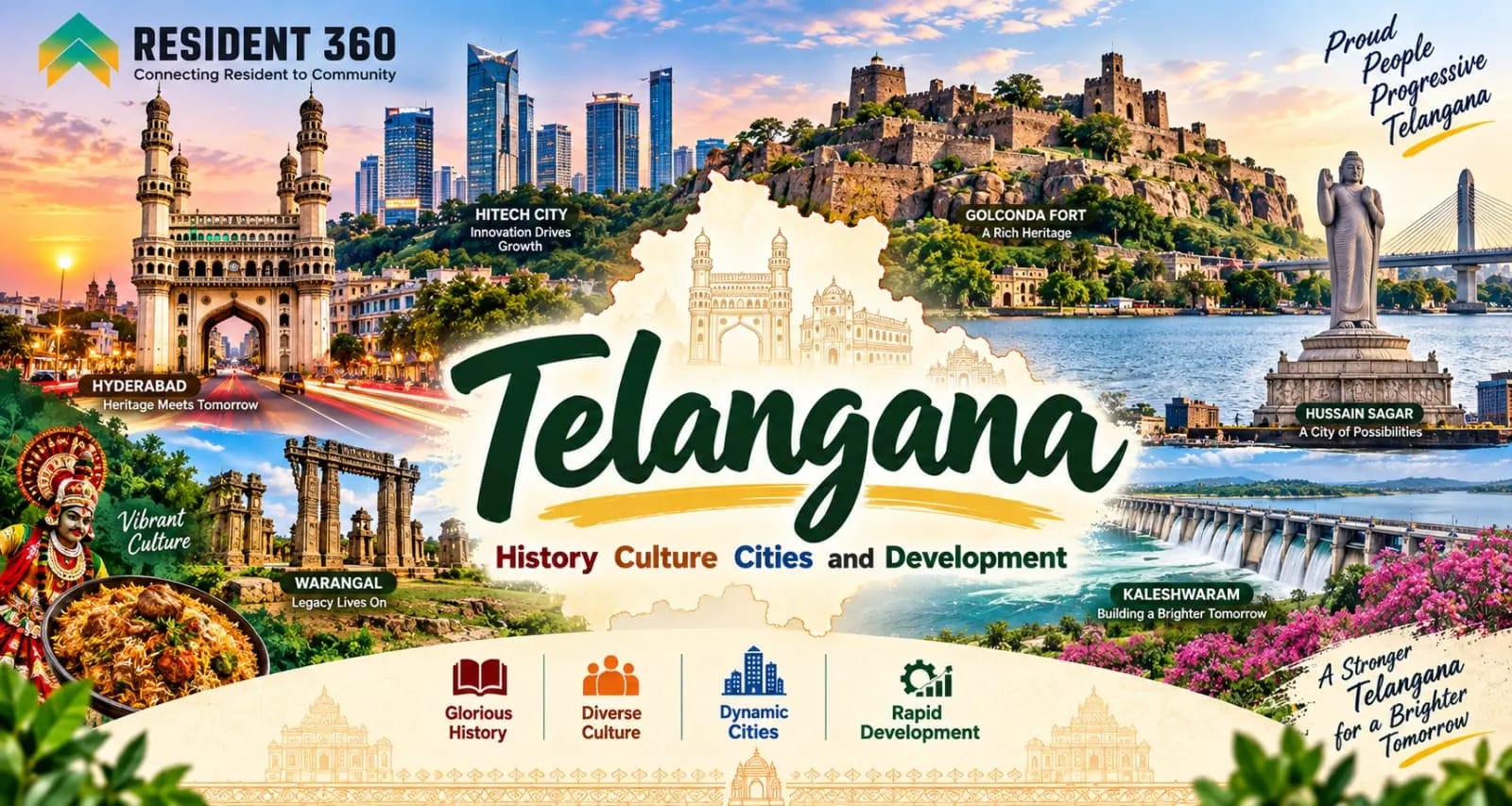
Telangana is a land where Deccan history, Telugu traditions, Islamic architecture, village customs and fast-growing cities exist side by side. Telangana history and culture are visible in everything from the forts and temples of the interior to Hyderabad’s food, monuments and multilingual neighborhoods. The state offers much more than a single urban destination: it includes forested hills, historic reservoirs, craft traditions, important pilgrimage centers and a modern economy shaped by technology and enterprise. Whether you are planning a visit, researching the region or trying to understand its identity, Telangana becomes clearer when its past and present are viewed together. The following guide explores its origins, major places, culture, lifestyle and development in a practical, connected way.
Its story is not defined only by famous landmarks. It is also found in local festivals, farming communities, regional speech, cuisine and the changing aspirations of its towns and cities.
The Historical Foundations of Telangana
Telangana occupies a historically important part of the Deccan Plateau. Its past has been shaped by several major dynasties and political powers, including the Satavahanas, Kakatiyas, Bahmani rulers, Qutb Shahi sultans and the Asaf Jahi Nizams. Each period left behind architectural, administrative, artistic and cultural influences that remain visible today.
The Kakatiya era is especially significant for the region. The dynasty developed strong fortifications, temple architecture and sophisticated water-management systems. Warangal and its surrounding areas preserve some of the best reminders of this period, including monumental gateways, temple remains and the celebrated Ramappa Temple.
The Qutb Shahi period gave Hyderabad its early urban character. The city grew around the Charminar and developed a distinctive blend of Persian, Turkish, Telugu and Deccani influences. Later, the Nizams expanded Hyderabad as a center of administration, education, culture and commerce.
After India became independent, the Telugu-speaking areas of the former Hyderabad State were reorganized over time. Telangana became a separate state on 2 June 2014, with Hyderabad serving as the capital. This modern political chapter added a new dimension to an already layered regional identity.
Landscape, Regions and Natural Features
Telangana is largely characterized by the Deccan Plateau, with granite formations, dry deciduous forests, rolling terrain and extensive river systems. The Godavari and Krishna are the principal rivers, while many smaller streams, tanks and reservoirs support agriculture and local communities.
The state’s geography changes noticeably from one region to another. Northern districts include forest zones and historic settlements, central areas contain productive agricultural landscapes and southern Telangana has rocky terrain, lakes and important urban corridors. This variety gives the state a character that is drier and more plateau-oriented than India’s coastal regions.
Wildlife and Water Landscapes
Protected areas such as the Kawal Tiger Reserve and Amrabad Tiger Reserve represent Telangana’s forest heritage. These landscapes support wildlife, though responsible travel is essential because forest ecosystems are sensitive to noise, waste and unregulated activity.
Water bodies are equally important. Historic tanks, village lakes and major reservoirs have long supported irrigation, fishing and settlement. The tank-building traditions associated with earlier kingdoms show how closely water management has been connected to life in the region.
Hyderabad: The State’s Historic and Modern Heart
Hyderabad is the most internationally recognized city in Telangana and often the starting point for understanding the state. Founded in the late sixteenth century by the Qutb Shahi rulers, it developed around the Charminar and later expanded under the Nizams. The old city retains historic markets, mosques, palaces and food traditions, while newer districts have become major centers for technology, pharmaceuticals, education and business.
Old Hyderabad and Architectural Heritage
The Charminar remains the city’s defining monument, but Hyderabad’s heritage extends much further. Mecca Masjid, the Qutb Shahi Tombs, Chowmahalla Palace and the Golconda Fort reflect different aspects of the city’s political and architectural history. Their arches, domes, courtyards, stonework and ceremonial spaces reveal the influence of the Deccan’s varied cultural connections.
The Contemporary City
Areas such as HITEC City and the Financial District represent Hyderabad’s modern economic identity. Technology companies, research institutions, hospitals, universities and startups have helped the city attract professionals from across India. The result is a city of contrasts: historic bazaars may sit within the same broad metropolitan region as glass office towers, large campuses and new residential districts.
Heritage Destinations Beyond Hyderabad
Telangana’s historic appeal does not end at the capital. Several towns and monuments offer a deeper view of the state’s religious, military and artistic traditions.
Warangal and the Kakatiya Legacy
Warangal is closely associated with the Kakatiya dynasty. The Warangal Fort, Thousand Pillar Temple and Ramappa Temple together demonstrate the region’s skill in sculpture, stone construction and temple planning. Ramappa Temple, known for its detailed carvings and distinctive engineering, is one of the state’s most important heritage attractions.
Nizamabad, Karimnagar and Basara
Nizamabad and Karimnagar combine historical remains with living town cultures and regional commerce. Basara, on the banks of the Godavari, is known for the Gnana Saraswati Temple and attracts families seeking a traditional pilgrimage experience.
Bhadrachalam and Yadadri
Bhadrachalam is an important Rama pilgrimage center and a major religious destination in eastern Telangana. Yadadri, associated with the Lakshmi Narasimha temple, has also become a prominent pilgrimage and cultural center. Visitors should approach these places not only as sightseeing locations but as active religious communities where local customs and temple practices matter.
Telangana Culture, Festivals and Languages
Telangana culture is expressed through language, music, dance, crafts, seasonal celebrations and community traditions. Telugu is central to public and cultural life, while Urdu has a particularly strong presence in Hyderabad and other urban communities. Dakhini, a Deccan form of Hindustani speech, also contributes to the region’s distinctive linguistic character.
Bathukamma is one of Telangana’s best-known festivals. Women gather flowers into colorful arrangements and celebrate through songs, dances and community events. The festival reflects the importance of nature, seasonal cycles and collective participation. Bonalu, dedicated to the goddess Mahankali, is another major celebration marked by offerings, processions and neighborhood rituals.
Folk Arts and Handicrafts
Oggu Katha, performed storytelling traditions and regional dance forms help preserve local history and religious narratives. Perini dance is associated with the Kakatiya period and is often presented as a vigorous warrior tradition.
Telangana is also known for handicrafts such as Pochampally ikat, Pembarthi metalwork, Nirmal paintings and Dokra metal craft. These products are not merely decorative; they represent inherited skills, local materials and the continuing work of artisan communities.
Food, Daily Life and Regional Identity
Telangana cuisine reflects the climate, crops and social history of the Deccan. Sorghum, millets, rice, lentils, tamarind, sesame, red chilies and locally available greens are common influences. Dishes tend to be flavorful and are often shaped by both rural cooking traditions and urban culinary exchange.
Hyderabadi biryani is the state’s most famous food association, but Telangana’s food identity is broader. Sarva pindi, jonna rotti, sakinalu, pachi pulusu and various millet-based preparations reveal different aspects of local cooking. In Hyderabad, haleem, kebabs, bakery items and Irani chai reflect the city’s cosmopolitan history.
Daily life varies between metropolitan neighborhoods, district towns and villages. Urban residents may follow fast-paced professional routines, while village life remains connected to farming, local markets, seasonal festivals and family networks. Even as lifestyles change, shared meals, hospitality and festival gatherings continue to link generations.
Economy and Development in Telangana
Telangana’s development has been strongly influenced by Hyderabad, but growth is not limited to the capital. Information technology, pharmaceuticals, biotechnology, healthcare, education, manufacturing, agriculture and logistics all contribute to the state’s economic landscape.
Hyderabad’s technology corridor has created employment and attracted investment, while its pharmaceutical and life-sciences sectors have strengthened the city’s role in research and production. Emerging business districts and improved transport connections have supported the expansion of the metropolitan region.
Agriculture and Rural Change
Agriculture remains important across Telangana. Rice, cotton, maize, pulses, chilies and horticultural crops are cultivated in different parts of the state. Irrigation projects, tanks and groundwater all influence farming conditions, although water availability and climate variability remain important challenges.
Rural development also includes roads, digital access, education, healthcare and market connections. The benefits of growth are strongest when infrastructure reaches smaller towns and when farmers, artisans and local businesses can participate in expanding markets.
Challenges Alongside Growth
Rapid urbanization brings pressure on traffic, housing, water supply, waste management and historic neighborhoods. Environmental conservation is another concern, particularly around forests, lakes and expanding construction zones. Telangana’s future development will depend on balancing economic opportunity with heritage protection, resource management and inclusive access to services.
Planning a Meaningful Telangana Experience
A useful Telangana itinerary should match the traveler’s interests rather than attempt to cover the entire state at once. Hyderabad suits visitors interested in architecture, museums, food and urban culture. Warangal is a strong choice for Kakatiya history, while Yadadri, Basara and Bhadrachalam appeal to those interested in pilgrimage and temple traditions.
Nature-focused travelers can explore forest and reservoir regions with proper permissions and local guidance. Craft enthusiasts may look for Pochampally textiles, Nirmal art or Pembarthi metalwork, while food lovers can compare Hyderabad’s famous dishes with rural Telangana specialties.
Travel is generally more comfortable when planned around the hotter months, particularly for outdoor heritage sites. Modest clothing is appropriate at religious places, and visitors should ask before photographing people, ceremonies or artisan work. Choosing local guides, respecting temple customs and avoiding litter help ensure that tourism supports the places being visited.
For anyone studying Telangana, the most rewarding approach is to connect its landmarks with their context. A fort becomes more meaningful when viewed alongside the dynasty that built it; a festival becomes clearer when understood through seasonal life; and a modern city makes more sense when its historic neighborhoods remain part of the story.
Conclusion
Telangana brings together Deccan history, Kakatiya heritage, Hyderabad’s layered urban culture, distinctive festivals, regional cuisine, craft traditions and a rapidly developing economy. Its identity is neither solely ancient nor entirely modern; it is shaped by the way old communities, living traditions and new opportunities continue to interact. From Charminar and Warangal to forest landscapes, temple towns and technology corridors, Telangana offers varied experiences for travelers, students and anyone seeking to understand the region. Exploring Telangana history and culture with attention to both heritage and change reveals what makes the state distinctive today.