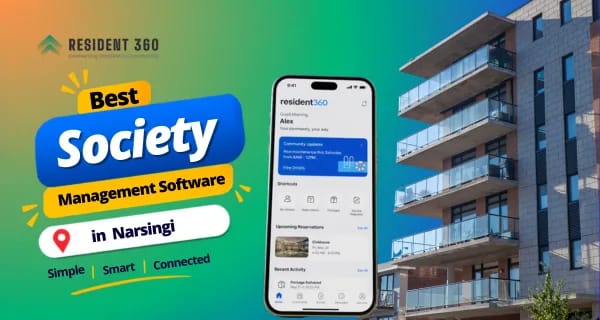
Narsingi’s growing residential communities bring together apartment owners, tenants, committee members, security teams, vendors, and facility staff. Coordinating daily work through messaging groups, spreadsheets, paper registers, and separate payment records can become difficult as a society expands. Society Management Software gives Resident Welfare Associations (RWAs) a more organized way to manage maintenance requests, notices, visitor information, complaints, community records, and routine operations from one structured platform. For apartments in and around Narsingi, the right digital process can reduce confusion without removing the human involvement that keeps a community running.
A practical system should fit the way each community works. Smaller apartments may need simple maintenance and communication tools, while larger gated communities may require stronger coordination across security, facilities, vendors, and resident services.
Why Narsingi Apartments Need a Society Management Software
Narsingi has a mix of apartment buildings, gated communities, and newer residential developments. As occupancy increases, committees often need to handle more maintenance requests, service providers, resident questions, visitor approvals, and shared-facility schedules without adding unnecessary administrative effort.
A structured Society Management Software can help create a common process for these activities. Residents can receive clearer updates, committee members can track pending work, and staff can get more defined instructions. The goal is not to digitize every interaction, but to make recurring tasks easier to record, follow up, and review.
For a broader view of local requirements, communities can also refer to this guide on society management software in Hyderabad.
Common Problems Faced by Apartments and Societies in Narsingi
Apartment operations can become fragmented when information is spread across chats, notebooks, calls, and individual spreadsheets. Common challenges may include:
- Maintenance requests getting lost in resident messaging groups
- Delays in assigning work to electricians, plumbers, or other vendors
- Difficulty confirming whether a service request has been completed
- Manual visitor entries and unclear approval communication
- Repeated questions about dues, payments, notices, or facility timings
- Delays in sharing urgent updates with all residents
- Limited visibility into staff duties and vendor follow-ups
- Difficulty maintaining accurate resident, vehicle, and tenant records
- Confusion around booking and upkeep of shared facilities
- Committee members spending excessive time on routine administrative work
These issues affect more than the committee. Residents may not know the status of a request, security staff may lack timely instructions, and vendors may receive incomplete information. Over time, the absence of a consistent process can create avoidable follow-ups and disagreements.
Communities comparing local approaches may find it useful to review society management software in Moosapet, particularly when evaluating workflows for maintenance, communication, and administration.
How a Society Management Software Solves These Problems
A digital management process brings recurring activities into a more visible structure. Instead of asking residents to contact different committee members for every issue, a community can create defined channels for maintenance, complaints, notices, visitor coordination, and payment-related information.
For example, a resident can raise a plumbing request with relevant details, while the committee or assigned staff member can review it, allocate the task, and update its status. Residents may then have a clearer view of whether the request is new, in progress, or completed. A Society Management App can support this type of organized interaction when it is configured around the community’s actual needs.
The same principle can apply to notices and approvals. Rather than relying on several informal messages, the committee can use a consistent method for sharing updates and retaining an accessible record of important communication.
Maintenance, Visitor, Security, and Complaint Management
Daily operations usually involve several connected responsibilities. A clear process helps residents know where to report an issue, helps staff understand what needs attention, and gives committee members a better way to review pending work.
Maintenance Management
Maintenance work can range from a leaking tap inside a flat to repairs involving lifts, pumps, lighting, water systems, or common-area equipment. A digital workflow may help the committee organize requests by type, location, priority, assigned person, and status.
Useful practices include:
- Recording the issue with a short description and relevant photo
- Assigning the request to an in-house staff member or vendor
- Tracking expected completion and follow-up dates
- Keeping notes on recurring equipment problems
- Reviewing open and completed requests during committee meetings
A Society Maintenance App can be useful for communities that want maintenance requests and updates to follow a consistent path. For more structured work allocation, maintenance management software may help organize tasks, service records, and follow-ups.
Visitor Management
Visitor handling needs to balance convenience and security. Residents may receive guests, domestic help, delivery personnel, drivers, or service technicians, each with different access requirements.
A visitor management system can help communities organize visitor requests, approvals, entry details, and relevant notifications. Depending on the process adopted by the apartment, it may help security staff verify information before allowing access and maintain a more searchable record than a paper register.
Security Management
Security teams often coordinate with residents, committee members, housekeeping staff, and vendors. Clear instructions can reduce uncertainty during scheduled visits, repair work, deliveries, or emergency situations.
An organized process may support visitor records, access coordination, security notices, and escalation of unusual events. It should complement the judgment of trained security personnel rather than replace on-ground checks. Communities should also define who can approve access, how temporary workers are recorded, and how urgent messages are circulated.
Complaint Management
A complaint process works better when residents know how to report an issue and when the committee can see what action has been taken. A structured complaint workflow can help categorize concerns, record follow-ups, and reduce repeated explanations.
For example, complaints about water supply, noise, parking, cleanliness, or common-area repairs can be directed to the relevant category. The committee can then acknowledge the concern, assign responsibility, and close it after suitable action rather than relying only on scattered chat messages.
Resident Communication, Staff, Facility, and Record Management
A residential community depends on more than maintenance tickets. Notices, staff coordination, facility schedules, resident records, and committee decisions also need a dependable place for information to be organized and reviewed.
Resident Communication
Communication can become difficult when important notices are mixed with casual conversations. Residents may miss updates about water shutdowns, lift servicing, pest control, parking changes, meetings, or facility closures.
A Resident communication app can help create clearer channels for notices, announcements, and resident interactions. Committees should still keep messages concise, share only relevant information, and use emergency communication methods where immediate action is required.
Staff Management
Housekeeping, security, gardening, technical support, and other staff may work different shifts and handle different areas. Clear task allocation can make it easier to understand daily responsibilities and identify work that needs follow-up.
A committee can maintain basic schedules, assign common-area tasks, record attendance or shift information where appropriate, and communicate changes to the relevant staff members. This gives the management team a more practical view of routine work without depending entirely on verbal updates.
Facility Management
Shared facilities such as clubhouses, gyms, swimming pools, community halls, play areas, and visitor parking require clear usage rules. Residents need to know availability, booking procedures, maintenance closures, and any applicable restrictions.
An organized facility process may help avoid overlapping bookings and make maintenance planning easier. Committees can also record recurring inspections for equipment, lighting, cleanliness, safety, and repairs.
Record Management
Resident details, tenant information, vehicle records, notices, vendor contacts, maintenance history, and committee documents can become difficult to manage when stored in separate files. A centralized approach may help authorized users locate current information more easily.
Communities should define who can access sensitive records and review information periodically for accuracy. Clear record practices also support smoother handovers when committee members change.
Society Management App for Small Apartments and Gated Communities
A small apartment may have fewer residents, limited facilities, and a committee that manages many tasks directly. Its priorities may include simple maintenance requests, notices, payment reminders, visitor coordination, and an accessible record of resident information.
A larger gated community may need more detailed coordination across towers, multiple entrances, security shifts, vendors, facility bookings, and several categories of maintenance. It may require role-based access, stronger reporting, and clearer escalation processes.
An Apartment Management App can support either setting when the features are matched to the community’s size and operating style. Communities reviewing options should avoid paying for complexity they will not use, while ensuring that future growth will not make the system difficult to manage.
For comparison with another expanding residential area, communities can review society management software in Miyapur and consider which functions are relevant to their own committee and resident needs.
How Resident360app Simplifies Apartment Management
Resident360app can help bring common apartment activities into a more organized digital workflow. Its usefulness depends on how the RWA defines responsibilities, communicates with residents, and encourages consistent use by staff and committee members.
Practical areas of support may include:
- Organizing resident requests and maintenance follow-ups
- Sharing notices and community updates through a central channel
- Supporting visitor and access-related coordination
- Helping committees maintain resident and apartment records
- Making recurring administrative tasks easier to review
- Providing a structured way to manage staff, facilities, and service information
For RWAs, rwa management software can be considered as part of a wider effort to document processes and improve coordination. The software should support the committee’s policies rather than replace discussions, approvals, or accountability.
How to Choose the Right Society Management Software
The right platform should be selected after understanding the community’s real operating needs. A feature-rich product may not be useful if residents find it difficult to use or if the committee cannot maintain accurate information.
Consider the following points before making a decision:
- Usability: Residents, guards, staff, and committee members should be able to understand the basic workflows without lengthy training.
- Management requirements: List current issues first, including maintenance, notices, visitors, facilities, complaints, records, and payment follow-ups.
- Resident adoption: A system is more useful when residents receive clear instructions and see consistent responses to their requests.
- Scalability: The platform should remain practical if occupancy, staff, facilities, or the number of buildings increases.
- Communication: Check whether notices, alerts, and community messages can be shared in an organized manner.
- Maintenance: Review whether requests, assignments, service history, and completion updates can be recorded clearly.
- Record organization: Confirm how resident details, vehicles, vendors, documents, and other information are stored and accessed.
- Payment clarity: Communities should provide residents with reliable payment information and follow appropriate processes for dues, receipts, and reconciliation.
- Operational tracking: A Maintenance management system may help committees review open tasks and recurring repairs.
It can also help to compare requirements across nearby communities. For example, the guide to society management software in Medchal offers another local reference point while evaluating workflows and priorities.
Conclusion
For apartments and gated communities in Narsingi, organized digital processes can make everyday RWA work easier to track and communicate. Society Management Software may help coordinate maintenance, visitors, complaints, staff, facilities, payments, and records without relying on scattered messages or paperwork. By choosing practical features and encouraging resident adoption, communities can build a clearer management process that supports both committee efficiency and resident convenience.
Get Started with Resident360 Today
Resident360app can be considered by apartment communities looking for a more organized approach to society management. To learn more, visit Resident360app.
Download the Resident360app Today