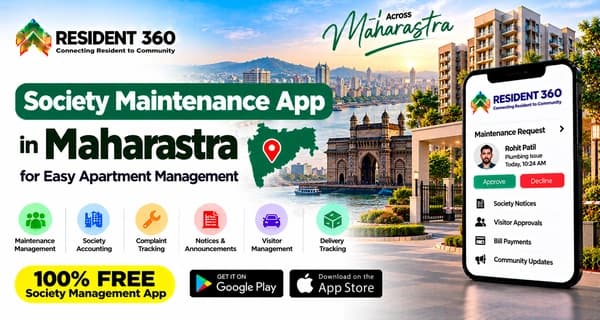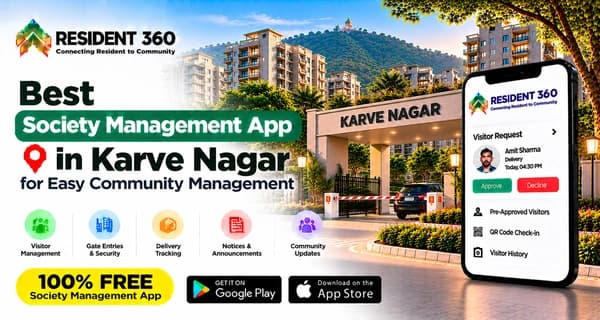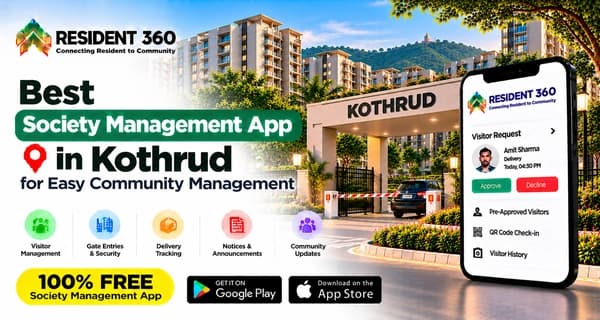
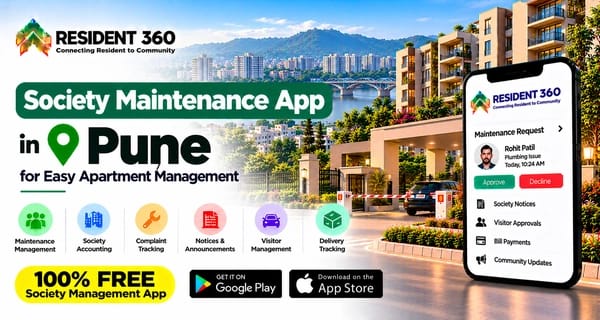
Managing recurring maintenance collections across a residential community in Pune can become difficult when records are spread across spreadsheets, paper receipts, payment messages, and manual follow-ups. A Society Maintenance App can help bring maintenance tracking, payment information, pending dues, resident communication, and committee coordination into a more organized process. This is especially useful for communities that need clearer records without adding more administrative work.
For societies in Maharashtra, a structured digital approach can make routine maintenance work easier to follow. Residents can receive clearer updates, while committee members and facility teams may spend less time checking multiple sources for the same information.
Why Pune Societies Need Better Maintenance Management
Pune has a wide range of residential communities, from compact apartment buildings to large gated developments. Each community may follow a different maintenance cycle, collect recurring charges, coordinate vendors, and respond to resident questions. Without an organized process, even regular activities can create confusion for the committee and residents.
A digital maintenance process can support societies by making information easier to organize and review. It can help committee members follow outstanding dues, communicate collection updates, and maintain a more consistent record of maintenance-related activity. The goal is not to remove human coordination, but to give the team a clearer working structure.
A Society Management App may also support broader coordination when maintenance work overlaps with complaints, residents, facilities, or security-related communication.
Common Maintenance Problems in Residential Societies
Maintenance administration often involves repetitive tasks that become difficult to manage as the number of homes increases. Common challenges include:
- Recording monthly maintenance charges manually
- Tracking which residents have paid and which payments remain pending
- Searching through messages or spreadsheets for earlier payment details
- Sending repeated reminders to residents about due dates
- Handling different maintenance amounts or adjustments without clear records
- Managing maintenance-related requests through separate communication channels
- Sharing collection updates with committee members
- Maintaining consistent records when committee responsibilities change
- Following up on repair or facility issues connected to maintenance work
- Answering resident questions without a centralized source of information
These problems may not appear serious when handled individually, but together they can consume considerable time. They may also make it harder for residents to understand their payment status or for committee members to review the society's current position.
How a Society Maintenance App Can Organize Daily Processes
A Society Maintenance App can provide a more structured way to record recurring charges, track payments, review pending dues, and share relevant updates. Instead of relying on separate registers and message threads, a committee can follow a defined process from maintenance creation to resident communication and record review.
For example, the committee may begin by recording the maintenance requirement for a billing period. Payment information can then be reviewed as residents complete their payments, while pending dues remain easier to identify for appropriate follow-up. If a resident raises a question, the team may be able to refer to the available record rather than reconstructing details from several conversations.
A Society Maintenance App can be useful when the main requirement is recurring maintenance administration. Communities considering a broader Society Management App may also evaluate how maintenance connects with resident records, complaints, communication, and other society activities.
The process can be further supported by using reliable payment information when residents and committee members need clarity about payment-related details. The exact workflow should be selected according to the society's internal practices and communication needs.
Four Core Areas of Society Maintenance Management
Maintenance Tracking
A clear tracking process can help the committee follow recurring maintenance requirements across units. It may reduce dependence on separate sheets and make it easier to review the current status of collections.
- Record recurring maintenance charges in an organized manner
- Review paid and pending amounts by resident or unit
- Follow the same process for each maintenance cycle
Payment and Dues Management
Payment and dues management is central to society maintenance. A structured record can help the committee identify pending amounts and communicate with residents more consistently, without treating every follow-up as a separate manual task.
- Review outstanding dues before sending reminders
- Maintain a clearer history of payment-related entries
- Coordinate collection follow-ups among committee members
Maintenance Records
Maintenance records may include collection details, adjustments, requests, and updates connected with society operations. Keeping this information organized can make future review easier when committee members need context.
- Maintain records for recurring maintenance activity
- Refer to earlier entries when questions arise
- Organize information for committee-level review
Resident Maintenance Communication
Residents usually need timely information about charges, due dates, pending amounts, and maintenance-related work. A clear communication process can reduce confusion and make updates easier to share with the right audience.
- Share maintenance notices in a consistent format
- Communicate changes or reminders clearly
- Provide a central point for maintenance-related updates
Related Operations That Support Maintenance Work
Resident Records
Accurate resident and apartment records can support maintenance administration by helping the committee associate charges, payments, and requests with the appropriate unit. This is particularly useful in larger communities where manual identification may take longer.
- Keep unit-related information organized
- Reduce confusion between similarly named residents
- Support committee review of maintenance activity
Complaints and Service Requests
Maintenance collections and physical maintenance work are closely connected. Residents may raise concerns about repairs, common areas, or services, so the team needs a practical way to organize each complaint and follow up with the relevant person.
- Record requests with useful context
- Track whether an issue needs committee or facility attention
- Keep service-related communication easier to review
Facility Coordination
Facility teams may be responsible for common-area upkeep, repairs, inspections, or vendor coordination. A structured maintenance approach can help committee members connect collection-related planning with the work being carried out in the community.
- Coordinate routine facility requirements
- Record updates related to common-area work
- Make responsibilities clearer between committees and service teams
Committee Coordination
Maintenance work often involves more than one committee member. A shared approach can make it easier for the management team to review dues, communication, records, and service requests without depending on one person's private files.
- Divide follow-up responsibilities more clearly
- Review pending work during committee discussions
- Maintain continuity when committee roles change
How Different Residential Communities Can Use a Maintenance App
The maintenance process may look different in a small society, a large apartment community, or a gated residential development. A smaller society may mainly need a reliable method to record recurring charges and follow up on pending dues. A larger community may require more structured records because several committee members, facility teams, and service providers are involved.
Apartment communities with multiple buildings may benefit from organizing maintenance information by building, unit, or recurring activity. Gated communities may also need to connect maintenance communication with facility coordination, common-area work, and resident requests. The suitable process depends on the community's size, committee structure, and existing administrative habits.
RWAs may use a maintenance process alongside broader administrative work. While the needs of each Resident Welfare Association (RWA) can differ, the basic requirement remains similar: residents and committee members need dependable information about recurring charges, records, communication, and follow-up.
A society that already uses a maintenance management software approach may find it easier to define responsibilities and review routine work. Communities should still choose processes that residents can understand and committee members can maintain consistently.
How Resident360app Can Support Society Maintenance in Pune
Resident360app can be considered by societies that want a more organized approach to maintenance and related community operations. Its relevant capabilities may help committee members coordinate maintenance and payment tracking, review pending dues, organize resident records, and communicate important updates.
For a society in Pune, this can provide a common working approach for recurring maintenance activities. Instead of keeping every detail in separate files, the committee may be able to bring maintenance information and related resident communication into a more structured process.
A Maintenance management system can also support the way committees review recurring tasks and service-related information. Where visitor or security coordination is connected with wider society operations, a visitor management system may be considered as a related operational area, though it is not a replacement for maintenance tracking.
Resident communication remains important because payment reminders, maintenance notices, service updates, and requests often require timely attention. A Resident communication app can support a more organized information-sharing process when communities want to reduce scattered conversations.
For RWAs handling several administrative responsibilities, rwa management software may provide useful context when evaluating how maintenance connects with records, communication, complaints, and committee coordination. Resident360app should be assessed according to the community's actual needs, internal process, and expected level of resident participation.
What to Evaluate Before Choosing a Society Maintenance App
Selecting a Society Maintenance App should begin with the society's daily maintenance workflow rather than with a long feature list. The committee can first identify how charges are created, how payments are recorded, how pending dues are followed up, and how residents receive updates.
Consider the following areas during evaluation:
- Maintenance workflow: Check whether the process can reflect the society's recurring collection cycle and internal responsibilities.
- Dues visibility: Look for an organized way to review paid, pending, and previously recorded amounts.
- Resident communication: Consider whether notices, reminders, and maintenance updates can be shared clearly.
- Record organization: Review how easily committee members can find resident, unit, payment, and maintenance information.
- Service requests: Assess whether related complaints and facility requirements can be coordinated without creating another disconnected process.
- Committee usability: A process is more likely to be followed when committee members can understand and maintain it without unnecessary complexity.
- Community fit: Small societies, apartment communities, and large gated developments may require different levels of coordination.
- Data responsibility: The committee should define who can review, update, and manage society information.
The evaluation should also include resident adoption. A technically capable process may not be useful if residents do not understand how to receive updates or check relevant information. Clear communication, practical onboarding, and consistent committee use can help a society establish better maintenance habits over time.
Conclusion
A Society Maintenance App can help Pune communities bring recurring charges, payment tracking, pending dues, records, service requests, and resident updates into a more organized process. For societies and RWAs in Maharashtra, the right approach can reduce manual follow-up and make committee coordination easier. Resident360app can be considered by communities seeking structured support for everyday maintenance administration and communication.
Get Started with Resident360 Today
Resident360app can be considered by societies and residential communities looking for a more organized approach to society management. To learn more, visit Resident360app.
Download the Resident360app Today