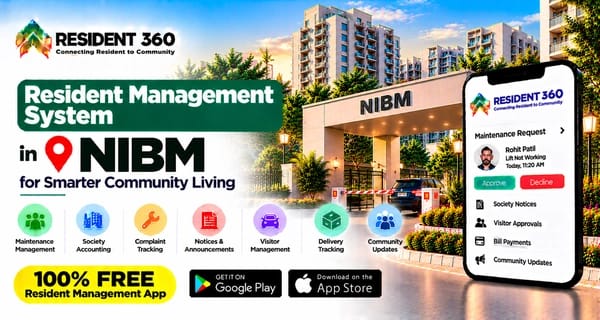
Managing a residential community in NIBM involves more than maintaining buildings and collecting dues. Committees, facility teams, security staff, and residents need a reliable way to coordinate updates, records, requests, visitors, and recurring responsibilities. A Resident Management App can help bring these activities into a more organized workflow, reducing dependence on scattered messages, paper registers, and manual follow-ups. For societies across Maharashtra, this approach may make routine administration easier to track while giving residents clearer access to relevant information.
NIBM communities can have different building layouts, resident needs, staffing arrangements, and operating routines. A digital system should therefore support practical coordination without making daily society work more complicated.
Why NIBM Communities Need a More Organized Resident Management Approach
Residential communities in NIBM often coordinate several activities at the same time. Committee members may need to review service requests, facility staff may be following up on work, and security teams may be managing visitors and deliveries. Residents also expect timely updates about maintenance, meetings, repairs, and community activities.
A Resident Management App can provide a central place for these interactions. Instead of relying on separate spreadsheets, notice boards, paper files, and multiple chat groups, the society can work with a more consistent flow of information. This can be useful for communities that want clearer accountability without assuming that every society follows the same process.
The local context also matters. Some NIBM communities may have multiple buildings, shared amenities, parking arrangements, or a mix of owners and tenants. As the number of daily interactions grows, an organized system can help the committee understand what requires attention and what has already been recorded.
Common Resident Management Problems Faced by Societies in NIBM
Many community-management difficulties are not caused by a lack of effort. They often arise when information is spread across different channels and responsibilities are not easy to follow. Common challenges include:
- Resident records being stored in separate files or outdated spreadsheets
- Important society announcements being missed among unrelated messages
- Maintenance requests being received without a clear status or follow-up trail
- Committee members lacking a shared view of pending community tasks
- Security teams having limited access to consistent visitor or delivery information
- Residents repeatedly asking for updates about repairs, payments, or complaints
- Staff instructions being communicated informally and inconsistently
- Facility-related issues not being assigned clearly to the responsible person
- Society activity details being difficult to organize and share
- Historical records becoming difficult to locate during committee changes
These issues can create avoidable delays. A resident may submit the same request more than once, while a committee member may spend time searching through messages to confirm whether an issue was resolved.
How a Resident Management App Can Organize Daily Community Work
A Resident Management App can address these problems by creating a more structured way to record, communicate, and review routine society activities. The goal is not to remove human involvement. Rather, it can help committee members, residents, staff, and security teams work from clearer information.
For example, a resident can raise a service request through a defined process instead of sending it to several individuals. The responsible team can review the request, communicate an update, and retain the relevant record for future reference. Similarly, the committee may find it easier to coordinate maintenance, resident records, visitor information, and announcements from a central system.
A broader Society Management App approach may be useful when a community wants to connect day-to-day administration with resident communication and operational coordination. For societies that are focused on recurring dues and service-related activities, a Society Maintenance App can provide more relevant support for maintenance information and follow-ups.
The value of the system depends on how consistently the community uses it. Clear responsibilities, suitable processes, and resident awareness remain important even when digital tools are introduced.
Four Core Areas a Resident Management App Can Support
Resident Records and Apartment Information
Accurate resident and apartment information can help the committee communicate with the right households and maintain a more dependable administrative record. It may also reduce repeated requests for basic details when society responsibilities change hands.
- Keep resident and apartment information more organized
- Support easier reference during society communication
- Help the committee review community information in one place
A structured apartment record can be particularly helpful in communities where owners, tenants, family members, and staff interact with the society in different ways.
Resident Requests and Service Follow-Up
A clear request process can help residents report issues and allow the responsible team to review their progress. This is more practical than depending entirely on informal messages that may be difficult to search or track later.
- Record service requests with relevant details
- Make pending follow-ups easier to identify
- Support communication between residents and the responsible team
A request workflow does not guarantee immediate resolution, but it can make the status and next action easier to understand.
Visitor and Security Coordination
Security operations are an important part of resident management, particularly in communities with frequent visitors, deliveries, domestic workers, and service personnel. A dedicated visitor management system can help organize visitor-related information and support coordination between residents and gate staff.
- Maintain more consistent visitor-related records
- Support resident approval processes where applicable
- Help security teams refer to entry and exit information
The exact process may differ between communities depending on the number of gates, staffing arrangements, and internal policies.
Community Communication and Notices
Residents need timely information about maintenance work, meetings, facility availability, repairs, and community activities. Centralized communication can help reduce confusion when multiple groups or notice channels are being used.
- Share relevant society announcements in an organized way
- Keep residents informed about operational updates
- Reduce repeated explanations for commonly asked questions
Communication works best when updates are concise, relevant, and shared through a channel residents know how to use.
Related Operations That Strengthen Resident Management in NIBM
Maintenance and Recurring Society Tasks
Routine maintenance requires regular coordination between the committee, residents, vendors, and facility staff. A digital approach can help keep recurring activities visible and make it easier to review what is pending.
A community exploring maintenance management software may consider whether the system supports practical records, follow-up, resident communication, and committee review rather than focusing only on isolated features.
Payments and Dues Information
Maintenance contributions and other society-related dues often require careful communication. Residents may want clarity about amounts, due dates, and pending entries, while the committee needs a more organized record for follow-up. Access to relevant payment information can support better understanding, although each society should follow its own approved financial processes.
- Organize payment-related communication
- Make pending dues easier to review
- Reduce dependence on scattered payment messages
Clear information can help prevent repeated questions and make routine follow-up more manageable.
Complaints and Service Requests
Residents may report issues involving common areas, facilities, cleanliness, repairs, or staff coordination. A defined process for recording a complaint can help the society separate urgent matters from routine requests and review the status of open items.
The process should remain practical. Residents need to know where to report an issue, while the committee or facility team needs enough information to assess the next step.
Committee and Staff Coordination
A society operates through shared responsibilities. Committee members may oversee policy and approvals, while security, housekeeping, maintenance, and facility teams handle daily activities. A connected workflow can help the management team coordinate responsibilities and retain useful records.
- Clarify who is expected to review a task
- Support communication between committee and operational staff
- Make recurring responsibilities easier to revisit
This can be useful during committee transitions, when clear records help new members understand ongoing work.
Using Resident Management Tools Across Different Community Types
A resident management solution may be relevant to more than one type of residential community, but the implementation should reflect the community's actual needs. A smaller society in NIBM may primarily need organized resident records, notices, service requests, and maintenance communication. Introducing too many processes at once could make adoption harder.
In a larger apartment community, the volume of requests, visitors, deliveries, and recurring tasks may be higher. The committee may benefit from clearer categorization of responsibilities and a shared view of pending activities. Different buildings or blocks may also need consistent communication while retaining the ability to address local concerns.
Gated communities may place greater emphasis on visitor coordination, security communication, facility records, and resident approvals. In such settings, a digital resident management process can help connect gate operations with the residents and committee without relying entirely on informal calls or messages.
RWAs may need a broader administrative view covering resident records, maintenance coordination, complaints, communication, and community activities. A rwa management software solution should be evaluated according to the association's working structure, committee responsibilities, and the level of resident participation it expects.
The most useful approach is usually the one that matches the community's existing routine and can be introduced in manageable steps.
How Resident360app Can Support Resident Management in NIBM
Resident360app can be considered by NIBM societies looking for a more organized approach to community administration. Based on the needs discussed in this article, it may help bring resident records, maintenance and payment tracking, service requests, visitor coordination, and resident communication into a more structured workflow.
For communities that need to share notices and operational updates, a Resident communication app approach can make information easier to organize. When maintenance activities are central to daily administration, a Maintenance management system can support the recording of dues, recurring work, and related follow-ups.
Resident360app may also help committee members and facility teams review pending activities instead of depending only on individual memory or scattered conversations. Its usefulness will depend on how the society defines responsibilities, communicates the process to residents, and keeps information current.
The system should be viewed as an administrative support tool rather than a replacement for committee decisions or staff judgment. Societies can decide which processes to introduce first, such as resident records, maintenance communication, complaints, or visitor coordination, based on their immediate operational priorities.
What to Evaluate Before Choosing a Resident Management Solution
A society considering a resident management solution should assess more than the number of listed features. The system should fit the way residents, committee members, security teams, and facility staff actually work. A practical evaluation may include the following considerations:
- Whether resident and apartment records can be organized clearly
- Whether announcements and community updates can be communicated consistently
- Whether maintenance, dues, and service requests can be reviewed without excessive manual effort
- Whether visitor and security coordination is relevant to the community's gate operations
- Whether committee members can understand pending activities and responsibilities
- Whether the process is simple enough for residents with different levels of digital familiarity
- Whether the society can introduce the system gradually rather than changing every process at once
- Whether information can remain useful when committee members or staff change
The committee should also consider internal governance. Before implementation, it can define who will update records, who will review requests, how residents will receive notices, and how unresolved matters will be followed up. These decisions can help the software support the community instead of becoming another disconnected channel.
Conclusion
For societies in NIBM, a Resident Management App can provide a more organized way to coordinate resident records, communication, maintenance, complaints, visitors, and everyday community responsibilities. The right approach should reflect the society's size, operating routines, and committee structure. With clear processes and consistent use, Resident360app may help communities in Maharashtra reduce scattered information and make routine resident management easier to follow.
Get Started with Resident360 Today
Resident360app can be considered by societies and residential communities looking for a more organized approach to society management. To learn more, visit Resident360app.
Download the Resident360app Today