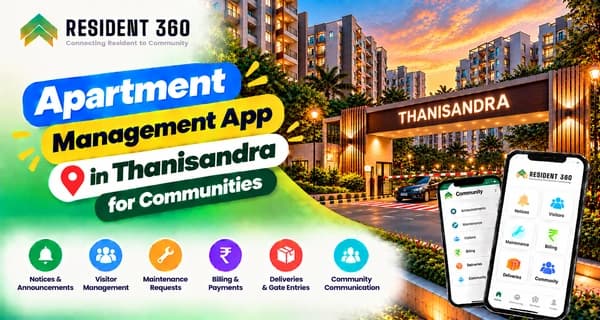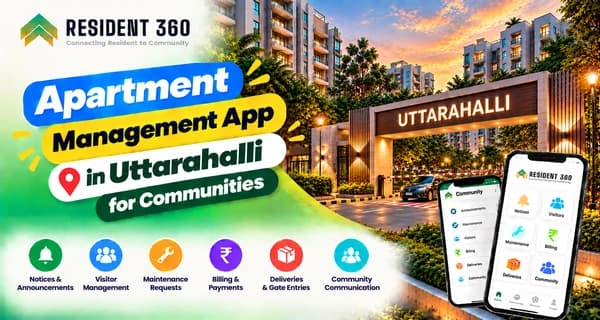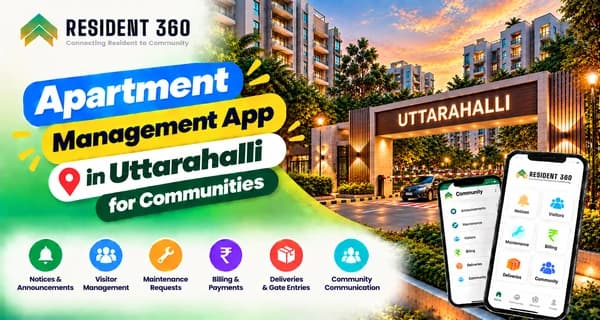
Managing apartment complexes and gated communities around Hyderabad’s bustling Mahatma Gandhi Bus Station (MGBS) area has become increasingly complex. In a zone with constant traffic, deliveries, and visitors, traditional paper-based or WhatsApp-based management falls short. Many societies near MGBS still rely on handwritten registers and spreadsheets to track payments, visitors, and complaints – methods that quickly break down as the community grows. A modern Resident Management System (RMS) is a digital platform that automates these daily tasks, bringing billing, payments, visitor logs, maintenance requests, accounting, and communication into one easy-to-use mobile app.
Download the Resident360app Today
Why MGBS Apartments Need a Resident Management System
The central location of the MGBS area means apartments here deal with a high volume of activity. Dozens of residents receive daily visitors, delivery partners, domestic helpers, and service personnel. Managing all this manually increases security risks and administrative errors.
In practice, communities around MGBS face challenges such as:
- Delayed maintenance payments and tracking: Manual invoicing leads to missed or late fees.
- Communication gaps: Notices often get buried in group chats or lost in handouts.
- Security and visitor control issues: Paper registers are slow and provide no instant alerts.
- Lost or ignored complaints: Repair requests sent via WhatsApp or calls easily fall through the cracks.
- Poor accounting transparency: Manual ledgers and spreadsheets cause errors and opaque finances.
- Excessive workload on committees: Volunteer members spend hours following up on routine tasks.
These problems collectively consume significant time and create confusion for both residents and committee members. In such a busy MGBS environment, an RMS can digitalize workflows – automating billing reminders, providing real-time updates, and enhancing security – to meet the demand for more efficient, transparent society management.
Common Problems Faced by Apartments and Societies in MGBS
Hyderabad’s MGBS corridors mix high-rise apartments and older buildings. Common operational problems in these societies include:
- Manual maintenance collection: Committees track payments in notebooks or Excel, leading to misplaced records and frequent follow-ups.
- Complaints scattered in chats: Issues like plumbing or parking complaints sent via WhatsApp can get buried under other messages.
- Visitor log bottlenecks: Writing guest details by hand slows entry and provides no instant alerts to residents.
- Communication overload: Important notices (water shutoffs, meetings, emergencies) mixed with personal messages can be missed.
- Lack of financial transparency: Without consolidated records, it’s hard to generate clear income/expense reports or prove where society funds were spent.
- Administrative inefficiency: Committees juggling multiple registers and chats spend far more time on routine tasks than necessary.
These issues are amplified in fast-paced areas like MGBS. A centralized RMS can address all of them by moving maintenance billing, visitor management, complaint tracking, and communication onto one digital platform.
How a Resident Management System Solves These Problems
A good Resident Management System consolidates society operations into a single app. Instead of separate papers and chats, every key function – from billing to security – happens online. This integration streamlines workflows and improves accuracy. For example, one platform enables committee members to generate maintenance invoices, collect payments, track visitor entries, share notices, and log issues without manual effort. All resident and transaction records are stored in one place, eliminating duplication and errors.
Below are core modules of an RMS and how they address common challenges:
Maintenance Collection and Payment Tracking
- Automated Billing: The system generates and sends maintenance invoices automatically each month, with reminders for overdue payments. This eliminates manual invoice preparation and reduces missed dues.
- Online Payments: Residents can pay securely through multiple digital modes (bank transfer, UPI, cards) and instantly see confirmation. This convenience encourages timely payments and reduces the need for follow-up calls.
- Digital Receipts & History: Each payment is logged in the app. Owners can view their payment history at any time, and committees have an up-to-date record of who has paid and who still owes, minimizing errors from manual entry.
These features drastically cut the time committees spend chasing dues. For example, Resident360 lets members set up automated reminders and real-time payment tracking, so unpaid accounts are highlighted immediately. A resident always knows exactly what they owe, and the committee never loses sight of pending charges.
Visitor and Security Management
- Digital Visitor Log: Security personnel use the app instead of a paper register. When a guest, delivery person, or vendor arrives, the guard enters the details (name, purpose, who they are visiting) into the system.
- Instant Notifications: The system notifies the host resident on their smartphone about the visitor’s arrival. The resident can approve or deny entry remotely. This removes the need for residents to run downstairs and speeds up gate operations.
- Access History: All visitor entries and exits are timestamped and stored. Committees can audit logs if any security questions arise.
With these digital visitor features, communities dramatically improve gate safety. As one resident app description notes, committees can manage guests without “paper registers,” so “security teams maintain organized records,” and residents get instant alerts. This makes entry faster and gives everyone greater visibility over who enters the premises.
Complaint Management
- Centralized Ticketing: Instead of shouting in group chats, residents lodge maintenance or service requests through the app. Each complaint becomes a ticket in the system.
- Task Assignment: Committees or facility managers assign tickets to staff (electrician, plumber, gardener, etc.) and update progress. The app tracks whether tasks are pending or completed.
- Resident Updates: Residents who filed the complaint receive status notifications (e.g., “plumber dispatched,” “issue resolved”). This closes the communication loop.
This structured approach means complaints don’t get lost. Rather than digging through hundreds of WhatsApp messages, managers view all open issues in one list. According to Resident360’s documentation, the app provides “a dedicated complaint management system where residents can raise tickets, monitor progress, and receive updates until the issue is resolved”. As a result, both residents and committees save time: issues are resolved faster, and everyone sees what’s being done.
Resident Communication
- Notice Board & Announcements: Committees post official messages (meetings, events, emergencies) in the app. All residents receive push alerts so no one misses important information.
- Emergency Alerts: For urgent situations (like water cuts or security alerts), administrators can broadcast a notice to everyone instantly.
- Group Coordination: Some apps also offer chat modules (e.g., owner–tenant chat) or discussion forums for informal communication.
Having a single communication channel solves the “message buried in chat” problem. Residents360, for instance, includes a Notice Board to share announcements or reminders instantly. Rather than checking multiple WhatsApp groups, people know to look in the app for official updates. In practice, communities see fewer missed notices and faster dissemination of critical info.
Staff and Facility Management
- Staff Attendance: The app can track attendance of security, housekeeping, and maintenance staff. Guards and cleaners can check in via the system, giving admins a view of duty rosters and absences.
- Service Scheduling: Committees can schedule regular maintenance (e.g., generator servicing, lift servicing) and vendors (pest control, gardeners) through the platform.
- Facility Booking: In larger societies, residents often book shared amenities (gyms, halls, parking slots) online to avoid conflicts. (Resident360’s feature list, for example, includes “book facilities” under its core features.)
These tools help professionalize operations. Digital systems “help professional management teams maintain better coordination between residents, security personnel, housekeeping teams, and vendors”. For example, if a plumber needs to visit, the app logs it so guards expect the plumber and the resident knows the time. This avoids missed appointments and miscommunications that happen when details are only on ad hoc notes or calls.
Records and Transparency
- Financial Reports: The RMS can automatically generate income/expense reports, maintenance summaries, and audit-ready financial statements. Committees no longer have to compile ledgers manually.
- Audit Trails: Every payment, complaint, or visitor entry is stored digitally. If there is a dispute or question later, admins can quickly retrieve the history.
- Accessibility: Authorized users (committee members and sometimes residents) can view summarized records at any time. This openness reduces mistrust.
Because all data is digital, societies gain unprecedented transparency. As Resident360’s documentation notes, automated reports (maintenance summaries, payment histories) improve visibility into finances.
Committees save time on paperwork, and residents can be confident there are no hidden entries. In effect, shifting to digital records eliminates piles of register books – “digital records reduce the need for physical registers and multiple spreadsheets” – making audits and reviews far easier.
Resident Management System for Small Apartments in MGBS
Even small apartment buildings in MGBS stand to gain from a resident management app. Many societies with only 10–30 families assume they can manage manually, but the realities are similar to larger communities.
In a 20-unit apartment, for example, a 3-person committee might be responsible for:
- Collecting monthly maintenance charges from each resident
- Managing the society’s bank account and expenses
- Maintaining a list of owners, tenants, and their contact information
- Following up on repair requests and vendor visits
- Circulating announcements and reminders
With traditional methods, these volunteers spend hours each month chasing dues and answering queries. In one case study, a 25-family society found its committee lost nearly a full workday per month on manual billing and collections. By switching to a digital app, the same tasks become faster. The app automates invoicing, logs payments, and lets residents see their dues in real time. It also consolidates resident details and communications. In short, even modest MGBS societies can simplify management and avoid delays: “an apartment management app can centralize these activities and reduce unnecessary manual work”, freeing up committees to focus on community improvements.
Resident Management System for Gated Communities
Large gated communities in the greater MGBS area have more complex needs. A sprawling society with hundreds of flats, multiple security gates, parking zones and amenities faces challenges like:
- Managing hundreds of residents: Keeping names, family details, and occupancy status up to date.
- Multiple entry points: Coordinating gate approvals across several checkpoints.
- Bulk communications: Informing all buildings about water schedules or events.
- Extensive facilities: Booking halls, gyms, or playgrounds for dozens of people.
- High volume of complaints: Prioritizing dozens of maintenance requests every week.
A robust RMS scales to handle this complexity. It maintains a centralized database of all owners, tenants, and family members. Security staff at each gate use the same system for visitor entries, ensuring consistency. Committees use the app’s accounting module to process large maintenance rolls and generate detailed reports. In practice, software “helps gated communities manage multiple activities such as maintenance, complaints, resident communication, visitor management, and administrative tasks in a more organized and transparent way”. For example, a multi-gate society could deploy Resident360 so that staff at any gate instantly see if a visitor is expected, and the finance team can pull a real-time dashboard of all pending dues. This digital coordination significantly reduces the bottlenecks and errors that manual processes introduce in a big community.
How Resident360app Simplifies Apartment Management
Resident360app is one leading RMS that unifies all community management tasks into one platform. It is offered as a free (no subscription) society management app, especially popular with small and medium apartments.
Key ways it simplifies management include:
- All-in-One Dashboard: Resident360 provides a communal hub where members, staff, and admins collaborate. Every community gets its own digital space, with separate sections for RWAs, apartments, PGs, and villas. Admins verify new members and define who can access what.
- Maintenance & Billing: Residents can submit maintenance requests (like plumbing or electrical issues) and track their status in real time. Committees generate maintenance bills automatically each month and send digital payment reminders. Residents pay online through multiple options and get instant receipts, so accounts balance seamlessly.
- Visitor Management: Security teams record guests and delivery personnel in the app, creating a digital visitor log with gate approvals. Residents receive visitor alerts on their phones, allowing them to approve or deny entry remotely. This replaces slow paper logs and gives everyone a clear entry history.
- Communication & Events: Committees broadcast notices (meetings, outages, events) to everyone through the app. There is also an owner–tenant chat module for everyday coordination. The app’s calendar lets societies create community events and photo galleries so that members can RSVP and share pictures. Emergency SOS alerts can be sent to all residents with one tap.
- Resident Directory & Reports: The app maintains a secure directory of all owners, tenants, and emergency contacts. It also generates reports and analytics – for example, detailed income/expense statements and payment histories. These features give committees insight into finances and maintenance trends with a few clicks.
- Staff & Security Tools: Resident360 tracks staff attendance and shifts for guards, housekeeping, etc. It includes dashboards for security – for example, showing who signed in or tracking delivery status – and supports facility booking. This helps supervisors coordinate personnel and shared amenities smoothly.
- Community Services: Beyond core management, Resident360 offers built-in classifieds (sell/buy ads) and a services marketplace (tutors, plumbers, etc.). A unique “street vendor alert” even notifies residents when a fruit/vegetable vendor is nearby. These extra features engage the community in daily living.
- Mobile & Support: The entire system is mobile-friendly (Android/iOS apps), meaning committees and residents can handle tasks on-the-go. Resident360 emphasizes ease of use and provides customer support. It is already used by hundreds of communities and thousands of users across Hyderabad (450+ societies, 4450+ flats, covering 637+ pin codes), demonstrating its scalability.
In summary, Resident360app packages maintenance, finance, security, and community features into one user-friendly platform. By moving tasks like online payments, visitor checks, complaint tickets, notices, and staff management into the app, it saves committees time and makes life easier for residents.
Choosing the Right Society Management Software
When selecting a society management system, committees should evaluate their specific needs. Key factors include:
- Comprehensive and Updated Features: Ensure the software covers all core modules (billing, accounting, visitor logs, complaint tracking, communications) and is regularly updated for security. Ask about customer support services.
- User-Friendly Interface: The app should be simple to navigate. Complex software will discourage users. Both residents and committee members must be able to check bills, post notices, and approve visitors without a learning curve.
- Cloud-Based Access: Choose a system that operates online so residents can access information anywhere, anytime. Real-time updates prevent discrepancies.
- Automated Billing & Accounting: Look for automated maintenance invoicing, digital payments (with email/SMS confirmations), and easy expense tracking. The software should handle different payment modes and generate audit-ready financial reports.
- Communication Tools: The platform should allow mass notifications and circulars. Efficient notice/circular modules and push notifications keep everyone informed.
- Visitor & Security Management: A good system includes digital visitor entry logs and gate approval processes to boost security.
- Scalability: It should serve your society’s size. Small apartments and large gated communities have different workflows; the chosen app must scale and offer relevant features for both.
- Data Portability: Check if you can export data (resident info, finances) in case you switch systems later.
- Mobile Accessibility: An app with well-designed Android/iOS versions ensures higher adoption across all resident age groups.
- Training and Support: Opt for a provider that offers user training and responsive support, so your committee can fully utilize the tool.
In short, the best system isn’t necessarily the one with the most features, but the one that fits your community’s needs and is easy for all stakeholders to use. Committees should also compare pricing and free trial options. For example, some apps (like Resident360) offer a lifetime free version for small societies, which may be attractive for cost-conscious communities.
Resident Management System Across Hyderabad
Digital society management is becoming mainstream across Hyderabad. Apartment communities from Central Hyderabad to the suburbs are adopting RMS solutions to improve efficiency. Whether near MGBS or in surrounding neighborhoods, societies see the value of streamlined operations. For example, residents in Mettuguda, Mehdipatnam, and Manikonda have their own dedicated Resident360 pages describing local needs and solutions. In Mettuguda, a busy residential area, committees often juggle small maintenance teams and visitor security; they are using apps to reduce manual work. In Mehdipatnam, a commercial-residential hub, associations rely on software to handle billing, guest tracking, and announcements. Manikonda’s rapidly growing gated communities depend on digital platforms to coordinate maintenance, staff, and security effectively. In each case, a single integrated system helps deliver a safer, more transparent living experience. As one blog notes, “apartment communities across Hyderabad are rapidly moving toward digital management solutions,” choosing apps that “simplify maintenance collection, visitor management, accounting, and resident communication”.
Conclusion:
In the MGBS area and throughout Hyderabad, resident management systems are transforming apartment life. By automating maintenance billing, streamlining visitor approvals, structuring complaint resolution, and centralizing communication, these platforms eliminate the delays and confusion of paper-based processes. Committees and residents alike benefit from greater transparency and convenience. For example, Resident360app provides an all-in-one, free app that handles payments, notices, security checks, and more. As urban communities grow, adopting a digital RMS is increasingly the key to safer, more efficient, and happier societies.
Explore & Download the Resident360 app Today for smarter apartment and society management.