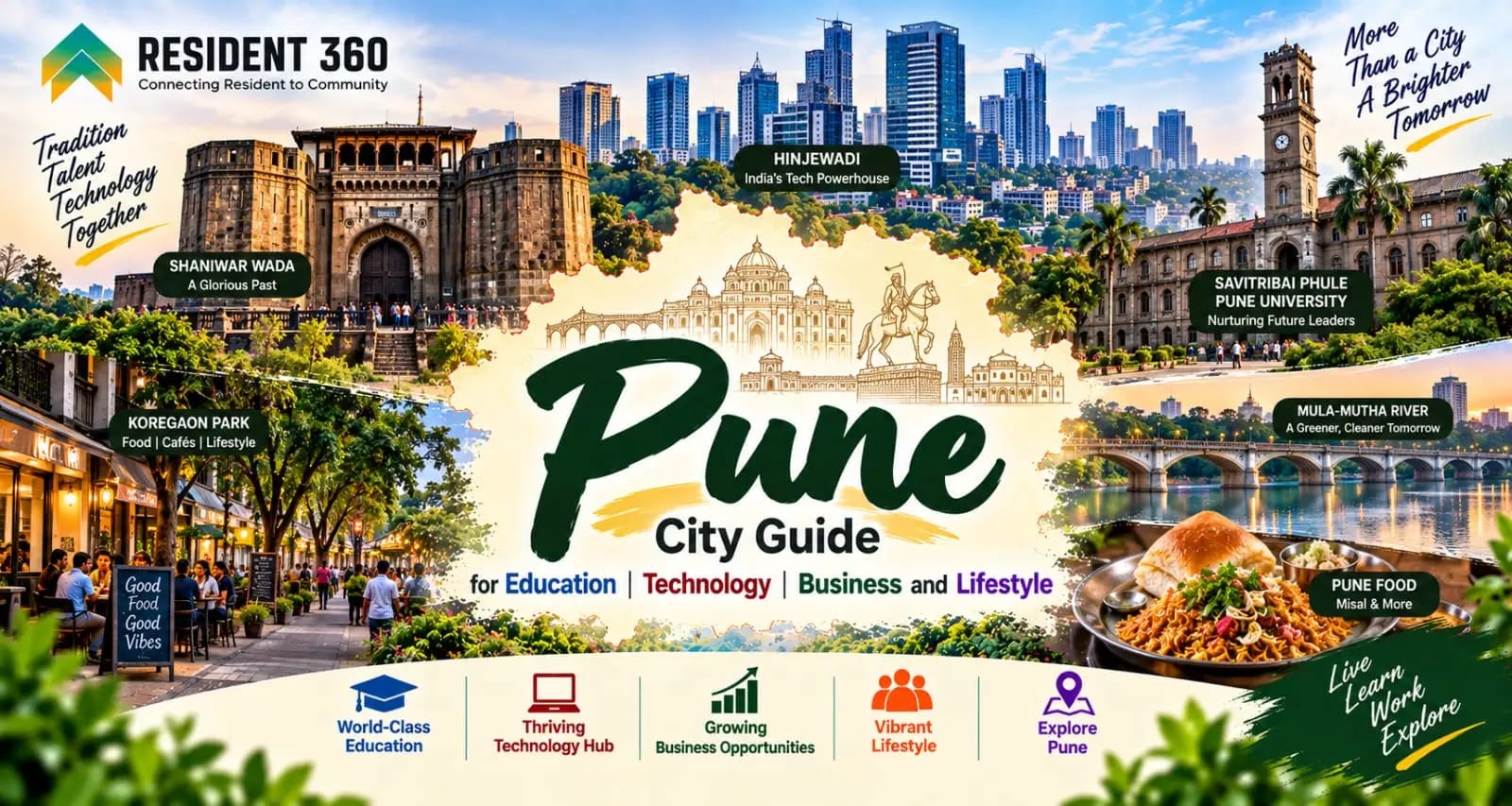
A Pune city guide is useful for students, professionals, entrepreneurs, families, and visitors who want to understand more than the city’s reputation as an education hub. Pune has developed into a diverse urban center where universities, technology companies, manufacturing, creative communities, and established local neighborhoods exist side by side. Its appeal comes from the balance between career opportunities and a relatively relaxed lifestyle, although traffic, rising costs, and rapid development are part of the experience. Whether you are considering studying, working, starting a business, or settling in Pune, understanding its major sectors and local character can help you make better decisions. The sections below explore the forces shaping Pune and the practical details that define everyday life in the city.
Pune is not a single, uniform market or neighborhood. Its opportunities and lifestyle vary considerably by location, purpose, budget, and preferred pace of living, so a closer look is worthwhile.
Why Pune Continues to Attract People and Investment
Pune’s growth is supported by several connected strengths rather than one dominant industry. Education brings students and academic talent, technology creates professional opportunities, manufacturing supports industrial activity, and a broad services sector serves both local and national markets. This combination gives the city a diverse economic base.
The city also benefits from its location in western India and its connection to the wider Mumbai–Pune region. Businesses can access a large talent pool, established industrial areas, professional services, and a growing consumer market. For individuals, this creates multiple pathways: a student may move into technology, a manufacturing professional may enter consulting, and a small business may find customers across different sectors.
Pune’s growth has changed its urban character. Established areas retain older markets, educational institutions, residential communities, and cultural traditions, while newer corridors feature offices, apartment developments, retail centers, and modern workspaces. This mixture is one reason people often view Pune as both a historic city and a modern employment destination.
At the same time, growth brings pressure. Road congestion, construction, housing demand, and uneven infrastructure can affect the daily experience. The most suitable part of Pune depends on whether convenience, affordability, access to work, education, or a quieter environment is the main priority.
Education in Pune: A Major Foundation of the City
Education is one of Pune’s defining strengths. The city attracts learners from Maharashtra and other parts of India because of its wide range of colleges, universities, professional institutes, coaching centers, and skill-development programs. This creates a youthful atmosphere and supports a steady flow of academic and early-career talent.
What students can study
Pune offers opportunities across engineering, management, commerce, science, medicine, law, design, media, computer applications, and vocational fields. Students should compare institutions based on curriculum, faculty, accreditation, campus facilities, industry exposure, location, and total living costs rather than relying only on reputation.
The city’s education ecosystem also extends beyond formal degrees. Short-term courses in programming, data analysis, digital marketing, design, finance, communication, and project management can help learners build practical skills. These options are particularly useful for graduates who want to shift fields or improve their employability.
How education shapes the local economy
A large student population supports housing, food services, transport, bookstores, coaching, technology training, and recreation. More importantly, universities and institutes help create networks between learners, employers, researchers, and entrepreneurs. Workshops, student projects, internships, and industry events can expose learners to career paths that are not visible through classroom study alone.
Students planning to move to Pune should assess commute time, accommodation, daily expenses, safety, study facilities, and access to essential services. A lower-cost area may appear attractive, but a long daily journey can increase both expense and fatigue.
Pune’s Technology and Innovation Ecosystem
Technology is a major part of Pune’s modern identity. The city has developed a broad information technology and business services sector, along with software development, engineering services, cybersecurity, analytics, cloud operations, product support, and digital operations. This variety makes Pune relevant to both experienced professionals and people beginning their careers.
Technology corridors and work patterns
Major employment clusters are spread across different parts of the metropolitan area. Some corridors are known for large office campuses and technology parks, while others combine business offices with residential communities, retail, and shared workspaces. Because employment is distributed, choosing a home near a workplace can make a noticeable difference to daily life.
Remote and hybrid work have also changed how professionals use the city. A reliable internet connection, quiet work area, access to cafés or coworking spaces, and manageable local travel may matter as much as proximity to a traditional office. These factors have increased interest in neighborhoods that combine residential comfort with professional amenities.
Skills that support technology careers
A technology career in Pune is not limited to software coding. Employers may seek skills in:
- Software development and testing
- Data analysis and artificial intelligence
- Cloud platforms and cybersecurity
- User experience and product design
- Technical support and project coordination
- Digital marketing and business operations
The strongest candidates usually combine technical ability with communication, problem-solving, teamwork, and an understanding of business goals. Continuous learning is valuable because tools and job requirements change quickly.
Business, Industry and Entrepreneurship Opportunities
Pune’s business environment includes large companies, manufacturing units, professional firms, retail businesses, education ventures, technology startups, and independent service providers. The city’s mix of industries creates demand for suppliers, consultants, logistics services, training providers, software firms, marketing agencies, and specialized professionals.
Manufacturing and engineering
Pune has a longstanding connection with automobile, engineering, industrial, and manufacturing activity. This supports a network of component suppliers, maintenance businesses, design specialists, quality professionals, and logistics providers. The sector also creates opportunities for firms working in automation, industrial software, sustainability, and process improvement.
Startups and small businesses
Entrepreneurs can find a broad customer base among students, households, professionals, and growing companies. Potential areas include education services, food and hospitality, health and wellness, local delivery, software products, creative services, financial support, and specialized consulting.
Before launching a business, founders should study the exact customer segment, local competition, operating costs, staffing needs, and regulatory obligations. Pune’s size can support niche businesses, but demand is not evenly distributed across the city. A service designed for students may perform well near educational clusters, while a business-to-business offering may need to be closer to office or industrial areas.
Networking also matters. Professional groups, incubators, coworking communities, industry associations, and educational institutions can help entrepreneurs find collaborators, early customers, mentors, and employees. A strong local network often provides practical insight that market research alone cannot reveal.
Career Prospects and Professional Growth
Pune offers career options across technology, education, manufacturing, finance, healthcare, consulting, retail, media, logistics, hospitality, and business services. This diversity can help professionals change industries without leaving the city, especially when they develop transferable skills.
For students and fresh graduates
Internships, apprenticeships, project work, campus activities, and entry-level roles can help graduates understand workplace expectations. Building a portfolio is useful in fields such as software, design, writing, marketing, analytics, and engineering. A portfolio gives employers evidence of practical ability rather than relying only on academic results.
For experienced professionals
Professionals can use Pune’s varied economy to pursue specialist roles, management positions, independent consulting, or a transition into new sectors. Technology workers may move into product management or cybersecurity, while manufacturing professionals may explore supply-chain strategy, automation, or operational consulting.
Building a sustainable career
Career decisions should consider more than salary. Commute, working hours, learning opportunities, team culture, employment stability, and future mobility all affect long-term satisfaction. Pune’s expanding business landscape can reward people who combine domain expertise with digital fluency and strong communication.
Professional growth also requires realistic planning. Comparing job offers, checking the actual work location, understanding hybrid-work expectations, and estimating housing and travel costs can prevent an attractive opportunity from becoming financially difficult.
Key Areas and Neighborhood Character
Pune’s neighborhoods differ in age, cost, accessibility, development pattern, and atmosphere. There is no universally best area; the right choice depends on work, education, family needs, budget, and preferred lifestyle.
Established central areas
Central neighborhoods generally offer access to older markets, cultural venues, educational institutions, public services, and established residential communities. They may appeal to people who value local character and connectivity, although parking, traffic, and older buildings can be concerns.
Eastern and northeastern growth corridors
Areas toward the eastern and northeastern side of the city have seen extensive office, residential, and commercial development. They can be convenient for professionals working in nearby business clusters, but travel times may vary significantly during peak hours.
Western and northwestern neighborhoods
The western side includes a mix of established housing, education centers, technology offices, retail, and newer residential projects. It attracts students, professionals, and families seeking access to employment and daily services in the same broad corridor.
Outlying and developing areas
Peripheral locations may offer newer buildings, larger homes, or comparatively different housing choices. However, residents should examine road access, public transport, water supply, nearby healthcare, schools, shopping, and future construction before making a decision.
When comparing areas, visit at different times of day. A neighborhood that feels convenient on a quiet afternoon may have a very different commute during office or school hours.
Lifestyle, Culture and Everyday Living
Pune’s lifestyle combines academic energy, professional ambition, regional traditions, and a growing modern social scene. People can find old markets, local food, cafés, restaurants, bookstores, music spaces, fitness centers, malls, parks, and community activities across different parts of the city.
The city’s cultural identity is visible in its language, food, festivals, performing arts, historical spaces, and neighborhood institutions. At the same time, students and professionals from many regions contribute new habits, cuisines, events, and business ideas. This creates a social environment that can feel both familiar and cosmopolitan.
Food and recreation
Daily food choices range from traditional Maharashtrian dishes and neighborhood eateries to regional Indian cuisine, international restaurants, cafés, bakeries, and delivery-focused businesses. Recreation often revolves around cultural programs, fitness, shopping, short local outings, and social gatherings.
Balancing convenience and cost
Lifestyle spending can vary widely. Housing, rent, transportation, dining, entertainment, and domestic services all depend on location and personal preferences. A practical monthly budget should separate fixed expenses from flexible spending and account for deposits, moving costs, utilities, and occasional travel.
For families, access to schools, healthcare, groceries, parks, and reliable transport may be more important than proximity to nightlife. For students and young professionals, affordability, social access, and commute time may carry greater weight.
Getting Around and Planning Life in Pune
Mobility is one of the most important practical considerations in Pune. The city’s expanding boundaries mean that a short distance on a map can still involve a long journey during busy periods. Before choosing a home, college, or office, estimate the route at the times you will actually travel.
Public transport, private vehicles, taxis, two-wheelers, walking, and app-based mobility each serve different needs. The most practical option depends on distance, road conditions, weather, parking, schedule, and comfort. People new to the city may benefit from testing a daily route before signing a long-term rental agreement.
A practical checklist for newcomers
- Identify the usual route between home, work, or college.
- Check access to groceries, pharmacies, healthcare, and banking.
- Compare rent with the full cost of commuting.
- Ask about water, power backup, maintenance, and parking.
- Visit the neighborhood during both daytime and evening.
- Review lease terms and move-in costs carefully.
- Keep time available for exploring local services after arrival.
Planning should also include seasonal conditions, school schedules, office timings, and construction activity. A flexible routine can make adjustment easier, particularly during the first few months.
Conclusion
Pune’s appeal comes from the way education, technology, manufacturing, business services, culture, and everyday lifestyle interact across the city. This Pune city guide shows why the city attracts students, professionals, entrepreneurs, and families while also highlighting the practical decisions that shape their experience. Choosing the right neighborhood, evaluating commute and living costs, building relevant skills, and understanding local opportunities can make a move or career decision more effective. Pune continues to grow, but its greatest strength remains its ability to combine established communities with new possibilities.