
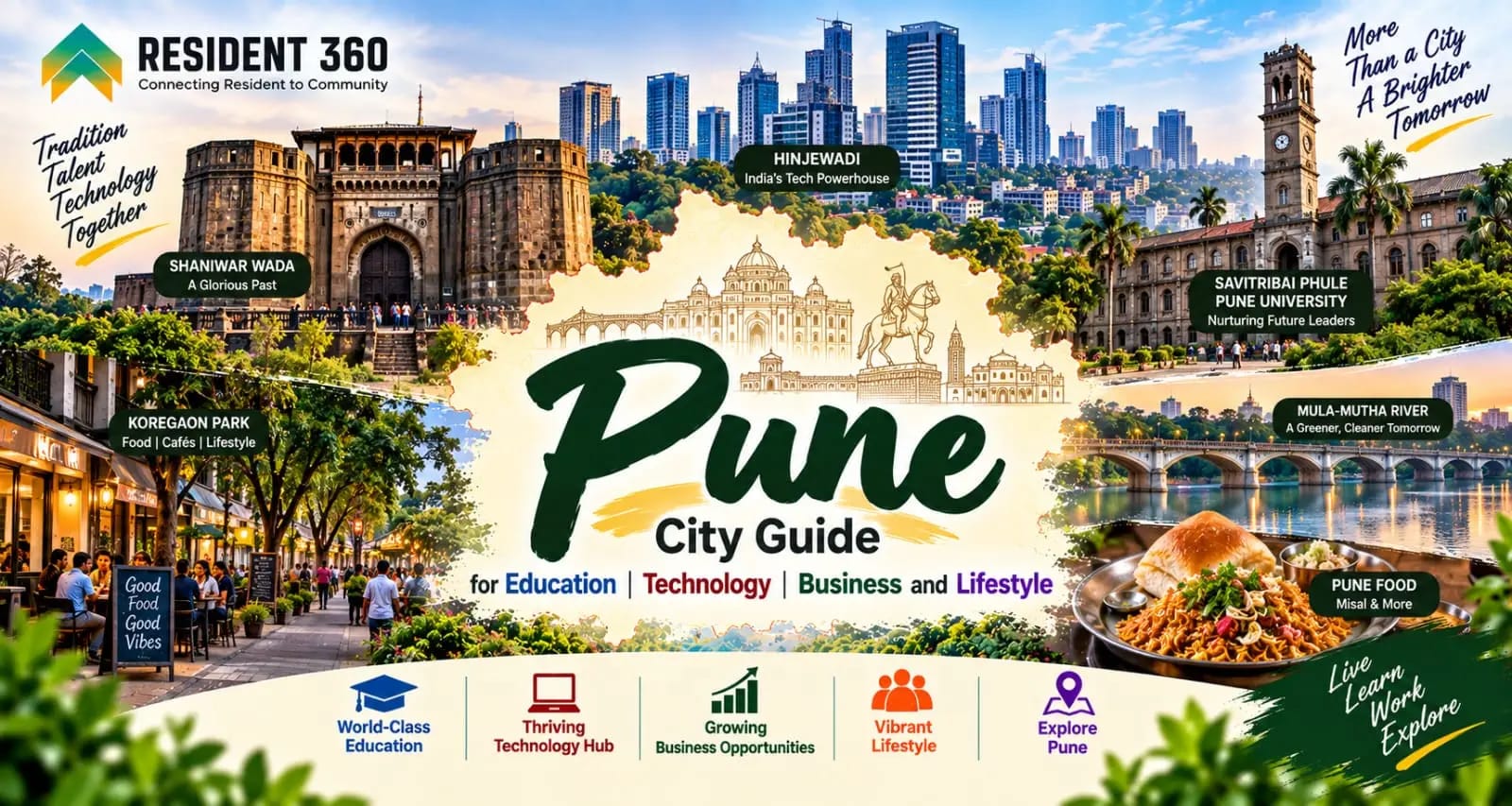
Pune is one of India’s most dynamic cities, bringing together education, technology, entrepreneurship, business, culture, and modern urban living. Often known as an educational hub, the city has grown far beyond its traditional identity and has become an important destination for students, IT professionals, startups, entrepreneurs, families, and businesses.
Located in Maharashtra, Pune offers a unique combination of academic opportunities, technology-driven employment, established industries, startup ecosystems, and a lifestyle that balances city convenience with a relatively relaxed atmosphere. Whether you are planning to study, start a career, build a business, or relocate with your family, Pune has something to offer.
Pune as an Education Hub
Pune has earned its reputation as one of India’s leading education destinations. Students from different parts of the country come to the city for undergraduate, postgraduate, professional, and technical education.
The city has several well-known universities, colleges, research institutions, and specialized educational centers. Engineering, management, medicine, law, commerce, arts, design, computer science, and other professional programs attract thousands of students every year.
One of Pune’s biggest advantages for students is the concentration of educational institutions. Students can find opportunities across different academic fields without needing to move to a much larger metropolitan city.
The city also has a strong ecosystem for competitive examinations, professional certifications, skill-development programs, coding courses, and vocational education. This makes Pune particularly attractive for students who want to combine a formal degree with practical skills.
For students interested in technology, areas such as software development, artificial intelligence, data science, cybersecurity, cloud computing, and electronics provide opportunities to build industry-relevant skills.
Technology and IT Opportunities in Pune
Pune is one of India's major technology and IT centers. The city has developed a strong presence in software development, information technology services, engineering technology, automotive technology, fintech, cloud computing, artificial intelligence, and enterprise solutions.
Technology professionals can find opportunities across established companies, product organizations, startups, consulting firms, and specialized technology businesses.
Major IT and business districts such as Hinjawadi, Kharadi, Viman Nagar, Baner, and nearby commercial areas have become important employment centers.
Hinjawadi, in particular, is widely recognized for its large technology ecosystem. The Rajiv Gandhi Infotech Park has attracted numerous technology companies and created a large employment base.
Kharadi has also developed rapidly as a major commercial and technology destination. Its proximity to the airport and growing office infrastructure has made it an attractive location for professionals and businesses.
For someone beginning a technology career, Pune can be particularly useful because the city provides access to jobs as well as communities, training centers, professional events, and networking opportunities.
Startup and Business Ecosystem
Pune is not only a technology employment destination but also an important city for entrepreneurship.
The presence of universities, engineering colleges, technology professionals, investors, incubators, and established companies creates a favorable environment for startups.
Entrepreneurs working in areas such as SaaS, education technology, fintech, automotive technology, healthcare technology, artificial intelligence, e-commerce, and professional services can find opportunities to build and expand their businesses.
The city's relatively diverse economy is another advantage. Pune has strong connections with the automotive, manufacturing, IT, education, healthcare, and services sectors.
This diversity can help businesses find customers, employees, partners, and suppliers across different industries.
For small businesses and startups, Pune also offers a wide range of coworking spaces, business communities, networking events, and professional services.
Pune's Automotive and Manufacturing Industry
One of Pune's defining economic strengths is its automotive ecosystem.
The city and its surrounding industrial areas have a long history of automobile manufacturing and engineering. Several major automotive companies, component manufacturers, engineering firms, and suppliers have established operations in and around Pune.
This has created opportunities for mechanical engineers, electrical engineers, electronics professionals, software developers, data specialists, manufacturing professionals, supply-chain experts, and business professionals.
The growing connection between automobiles and technology has also created new career areas. Electric vehicles, connected vehicles, automotive software, embedded systems, automation, robotics, and battery technologies are increasingly important parts of the industry.
Because of this combination of traditional engineering and modern technology, Pune can be an attractive destination for professionals from both software and core engineering backgrounds.
Business Areas and Commercial Growth
Pune's business environment is spread across several important areas rather than being concentrated in a single central business district.
Hinjawadi is strongly associated with IT and technology companies.
Kharadi has become a major business and office destination, particularly for technology and corporate organizations.
Viman Nagar benefits from its proximity to Pune International Airport and has a mix of offices, hotels, restaurants, retail spaces, and residential developments.
Baner and Balewadi have developed into popular commercial and residential locations, especially among young professionals.
Magarpatta City is another important integrated development combining offices, residential communities, retail, and recreational facilities.
This distributed business structure gives residents more choices when selecting where to live based on their workplace.
Lifestyle in Pune
Pune offers a lifestyle that combines urban facilities with a comparatively calmer environment than some of India's largest metropolitan cities.
The city has shopping malls, restaurants, cafes, entertainment centers, gyms, cultural venues, parks, and recreational spaces.
Young professionals often choose neighborhoods such as Baner, Balewadi, Viman Nagar, Kharadi, Wakad, and Hinjawadi because of their access to workplaces and lifestyle facilities.
Pune also has a strong cafe and food culture. From traditional Maharashtrian cuisine to North Indian, South Indian, Asian, continental, and international food, residents have plenty of choices.
The city is also known for its cultural identity. Marathi traditions, music, theatre, festivals, historical landmarks, and local food continue to play an important role in everyday life.
Housing and Residential Areas
Choosing the right residential area in Pune depends heavily on your workplace, budget, lifestyle, and transportation requirements.
Professionals working in Hinjawadi often consider Hinjawadi, Wakad, Tathawade, and nearby areas.
People working around Kharadi may prefer Kharadi, Viman Nagar, Wadgaon Sheri, or nearby neighborhoods.
Baner and Balewadi are popular among professionals looking for a combination of residential comfort, restaurants, cafes, fitness centers, and access to business districts.
For students, areas close to educational institutions can be more practical because reducing daily travel can save both time and money.
Before renting or purchasing a home, it is important to consider not only the rent or property price but also commuting time, public transport, traffic conditions, nearby supermarkets, healthcare facilities, schools, and other everyday requirements.
Transportation and Connectivity
Pune has several transportation options, including buses, taxis, auto-rickshaws, ride-hailing services, private vehicles, and the Pune Metro.
The city is also connected to important destinations across Maharashtra and other parts of India through road and rail networks.
Pune International Airport provides air connectivity to several major destinations, while Pune Railway Station is an important railway connection for the city.
However, traffic should be considered when choosing where to live. Travel times can vary significantly depending on the route, time of day, and location of employment.
For professionals who need to travel to an office every day, choosing a home close to the workplace can significantly improve quality of life.
Food and Local Culture
Food is an important part of Pune's lifestyle.
Traditional Maharashtrian dishes such as misal pav, poha, bhakri, and other regional specialties are widely available throughout the city.
At the same time, Pune's large student and professional population has created demand for diverse cuisines.
You can find everything from affordable student-friendly restaurants and street food to cafes, premium restaurants, cloud kitchens, bakeries, and international cuisines.
The city also has a strong cafe culture, making it popular among students, freelancers, remote workers, and young professionals looking for informal spaces to meet or work.
Weekend Experiences Around Pune
Pune's location makes it suitable for weekend travel.
The Western Ghats are relatively close, providing opportunities for trekking, sightseeing, nature trips, and short road journeys.
Popular destinations around Pune include Lonavala, Khandala, Mahabaleshwar, Panchgani, Mulshi, and several forts and natural attractions.
Historical sites such as Sinhagad Fort also provide opportunities for short trips without requiring a long vacation.
For people who enjoy road trips, Pune's surrounding areas offer numerous routes through hills, forests, lakes, forts, and villages.
This accessibility to weekend destinations is one of the lifestyle advantages of living in Pune.
Healthcare and Everyday Convenience
Pune has a growing healthcare ecosystem with hospitals, clinics, diagnostic centers, pharmacies, wellness centers, and specialized medical facilities.
The city also provides access to supermarkets, shopping centers, banks, educational services, fitness centers, salons, delivery services, and other everyday conveniences.
For families, the availability of schools, hospitals, residential communities, and recreational facilities can make Pune a practical long-term location.
Who Should Consider Moving to Pune?
Pune can be a strong choice for several groups.
Students: The city's education ecosystem provides opportunities across academic and professional fields.
IT professionals: Pune offers a large technology and corporate employment market.
Engineers: The automotive, manufacturing, electronics, and technology sectors create diverse career opportunities.
Entrepreneurs: The combination of talent, technology companies, educational institutions, and business infrastructure supports startup development.
Families: Residential communities, schools, healthcare facilities, shopping, and recreational options make many parts of Pune suitable for family life.
Freelancers and remote workers: The city's cafe culture, coworking spaces, technology community, and relatively diverse neighborhoods provide flexible working options.
Things to Consider Before Moving to Pune
Although Pune has many advantages, it is important to understand its challenges before relocating.
Traffic can be a major issue during peak hours, particularly around busy IT and commercial corridors. Your daily commute should therefore be an important factor when selecting accommodation.
Housing costs can vary considerably between neighborhoods. Locations closer to major IT and business hubs may be more expensive.
The city is also experiencing rapid development, so some areas can change significantly within a few years.
Before moving, research your workplace location, expected monthly expenses, housing options, transportation, healthcare access, and nearby facilities.
Pune: A City for the Next Generation
Pune's biggest strength is its combination of education, technology, business, engineering, and lifestyle.
A student can begin a degree here, develop professional skills, find employment in the technology or engineering sector, and potentially build a business without leaving the city's broader ecosystem.
At the same time, professionals can enjoy a city with strong cultural roots, modern infrastructure, diverse food, recreational opportunities, and access to the Western Ghats.
As technology, startups, advanced manufacturing, artificial intelligence, electric vehicles, and digital businesses continue to grow, Pune is positioned to remain an important destination for India's next generation of students, professionals, entrepreneurs, and businesses.
Conclusion
Pune is more than an educational city or an IT hub. It is a diverse urban ecosystem where education, technology, business, engineering, entrepreneurship, culture, and lifestyle come together.
Whether you are a student choosing your next academic destination, a professional planning a career move, an entrepreneur looking for a business environment, or a family searching for a new city, Pune offers a wide range of opportunities.
The best way to experience Pune is to choose your location based on your daily needs, explore its different neighborhoods, understand the local commute, and gradually discover the city's education, technology, business, food, culture, and lifestyle ecosystem.