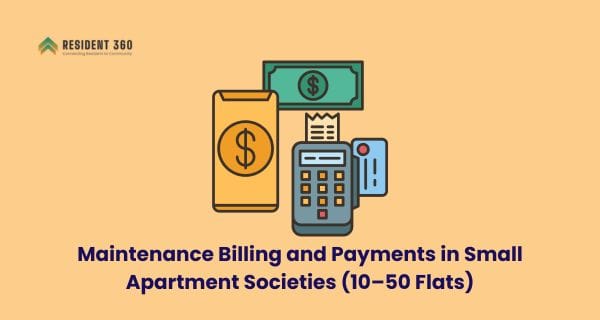
Maintenance billing is at the core of running any apartment society smoothly. From paying for daily operations to handling vendor services, the timely collection of maintenance charges is essential. In small apartment societies with 10–50 flats, billing and payments are often managed manually using spreadsheets, notebooks, or messaging apps. While this may work initially, it can quickly become inefficient as the community grows.
Common Billing Issues
Managing maintenance billing manually often leads to several challenges:
- Missed or delayed payments due to a lack of reminders
- Manual tracking errors in calculations or records
- No centralized system to monitor dues and collections
- Lack of transparency in payment status
These issues can create confusion among residents and put pressure on association members managing finances.
Common Problems in Small Apartment Management Societies
Why Efficient Billing Matters
Having a proper billing and payment system is critical for:
- Smooth day-to-day operations
- Timely vendor payments (security, maintenance, cleaning, etc.)
- The financial stability of the society
- Better trust and transparency among residents
When payments are streamlined, the entire community benefits from better planning and fewer conflicts.
How to Collect Maintenance Efficiently in Small Apartments
Better Way to Manage Billing
Instead of relying on manual processes, small apartment societies can simplify billing with digital tools like Resident 360.
With the right system, societies can:
- Track maintenance dues in one place
- Send automated payment reminders.
- Maintain clear and transparent records.
- Reduce dependency on manual follow-ups.
digital vs manual management in apartment societies
Resident 360 is:
- Lifetime free
- Designed specifically for small apartment communities
- Simple to use for both residents and association members
- Free from ads and broker interference
Conclusion:
Efficient maintenance, billing, and payment management are essential for the smooth functioning of any apartment society.
By moving away from manual tracking and adopting a more structured system, small apartment communities can reduce delays, improve transparency, and ensure financial stability.