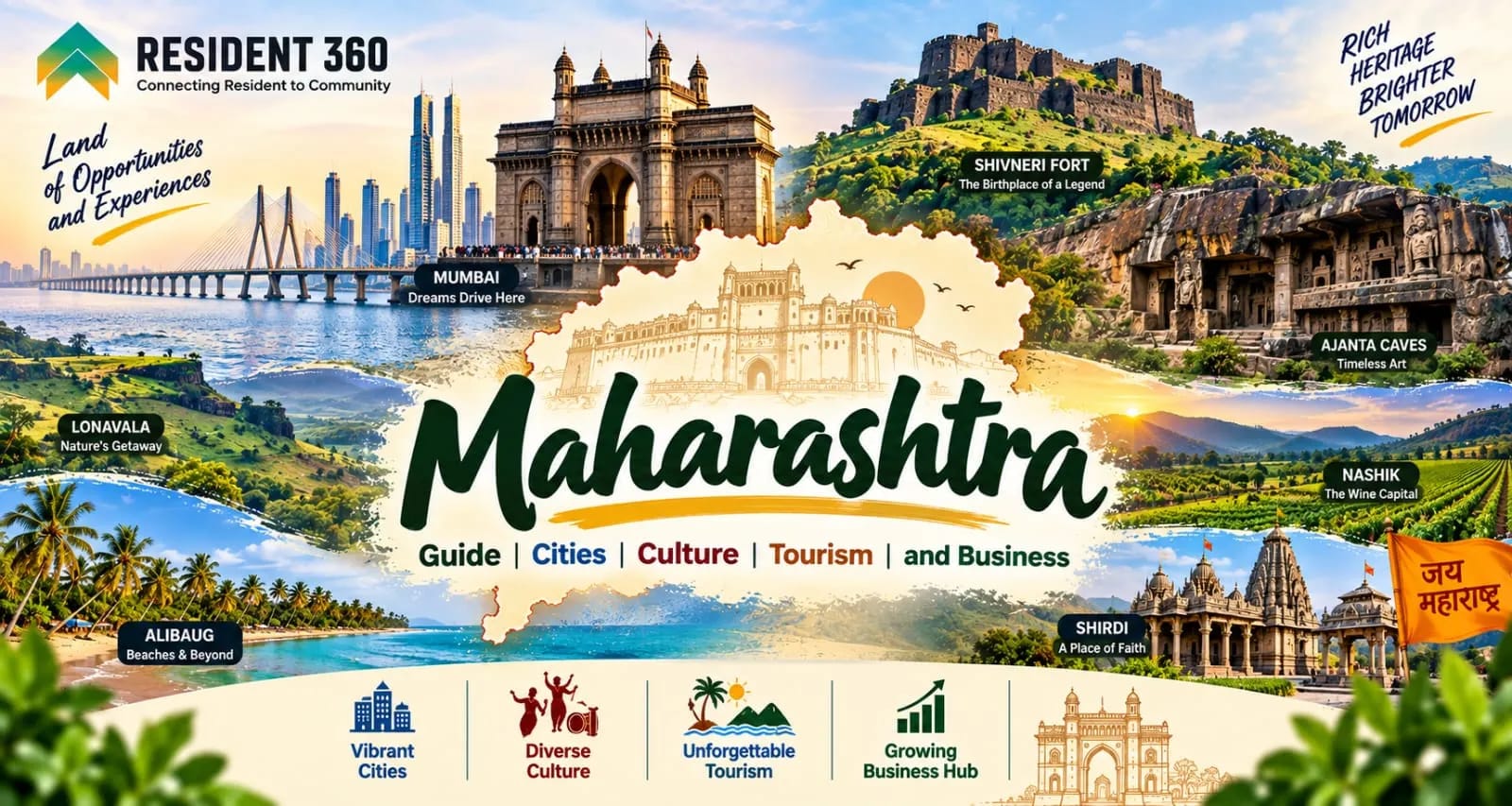
Maharashtra is one of India’s most diverse states, combining busy metropolitan life, historic cities, hill stations, beaches, pilgrimage centers and a strong industrial and cultural identity. From Mumbai’s coastal skyline and Pune’s educational atmosphere to the caves of Aurangabad region, the forts of the Western Ghats and the vineyards of Nashik, Maharashtra offers experiences for travelers, residents, students and businesses alike. The state is also an important center for finance, entertainment, manufacturing, technology and education. Whether you want to understand its history, plan a journey, explore its cities or learn about its economy, this Maharashtra guide brings together the essential facts, destinations and local highlights in one place.
Its appeal comes from the way different landscapes and communities exist side by side. A clear look at the state’s geography, heritage, lifestyle and opportunities makes it easier to decide where to visit, live, study or invest time and attention.
Geography and Regional Identity
Maharashtra lies in western and central India, with a long Arabian Sea coastline and a landscape that changes significantly from one region to another. The Western Ghats run through the state and create areas of thick greenery, waterfalls and mountain valleys. To the east and southeast, the terrain becomes more open and agricultural, while the Konkan coast is known for beaches, seafood, tropical vegetation and historic port settlements.
The state is commonly understood through several broad regions:
- Konkan: A coastal belt that includes Mumbai, Thane, Raigad, Ratnagiri and Sindhudurg, known for beaches, forts, mangoes and coastal cuisine.
- Western Maharashtra: Home to Pune, Satara, Kolhapur and nearby areas, with strong educational, agricultural and industrial traditions.
- Khandesh: A northern region associated with agriculture, historic settlements and cities such as Jalgaon and Dhule.
- Marathwada: A culturally rich region that includes Chhatrapati Sambhajinagar, Latur, Nanded and Beed, with important monuments and pilgrimage sites.
- Vidarbha: The eastern part of the state, known for Nagpur, forests, wildlife, agriculture and mineral resources.
The Godavari, Krishna, Bhima, Tapi and Wardha are among the important rivers that support agriculture and settlements. This regional variety explains why Maharashtra cannot be experienced through one city or one style of travel. Each area has its own food, festivals, architecture, language influences and pace of life.
History and Heritage of Maharashtra
Maharashtra has a long history shaped by ancient settlements, Buddhist learning centers, medieval kingdoms, the Maratha era and modern political and social movements. Its location connected the Deccan plateau with coastal trade routes, helping different cultures, religions and artistic traditions develop across the region.
Ancient and Medieval Legacy
The Ajanta and Ellora caves are among the state’s most important heritage sites. Their rock-cut architecture, sculptures and paintings show the artistic and religious achievements of earlier periods. Karla and Bhaja near Lonavala also preserve remarkable Buddhist cave traditions, while many old temples across the state reflect regional architectural styles.
Medieval Maharashtra contains forts, temples, mosques, palaces and historic urban centers. Daulatabad Fort near Chhatrapati Sambhajinagar demonstrates the strategic importance of the Deccan, while the old areas of Pune, Kolhapur and Nashik reveal layers of political and cultural development.
The Maratha Heritage
The Maratha period is central to the state’s identity. Forts such as Raigad, Pratapgad, Sinhagad, Shivneri and Panhala remain powerful symbols of administration, military planning and regional history. Many are located on hills, so visiting them also offers views of the surrounding landscape and an understanding of how geography influenced defense.
Maharashtra’s heritage is not limited to monuments. Folk performances, devotional traditions, local literature, traditional crafts and historic food practices continue to connect present communities with the past.
Major Cities and What They Offer
Maharashtra’s cities serve different purposes, making the state relevant to tourists, professionals, students and families. Understanding their character helps visitors choose the right base for a trip or identify the places best suited to their interests.
Mumbai
Mumbai is the state capital and India’s major financial and entertainment center. It combines colonial-era architecture, crowded markets, beaches, museums, religious landmarks and a globally recognized film industry. The Gateway of India, Chhatrapati Shivaji Maharaj Terminus, Marine Drive, Elephanta Island and neighborhoods such as Colaba and Bandra are among its well-known attractions.
Mumbai is also a city of opportunity, with strong links to banking, media, advertising, design, technology, trade and professional services. Its public transport network and dense urban form make it energetic, demanding and constantly active.
Pune
Pune is widely known for education, research, information technology, automobiles and a growing startup community. It has a younger atmosphere than many large Indian cities, while areas such as Shaniwar Wada and nearby historic sites reflect its Maratha-era importance. The city is also a convenient base for exploring hill forts, caves and weekend destinations in the Western Ghats.
Nagpur
Located in Vidarbha, Nagpur is an important commercial and administrative center. Its central location supports logistics and transport, while nearby attractions include lakes, wildlife areas and sites associated with Buddhist and social history. Nagpur is also known for oranges and has growing relevance in warehousing, services and regional connectivity.
Nashik and Kolhapur
Nashik is associated with temples, vineyards, the Godavari River and the Kumbh Mela tradition. It has also developed as an agricultural and manufacturing center. Kolhapur is known for its palace heritage, religious significance, handicrafts, distinctive cuisine and links to wrestling and traditional arts.
Other important cities, including Thane, Navi Mumbai, Chhatrapati Sambhajinagar, Solapur, Amravati and Nanded, add to the state’s urban, cultural and economic diversity.
Culture, Festivals and Local Cuisine
Maharashtra’s culture is expressed through language, music, theater, dance, festivals, clothing, food and community traditions. Marathi is the principal regional language, while the state’s cities and workplaces bring together people from many parts of India. This creates a lively mix of customs, languages and contemporary lifestyles.
Festivals and Performing Arts
Ganesh Chaturthi is one of the most visible celebrations, especially in Mumbai and Pune. Public installations, devotional music, processions and neighborhood gatherings make it both a religious and community event. Gudi Padwa marks the Marathi New Year, while Diwali, Navratri, Makar Sankranti, Dahi Handi and traditional pilgrimage festivals are celebrated across different regions.
Lavani, Powada, Tamasha and Kirtan are important performance traditions. They combine music, storytelling, poetry and social commentary. Contemporary Marathi theater and cinema continue this creative legacy, while Mumbai remains a major center for India’s wider entertainment industry.
Food to Experience
Maharashtrian cuisine varies between the coast, plateau and interior regions. Popular dishes and food traditions include poha, misal pav, vada pav, bhakri, puran poli, thalipeeth, sabudana preparations and modak. Konkan cuisine often features coconut, rice, seafood and kokum, while Kolhapuri food is known for bold spices.
Visitors should also explore local sweets, seasonal fruits and regional snacks rather than relying only on restaurant menus. Mangoes from the Konkan, especially the celebrated Alphonso variety, are an important part of the state’s agricultural and culinary identity.
Top Tourism Destinations
Tourism in Maharashtra includes heritage, nature, spirituality, adventure and urban exploration. The best itinerary depends on the season, travel time and whether the visitor prefers monuments, beaches, mountains or wildlife.
Heritage and Cave Sites
Ajanta and Ellora are essential destinations for travelers interested in art, history and architecture. Their scale and craftsmanship make them particularly valuable for understanding the Deccan’s ancient cultural connections. Chhatrapati Sambhajinagar is a practical base for exploring these sites and other nearby attractions.
Mumbai’s historic buildings and Elephanta Island provide a different heritage experience, blending urban history with coastal scenery. The forts of Raigad, Sinhagad, Pratapgad and Panhala are ideal for travelers interested in Maratha history and trekking.
Hill Stations and Nature
Lonavala, Khandala, Mahabaleshwar, Matheran and Bhandardara are popular mountain destinations. Their appeal is strongest during and after the monsoon, when waterfalls, forests and valleys become especially scenic. Weather can change quickly in these areas, so suitable footwear and careful road planning are useful.
Wildlife enthusiasts can consider Tadoba-Andhari, Pench’s surrounding region, Navegaon-Nagzira and other protected natural areas. Wildlife sightings are never guaranteed, and visitors should follow park rules, remain quiet and avoid disturbing animals.
Coastal Maharashtra
The Konkan coast offers beaches, seafood, forts, village landscapes and a slower travel experience. Alibaug is convenient for a short break from Mumbai, while Ratnagiri, Sindhudurg, Ganpatipule and Tarkarli offer different combinations of beaches, temples, water activities and coastal heritage.
Economy, Business and Employment
Maharashtra is one of India’s most economically important states because it combines a large consumer market, established industries, ports, transport links, educational institutions and major financial centers. Mumbai is the country’s leading financial hub, while Pune has strong capabilities in technology, automobiles, engineering, education and research.
Key Economic Sectors
Important sectors across the state include:
- Finance, banking, insurance and professional services
- Information technology, software and business services
- Automobile manufacturing and engineering
- Pharmaceuticals, chemicals and biotechnology
- Media, film, advertising and creative industries
- Agriculture, food processing and horticulture
- Textiles, gems, jewelry and traditional manufacturing
- Logistics, ports, warehousing and retail
Industrial activity is spread across several urban and regional clusters rather than being limited to Mumbai. Pune, Nashik, Nagpur, Thane, Chhatrapati Sambhajinagar, Kolhapur and other centers each contribute in different ways.
Agriculture and Rural Enterprise
Agriculture remains important, with crops and products varying by climate and region. Sugarcane, cotton, grapes, soybeans, fruits, rice and vegetables support farming communities and related industries. Food processing, cold storage, farm tourism and direct-to-consumer models can create additional value when supported by reliable infrastructure and market access.
For businesses, Maharashtra offers scale and diversity, but opportunities should be assessed carefully. Factors such as location, transport, workforce, water availability, land rules and local market conditions can differ significantly between districts.
Planning a Trip to Maharashtra
A successful Maharashtra trip depends more on realistic scheduling than on trying to cover every famous destination. The state is large, and journeys between coastal cities, plateau regions and eastern districts can take considerable time.
Choosing the Right Season
The cooler months are generally comfortable for city sightseeing, heritage visits and outdoor travel. The monsoon transforms the Western Ghats and Konkan into lush landscapes, but heavy rain can affect roads, trekking routes and transport. Summer can be hot, particularly in inland and eastern areas, although hill stations and some coastal destinations remain popular.
Building a Practical Itinerary
Short trips can focus on one region, such as Mumbai and nearby coastal attractions, Pune and the hill forts, or Nashik and surrounding heritage and vineyard areas. Longer journeys can combine different experiences, but they should include rest days and flexible travel time.
Useful planning considerations include:
- Check seasonal weather before booking outdoor activities.
- Reserve accommodation early during major festivals and holiday periods.
- Allow extra time for traffic in Mumbai, Pune and other large cities.
- Wear comfortable footwear for caves, forts and uneven historic sites.
- Carry water and sun protection during heritage walks and fort visits.
- Use authorized guides or local information services at major monuments.
- Respect photography rules, religious customs and environmental guidelines.
Public transport is practical in major cities, while private vehicles, taxis or organized tours may be more convenient for rural destinations and multi-site itineraries. Visitors should also confirm current timings and access conditions before traveling to remote attractions.
Living, Education and Everyday Life
Maharashtra attracts people who come to study, work, start businesses or settle with their families. Mumbai offers extensive employment and cultural options but is known for high density and a fast pace. Pune is popular with students and professionals because of its universities, technology parks and relatively varied neighborhoods. Nagpur, Nashik, Kolhapur and other cities provide different combinations of affordability, connectivity and regional opportunity.
The state has a strong network of schools, universities, research centers, training institutes and professional colleges. Education is a major part of Pune’s identity, while Mumbai has institutions connected to finance, media, law, arts and management. Healthcare, retail, housing and transport options vary by city and should be evaluated based on the specific neighborhood rather than the city name alone.
Everyday life also changes from one region to another. Urban residents may rely on local trains, buses, metro systems and app-based services, while smaller towns have a more community-oriented rhythm. Marathi is valuable for communication and cultural connection, although Hindi and English are widely used in cities, workplaces and tourism settings.
Conclusion
Maharashtra brings together historic forts, ancient caves, coastal villages, mountain landscapes, major cities, rich cuisine and a powerful modern economy. Mumbai, Pune, Nagpur, Nashik, Kolhapur and the state’s many smaller destinations each reveal a different part of its identity. Whether the goal is tourism, education, business, relocation or cultural discovery, Maharashtra offers depth beyond its most famous landmarks. By planning around regional geography, seasonal conditions and local traditions, visitors and residents can experience the state in a more informed, comfortable and meaningful way.