
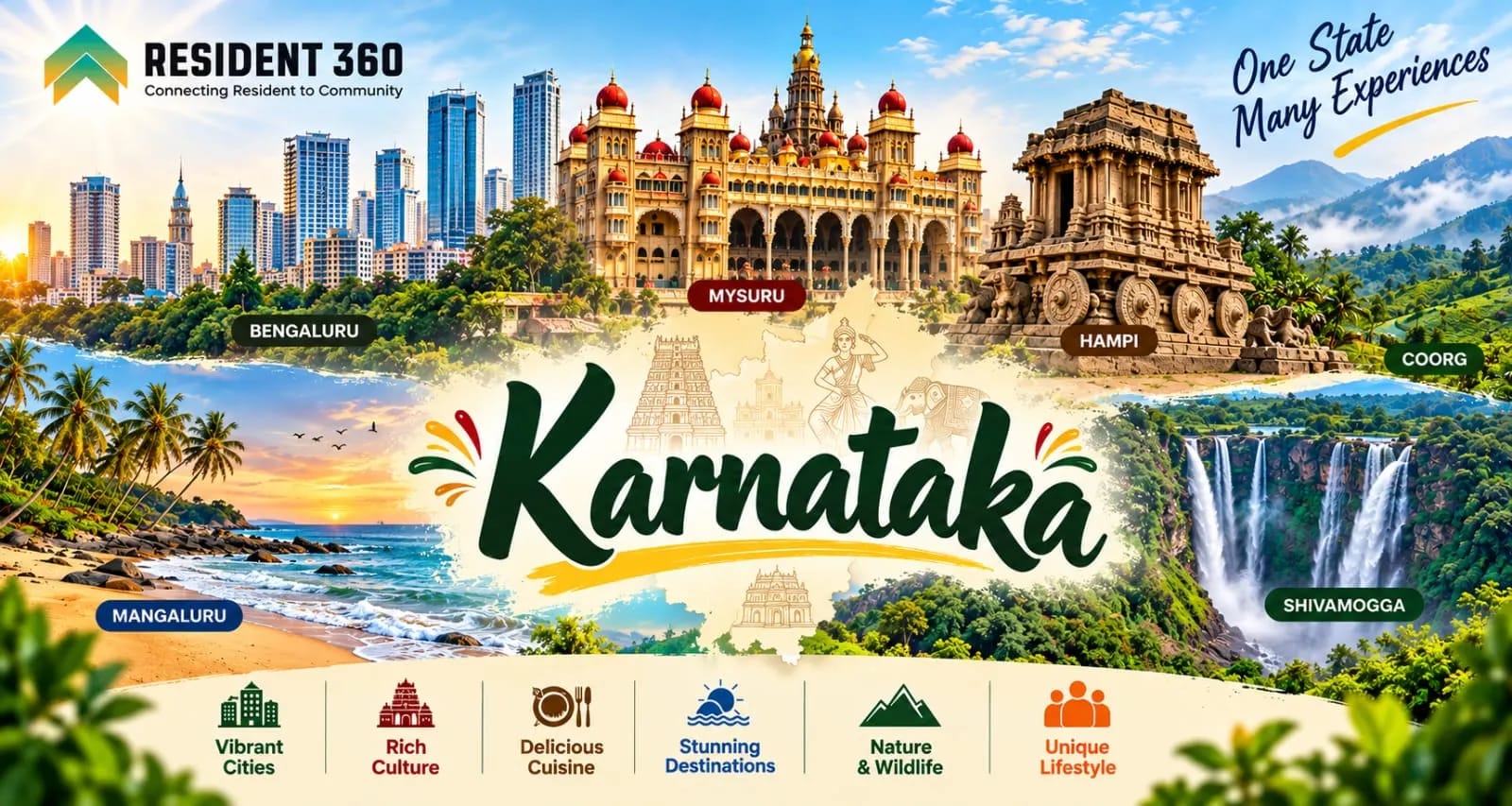
Karnataka is a state of remarkable contrasts, where technology-driven cities, historic kingdoms, coastal communities, coffee-growing hills and traditional villages exist side by side. Exploring Karnataka cities, culture and lifestyle helps readers understand more than its famous landmarks; it reveals how geography, language, food, art and modern growth influence everyday life across the state. Bengaluru offers cosmopolitan energy and employment opportunities, Mysuru reflects royal heritage, coastal Karnataka brings maritime traditions, and the northern districts preserve a strong connection with history and folk culture. Whether you are planning a visit, considering a move or simply learning about the state, Karnataka rewards a region-by-region approach. The sections below explain its major urban centres, cultural landscapes, local traditions and practical character so that the state becomes easier to understand and experience.
Its variety is also what makes Karnataka distinctive. A journey from the Deccan plateau to the Arabian Sea or from a busy technology corridor to a quiet coffee estate can feel like a journey through several different worlds.
Karnataka at a Glance: Geography, People and Regional Identity
Karnataka occupies a large part of southern India and includes several distinct geographic zones. The state stretches from the elevated Deccan Plateau in the east and centre to the Western Ghats and the Arabian Sea in the west. This natural variety influences rainfall, agriculture, architecture, cuisine, occupations and settlement patterns.
Bengaluru and many central districts have a plateau climate, while the coast is more humid and receives heavier rainfall. The Malnad, or hilly Western Ghats region, is greener and known for forests, plantations and rivers. Northern Karnataka has a drier landscape with important historical cities, agricultural communities and monuments shaped by several ruling dynasties.
Kannada is the principal language and an important part of the state’s identity, but Karnataka is linguistically diverse. Tulu, Kodava, Konkani, Urdu, Marathi and other languages are spoken in different communities. English and Hindi are also widely understood in urban areas, especially in workplaces, education and tourism.
This diversity means that there is no single Karnataka lifestyle. Urban professionals, fishing communities, farmers, students, artisans, entrepreneurs and plantation workers each contribute to the state’s social character. Shared traditions connect them, but local identities remain strong from one region to another.
Bengaluru and the Changing Urban Lifestyle
Bengaluru is Karnataka’s best-known city and its largest urban centre. It is widely associated with information technology, start-ups, research, education and a large professional workforce. Yet the city’s character is broader than its business reputation. Older neighbourhoods, markets, parks, temples, cultural venues and food streets continue to exist alongside modern offices, apartment communities and commercial districts.
Work, education and everyday life
The city attracts people from across India and from different parts of the world. This has created a multicultural environment in which regional cuisines, languages and celebrations are part of daily urban life. The city’s universities, technology companies, hospitals and creative industries make it an important destination for students and professionals.
Bengaluru’s lifestyle is fast-moving, but it also includes strong preferences for cafés, live performances, weekend outings, fitness activities and community events. Traffic, rising housing costs and long commuting distances are practical concerns for residents, so neighbourhood choice often depends on proximity to work, schools, public transport and essential services.
Old Bengaluru and new neighbourhoods
Traditional areas retain local markets, small businesses and long-established food traditions. Newer parts of the city are shaped by technology campuses, gated communities, retail spaces and co-working environments. The contrast between these areas shows how Karnataka’s capital is balancing heritage with rapid urban development.
Mysuru and Karnataka’s Royal Heritage
Mysuru is one of the most recognisable cultural cities in Karnataka. Its planned avenues, palaces, markets, educational institutions and relaxed pace give it a distinct identity. The city is closely associated with the former Wadiyar kingdom, classical arts, traditional crafts and the annual Dasara celebrations.
Mysuru Palace is a major architectural landmark, while the surrounding city offers a wider cultural experience through museums, markets, historic neighbourhoods and public spaces. The city is also known for its association with yoga, sandalwood products, silk weaving and a refined culinary tradition. These associations continue to influence both tourism and local commerce.
A city shaped by celebration
Dasara is central to Mysuru’s public identity, bringing processions, illumination, music and cultural performances into the city’s streets. Beyond the festival season, Mysuru’s cultural life includes classical music, dance, theatre, literature and traditional celebrations observed by different communities.
The city is also a useful base for exploring nearby heritage and nature destinations. Its more measured pace compared with Bengaluru appeals to visitors and residents who value access to culture without the intensity of a large metropolitan environment.
Heritage Cities of Northern and Central Karnataka
Northern Karnataka contains some of the state’s most significant historical landscapes. Places such as Hampi, Badami, Aihole and Pattadakal reveal the architectural achievements of earlier South Indian kingdoms and the influence of changing political and religious traditions.
Hampi is known for the extensive remains of the Vijayanagara Empire, including temples, gateways, markets and monumental stone structures spread across a striking boulder-strewn landscape. Badami is associated with rock-cut cave temples and sandstone formations, while Aihole and Pattadakal are important for the development and expression of temple architecture.
History beyond monuments
The region’s culture is not limited to ruins. It includes folk performances, handloom traditions, local fairs, farming communities and cuisines suited to a drier climate. Cities such as Hubballi and Dharwad are known for education, trade, music and regional connectivity. Dharwad’s literary and musical associations have also contributed to Karnataka’s wider cultural identity.
Visitors should allow time to understand the setting around each monument rather than treating heritage sites as isolated stops. Local villages, craft practices and seasonal landscapes help explain how history remains connected to present-day life.
Coastal Karnataka: Sea, Faith and Community Traditions
The coastal belt, including Mangaluru, Udupi and the surrounding districts, has a culture shaped by the Arabian Sea, monsoon rainfall, trade and close-knit communities. The region combines beaches, estuaries, temples, churches, mosques, fishing settlements, educational institutions and busy commercial centres.
Mangaluru is a major coastal city with strong links to education, healthcare, trade and overseas communities. Udupi is known for its temple tradition and distinctive vegetarian cuisine. Smaller coastal towns and villages add their own customs, dialects, seafood traditions and religious practices.
Food and coastal living
Coastal cuisine often features rice, coconut, tamarind, local spices and seafood, although vegetarian traditions are equally important. Dishes vary between communities and districts, so there is no single meal that represents the entire coast. The monsoon also affects work, travel, fishing and the rhythm of everyday life.
Yakshagana, a vibrant dance-drama tradition, is one of the region’s best-known performing arts. Its elaborate costumes, music and storytelling reflect the area’s strong relationship with mythology and local performance culture. Coastal life therefore combines economic activity, environmental awareness and deeply rooted traditions.
Malnad, Kodagu and Karnataka’s Green Landscapes
The Malnad region and the hill districts offer a very different experience from Karnataka’s plateau cities. The Western Ghats bring dense vegetation, waterfalls, streams and fertile slopes. Shivamogga, Chikkamagaluru and Kodagu are associated with forests, plantation landscapes and routes that appeal to nature lovers.
Kodagu, also known as Coorg, has a distinctive regional identity shaped by its history, coffee cultivation, martial traditions and close relationship with the hills. Chikkamagaluru is known for coffee-growing areas and mountain scenery, while Shivamogga serves as an important centre for the surrounding Malnad region.
Responsible travel in the hills
The beauty of these areas depends on healthy forests, clean waterways and responsible visitor behaviour. Travellers should avoid littering, respect private plantation land, follow local instructions near waterfalls and choose accommodation that manages waste and water carefully.
The hill regions also demonstrate how geography shapes livelihoods. Coffee, pepper, areca nut, paddy and other crops support local economies, while forest resources and rainfall influence settlement patterns. Visiting with patience allows travellers to appreciate both the scenery and the communities that maintain it.
Karnataka Cuisine and Everyday Food Traditions
Food is one of the easiest ways to understand Karnataka’s regional diversity. Meals differ across Bengaluru, Mysuru, the coast, the northern districts and the Malnad. Rice, ragi, millets, lentils, vegetables, coconut and spices appear in many forms, but preparation methods and flavours change considerably by location and community.
In southern Karnataka, dishes such as ragi-based preparations, dosa varieties, idli, vada, sambar and meals served with several accompaniments are common parts of the food culture. Mysuru is associated with sweets and traditional snacks, while Bengaluru offers everything from local breakfast foods to regional Indian and international cuisines.
Coastal Karnataka uses coconut, seafood and distinctive spice combinations, with strong vegetarian traditions in places such as Udupi. Northern Karnataka is known for hearty dishes, millet-based foods, flatbreads and bold flavours suited to its climate. Malnad cooking often reflects abundant rainfall, forest produce and plantation agriculture.
Food habits also reveal social life. Breakfast restaurants, neighbourhood bakeries, weekly markets, festive meals and family kitchens all create spaces where traditions are shared. For visitors, trying regional food respectfully is a practical way to experience Karnataka beyond its tourist attractions.
Festivals, Arts, Languages and Community Life
Karnataka’s cultural calendar includes state-wide celebrations as well as festivals rooted in particular communities. Dasara in Mysuru is internationally recognised, while Ugadi, Deepavali, Makar Sankranti, Eid, Christmas and many local temple festivals are observed across different parts of the state.
The arts include classical music and dance, theatre, literature, cinema, folk songs, puppetry and regional performance traditions. Yakshagana is strongly associated with the coast, while other districts have their own forms of storytelling, procession, devotional music and village theatre.
Language as a cultural bridge
Kannada literature has a long and influential history, and the language remains central to public life, education, media and local administration. At the same time, the presence of multiple linguistic communities adds depth to Karnataka’s cities and border regions.
Community life may be experienced through markets, neighbourhood associations, religious institutions, schools, cultural groups and family gatherings. In urban areas, these networks increasingly include people from different states and backgrounds. The result is a culture that preserves local customs while continuously adapting to migration, technology and changing lifestyles.
Planning a Meaningful Karnataka Experience
The best way to explore Karnataka depends on the purpose of the journey. A first-time visitor interested in cities may combine Bengaluru and Mysuru. Someone focused on history may prefer a route through Hampi, Badami, Aihole and Pattadakal. Travellers seeking beaches and food can explore the coastal belt, while nature-focused itineraries suit the Western Ghats and plantation districts.
Practical considerations
Distances between regions can be significant, and travel times may change with traffic, road conditions, monsoon weather and local events. It is useful to avoid planning too many destinations into a short trip. Grouping places by region creates a more comfortable schedule and allows time for markets, meals and unplanned discoveries.
Visitors should dress appropriately for religious and cultural sites, follow photography rules, carry suitable clothing for changing weather and keep emergency essentials available in less-connected areas. Public transport, taxis, rental vehicles and organised tours are available in different forms, but convenience varies between cities and rural destinations.
For those considering life in Karnataka, the choice of city depends on employment, education, climate, housing, commuting needs and preferred pace. Bengaluru offers extensive professional opportunities, Mysuru provides a quieter urban setting, coastal cities offer a different climate and food culture, and hill districts suit people drawn to greener surroundings. Understanding these regional differences makes relocation decisions more realistic.
Conclusion
Karnataka cities, culture and lifestyle are best understood as a rich regional mosaic rather than a single identity. Bengaluru represents innovation and cosmopolitan growth, Mysuru preserves royal and artistic traditions, northern Karnataka carries the depth of historic architecture, the coast reflects maritime communities, and the Malnad celebrates forests, plantations and slower rhythms. Food, festivals, languages and everyday neighbourhood life connect these regions while allowing each to remain distinctive. Whether you are visiting, relocating or researching the state, exploring Karnataka by region offers a clearer and more meaningful view of its people, places and continuing cultural evolution.