
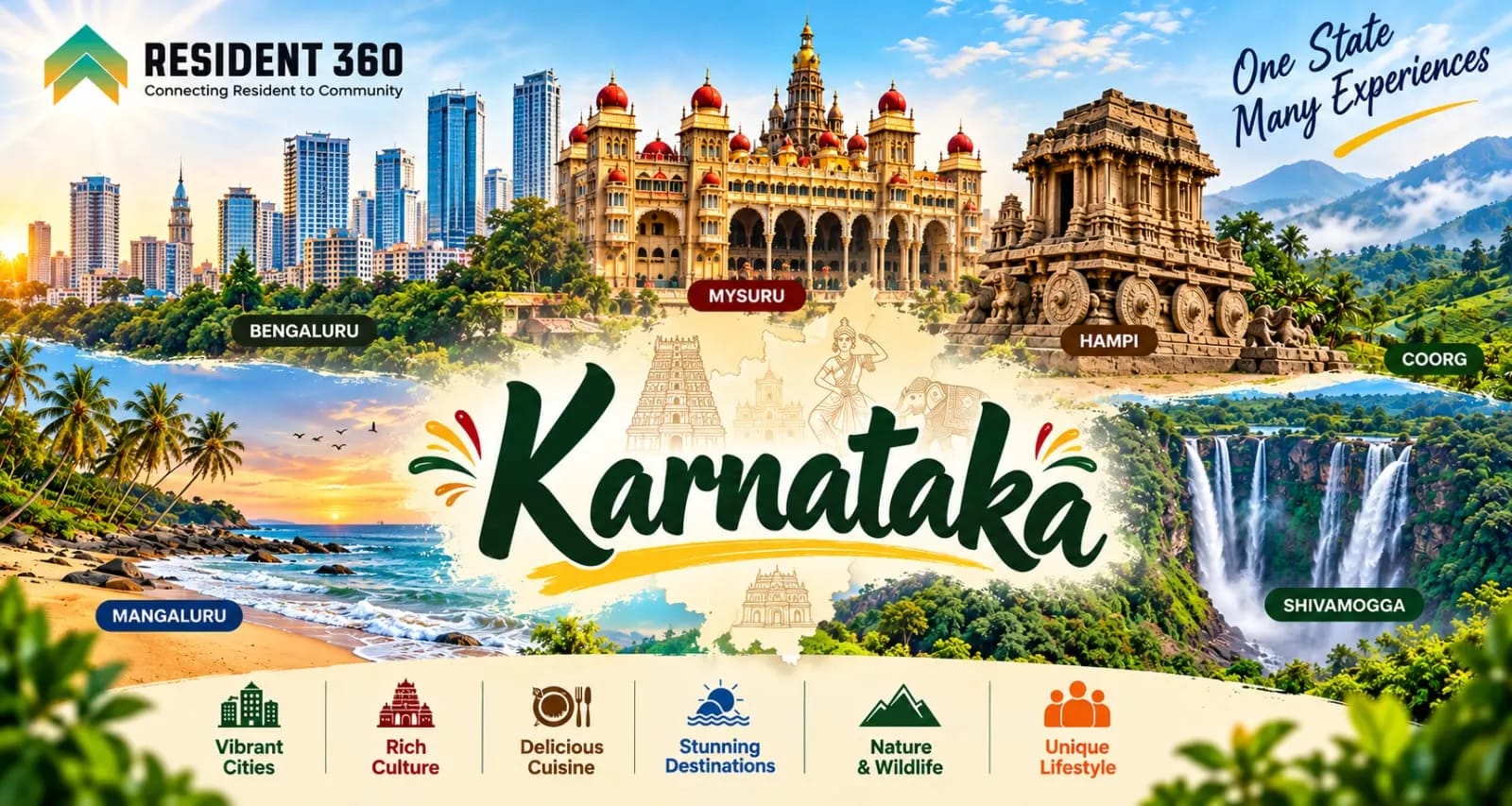
Karnataka is a state of striking contrasts, where historic temples, technology hubs, coffee-growing hills, coastal towns and wildlife-rich forests exist within one diverse region. From Bengaluru’s modern energy and Mysuru’s royal heritage to the beaches of the coast and the stone monuments of Hampi, Karnataka offers many different ways to experience South India. Its appeal extends beyond sightseeing: the state also has distinct languages, food traditions, festivals, communities and patterns of urban and rural life. Whether you are planning a journey, considering a move, researching its culture or simply trying to understand its cities, this guide to Karnataka brings together the essential features of the state in a clear and practical way.
The best way to appreciate Karnataka is to look at its regions together, because each one adds a different character to the state’s identity. The following sections explore its cities, history, landscapes, cuisine, lifestyle and practical travel considerations.
Karnataka’s Geography and Regional Character
Karnataka occupies a large part of southern India and stretches from the Arabian Sea in the west to the elevated interior of the Deccan Plateau. This broad geography gives the state several distinct natural and cultural zones rather than one uniform identity.
The western coast is known for humid weather, beaches, estuaries, fishing communities and lush vegetation. The Western Ghats rise inland from the coast, creating a landscape of forests, waterfalls, plantations and winding mountain roads. Further east, the Malnad and plateau regions become drier, with open agricultural land, historic settlements and large urban centres.
The state is commonly understood through broad regional identities:
- Coastal Karnataka: Known for seafood, temple towns, beaches, port cities and strong local traditions.
- Malnad: A greener highland area associated with coffee plantations, rainfall, forests and hill landscapes.
- Old Mysuru region: Recognised for royal history, classical arts, heritage buildings and Kannada cultural traditions.
- Northern Karnataka: Home to important historic sites, distinctive cuisine, large temple complexes and dramatic rocky landscapes.
- Bengaluru and the southern urban belt: A modern economic and educational centre with a highly diverse population.
The Cauvery, Krishna, Tungabhadra and other river systems have influenced farming, settlement and regional culture. Climate also varies considerably. Coastal areas are generally warm and humid, hill regions are cooler, and the interior plateau can experience hot summers. This variation helps explain why Karnataka supports such different crops, lifestyles and travel experiences within one state.
Major Cities and What Makes Them Distinct
Karnataka’s cities reflect its changing economy, royal past, religious traditions and regional diversity. Each major urban centre offers a different perspective on life in the state.
Bengaluru: The Modern Metropolitan Centre
Bengaluru is Karnataka’s capital and its most internationally recognised city. It is known for technology, start-ups, research, higher education, healthcare and a large professional population. The city’s older neighbourhoods, markets, parks and cultural institutions exist alongside technology corridors, apartment communities and commercial districts.
Bengaluru is also one of the most cosmopolitan places in Karnataka. People from many parts of India live and work here, creating a mix of languages, cuisines and cultural activities. At the same time, traffic, high housing demand, rapid construction and pressure on public infrastructure are important parts of the city’s urban reality. For visitors and residents, the city is best understood as a combination of established local communities and fast-changing metropolitan life.
Mysuru: Heritage, Arts and a Comfortable Pace
Mysuru is widely associated with the former royal family, grand architecture, traditional arts and the Dasara celebrations. The city’s palaces, markets, museums and older neighbourhoods give it a strong heritage character. It is also known for yoga traditions, sandalwood crafts, sweets and a relatively relaxed urban atmosphere.
Mysuru appeals to travellers interested in history and culture, while its educational institutions and improving connectivity have also made it attractive to students, families and retirees. The city provides a useful contrast to Bengaluru: it is urban and well connected but generally less intense in pace and scale.
Mangaluru and the Coastal Cities
Mangaluru is an important coastal city with strong links to education, healthcare, shipping, trade and the surrounding districts. Its food culture reflects coastal ingredients and influences, including seafood, coconut, rice and local spices. Beaches, churches, temples and nearby hill or plantation areas add to its appeal.
Udupi is especially known for its temples and vegetarian cuisine, while towns along the coast offer access to beaches, islands, estuaries and traditional communities. Coastal Karnataka is a region where religion, food, trade and landscape are closely connected.
Hubballi-Dharwad, Belagavi and Other Regional Centres
Hubballi-Dharwad serves as an important commercial, educational and cultural centre in northern Karnataka. Belagavi has a distinctive regional identity shaped by its location near the state’s northern border and its historical connections. Shivamogga, Kalaburagi, Davanagere and Ballari also serve as significant centres for commerce, education, administration and access to nearby attractions.
These cities are useful starting points for exploring northern and central Karnataka, where visitors can find historic temples, forts, handloom traditions, local markets and a cuisine that often differs noticeably from the south and coast.
History, Heritage and Architectural Identity
Karnataka’s history can be seen in its temples, forts, palaces, stepwells, monastic centres and ancient urban sites. Several powerful dynasties ruled different parts of the region, leaving behind architectural styles that vary by period and location.
The Chalukyas are remembered for important temple architecture in places such as Badami, Aihole and Pattadakal. These sites show the development of early South Indian architectural ideas through rock-cut caves, structural temples and detailed stone carvings. The Hoysala period produced highly ornamented temples, with Belur and Halebidu among the best-known examples.
The Vijayanagara Empire created one of the most remarkable historic landscapes in the region at Hampi. Its ruins include temples, royal enclosures, market streets, water structures and massive stone formations. The site is not simply a collection of monuments; it is a large archaeological landscape that helps visitors imagine the scale and organisation of a historic capital.
Mysuru’s palaces and public buildings represent a later royal tradition, while Bengaluru’s older areas preserve markets, gardens, colonial-era structures and neighbourhood temples. Karnataka’s heritage is therefore spread across many periods rather than concentrated in one city.
Living Heritage and Traditional Arts
Heritage in Karnataka is also expressed through performance, craft and community practice. Yakshagana is a highly visual theatre tradition associated with the coastal region. Dollu Kunitha, classical music, folk dances, temple festivals and traditional storytelling continue to contribute to the cultural landscape.
Handloom weaving, woodwork, metalwork, stone carving and sandalwood-related crafts are also connected with different parts of the state. These traditions may appear in markets, festivals, family workshops and cultural institutions. Visitors should approach them as living practices rather than only as souvenirs or displays.
Natural Landscapes and Places to Explore
Karnataka offers a wide range of natural settings, from Arabian Sea beaches to highland plantations and dry interior forests. This variety makes the state suitable for different kinds of travel, including heritage trips, road journeys, wildlife visits, outdoor recreation and quiet escapes.
The Coast and Western Ghats
The coast provides beaches, lagoons, fishing villages, temple towns and seafood-focused culinary experiences. Some beaches are busy and developed, while others are quieter and better suited to travellers seeking a slower atmosphere. Coastal trips are often most rewarding when they combine scenery with local food and nearby cultural sites.
The Western Ghats bring a very different experience. Coorg, Chikkamagaluru, Sakleshpur and surrounding areas are associated with coffee plantations, forest trails, waterfalls and cooler weather. The landscape changes significantly during the monsoon, when streams and waterfalls become more active and vegetation turns especially dense. Weather can also make roads slippery, so careful planning is important during heavy rains.
Wildlife and Forest Regions
Karnataka has several forested areas where visitors may encounter diverse plant and animal life. The state is known for protected landscapes in the Western Ghats and southern forest belt, including areas associated with elephants, tigers, gaur, deer and many bird species.
Wildlife tourism requires patience and responsible behaviour. Sightings are never guaranteed, and visitors should follow the instructions of forest authorities, avoid loud noise, respect distance from animals and refrain from leaving designated routes. The quality of a wildlife experience depends as much on observing the habitat respectfully as it does on seeing a particular species.
Waterfalls, Rivers and Outdoor Travel
Rivers and seasonal waterfalls add another dimension to Karnataka’s landscape. Trekking routes, viewpoints, boating areas and riverside locations can be found in several districts. Some sites are suitable for families and casual visitors, while others require fitness, local guidance and preparation.
A practical approach is to check seasonal access, weather conditions, road quality and local restrictions before travelling to remote areas. Carrying reusable water bottles, avoiding litter and respecting village spaces helps protect the environments that make these destinations attractive.
Food and Culinary Traditions
Karnataka cuisine is varied because the state includes coastlines, forests, plantation regions, dry northern districts and large multicultural cities. Rice, millets, ragi, coconut, lentils, vegetables, spices and seafood all play important roles, but their preparation changes from one region to another.
In Bengaluru and southern Karnataka, dishes such as ragi-based preparations, dosa varieties, idli, vada, bisi bele bath and traditional meals are widely enjoyed. Mysuru is associated with sweets and distinctive versions of South Indian snacks. Udupi cuisine has become famous far beyond Karnataka for its vegetarian dishes, tiffin meals, sambar, chutneys and carefully balanced flavours.
Coastal cuisine often uses coconut, tamarind, curry leaves and seafood. Mangalorean preparations, fish curries, neer dosa and regional meat dishes reflect the relationship between the coast and its local produce. In northern Karnataka, jowar-based breads, spicy curries, lentil preparations and vegetable dishes are common parts of the food culture.
How to Experience Local Food
A useful way to explore Karnataka’s cuisine is to eat across different settings. Breakfast restaurants offer popular tiffin dishes, local family-run eateries reveal regional meals, and markets provide snacks and seasonal produce. In smaller towns, meal timings and menus may differ from those in large cities, so flexibility is helpful.
Food preferences and preparation styles vary between communities and households. Asking about ingredients is sensible for people with allergies or dietary restrictions, particularly when dishes contain coconut, nuts, dairy, seafood or strong spices.
Culture, Festivals and Everyday Community Life
Kannada is the principal language of Karnataka, but the state is multilingual. Depending on the region, people may also speak Tulu, Konkani, Kodava, Urdu, Tamil, Telugu, Marathi and other languages. English and Hindi are commonly used in many urban and professional settings, although local language remains important in daily life and cultural expression.
Festivals bring together religious, artistic and community traditions. Mysuru Dasara is among the state’s most recognised celebrations, while Ugadi marks the Kannada and broader Deccan New Year in many communities. Karaga, Kambala, local temple festivals, harvest observances and music or dance events add further regional variety.
Karnataka’s cultural life also includes theatre, cinema, classical music, folk performance, literature and contemporary art. Bengaluru has a broad calendar of concerts, exhibitions, workshops and public events, while smaller cities and towns maintain their own community-based traditions.
Everyday life differs between urban neighbourhoods, agricultural villages, plantation communities and coastal settlements. Family networks, local associations, religious institutions and neighbourhood markets continue to shape social life, even as online services, modern workplaces and apartment living become more common.
Living, Working and Studying in Karnataka
Karnataka attracts people for different reasons. Bengaluru offers opportunities in technology, finance, design, research, education, healthcare and entrepreneurship. Mysuru, Mangaluru, Hubballi-Dharwad and other cities provide growing options in education, services, manufacturing, trade and regional business.
The state also has a strong academic presence, with universities, professional colleges, research organisations and specialised institutions spread across several cities. Students often choose locations based on the combination of academic programmes, transport, housing, climate and access to internships or employment.
Choosing a City or Neighbourhood
People considering a move should compare more than job opportunities. Important factors include:
- Distance between home, workplace and educational institutions
- Availability and cost of suitable housing
- Access to healthcare, schools, markets and public transport
- Climate and daily commute conditions
- Noise levels, traffic patterns and neighbourhood character
- Proximity to family, social networks or community support
Bengaluru may suit people seeking a large professional ecosystem, but its neighbourhoods differ greatly in pace and convenience. Mysuru can offer a quieter environment with urban facilities, while coastal cities may appeal to those who value regional food, education and proximity to the sea. Smaller centres can provide stronger local connections, though specialised services may be less accessible.
Modern living in Karnataka increasingly combines digital services with traditional neighbourhood life. People may work in global industries, order food online and use app-based transport while still shopping at local markets, observing regional festivals and maintaining close ties with extended family.
Practical Travel Planning for Karnataka
Karnataka is best explored according to region rather than trying to cover the entire state in one short trip. A city-and-heritage itinerary might combine Bengaluru, Mysuru and nearby historic sites. A coastal journey could focus on Mangaluru, Udupi and beach towns. A hill or nature trip may centre on Coorg, Chikkamagaluru or parts of the Western Ghats.
Travel time can vary considerably because roads, terrain and traffic conditions differ. Bengaluru’s urban traffic may make short distances slow, while hill roads require additional time and care. Rail and bus services connect many major towns, and flights are useful for longer distances, but the most suitable option depends on the route and final destination.
When to Visit
The best season depends on the experience you want. Cooler months are generally comfortable for city sightseeing, heritage exploration and road trips. The monsoon creates lush landscapes in the Western Ghats and supports dramatic waterfalls, but heavy rain can affect outdoor plans and transport. Summer may be hot in inland areas, although hill regions can remain more comfortable.
Before setting out, confirm local weather, opening schedules, transport availability and any access rules for protected areas. Carrying light clothing, comfortable footwear, sun protection and rain protection is useful because conditions can change between regions.
Responsible and Respectful Travel
Karnataka’s destinations include active temples, villages, forests and historic structures that require considerate behaviour. Dress appropriately at religious sites, follow photography rules, avoid touching old carvings and use authorised guides where available. In natural areas, do not feed animals, disturb wildlife or leave waste behind.
Supporting local eateries, homestays, craft sellers and community-based experiences can help spread the benefits of tourism beyond large commercial centres. Respect for local customs and patience with regional differences will make travel more comfortable for both visitors and residents.
Conclusion
Karnataka brings together historic cities, living traditions, varied cuisine, modern workplaces, forested hills, coastal landscapes and some of South India’s most memorable heritage sites. Bengaluru reflects its global outlook, Mysuru preserves its royal and artistic character, the coast adds maritime and culinary depth, and northern Karnataka reveals a powerful architectural past. Whether you visit for culture, nature, food, education or a new way of life, Karnataka rewards a region-by-region approach. Its diversity is the central feature that makes the state distinctive, welcoming and continually worth exploring.