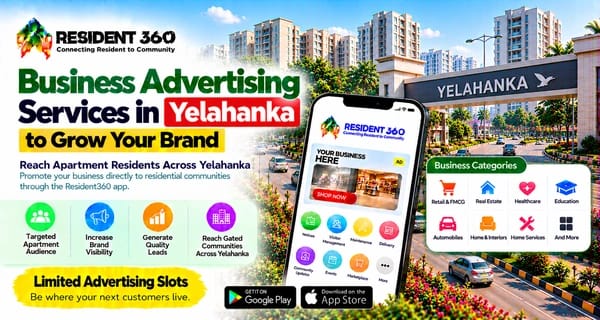
Businesses in Yelahanka often serve a mix of apartment residents, gated communities, families, professionals, students, and local service seekers. That makes business advertising in Yelahanka more effective when campaigns are planned around nearby audiences rather than broad, untargeted promotion. A local salon, home-service provider, tuition centre, restaurant, clinic, retailer, or property-related business can build awareness by appearing where residents already look for information and recommendations. Community-focused advertising also helps businesses communicate relevant offers, explain their services clearly, and remain visible across the neighbourhood without relying only on offline signage or word-of-mouth.
For local businesses, the goal is not simply to display an advertisement. It is to reach the right residential audience with a useful message at a suitable time and through a trusted communication channel.
Why Yelahanka Businesses Need a More Local Advertising Approach
Yelahanka has a varied residential and business environment, so a single advertising message may not work equally well for every audience. A family-oriented service may need to reach apartment residents, while a professional service may benefit from connecting with working residents or facility managers. Local advertising can help businesses focus their budget and message on communities that are more likely to need their offerings.
A neighbourhood-focused approach may also make it easier to:
- Promote services within a practical delivery or service area
- Reach residents who may prefer nearby vendors
- Share location-specific offers and announcements
- Build awareness among apartment and gated-community audiences
- Encourage residents to contact a business directly
- Support repeat visibility instead of one-time promotion
- Explain service availability, operating hours, and contact details
- Create a stronger connection between local businesses and residential communities
Businesses should also consider how residents receive information. Some communities use a society management app for daily coordination, while others rely on notice boards, resident groups, or community events. Advertising works better when the message fits the communication habits of the intended audience.
Common Challenges in Business Advertising in Yelahanka
Even businesses with a useful product or service can struggle to attract local attention. The challenge is often not the quality of the offer, but the lack of a clear, consistent, and location-relevant advertising process.
Common challenges include:
- Reaching residents beyond a small circle of personal contacts
- Choosing between digital, printed, and community-based advertising
- Communicating with different apartment communities separately
- Using a generic message that does not reflect local needs
- Spending on broad campaigns with limited neighbourhood relevance
- Finding suitable spaces or channels for local promotion
- Maintaining consistent visibility after an initial campaign
- Explaining offers without making the advertisement feel intrusive
- Tracking enquiries generated by different advertising activities
- Coordinating promotions with residential community schedules
A local business may also need to understand how a community operates before proposing an advertising activity. For example, a service provider promoting recurring home maintenance may need to understand how residents submit requests, how payments are discussed, and how access is coordinated. Content related to a society maintenance app can help advertisers understand the operational context in which maintenance-related services may be promoted.
How Business Advertising in Yelahanka Can Reach the Right Local Audience
Business advertising in Yelahanka can become more focused when businesses define the audience, offer, location, and action they want from each campaign. Instead of promoting every service to everyone, a business can create separate messages for residents, committees, facility managers, security teams, or local professionals.
For example, a cleaning company could promote scheduled deep-cleaning services before a festival or during a community maintenance period. A tutoring centre could share information with families living near its service area. A restaurant could promote delivery coverage and group offers to nearby apartments. A healthcare provider could communicate appointment availability, service categories, and contact options without making unsupported health claims.
A practical local advertising process may include:
- Identify the residential communities and audience segments most relevant to the business.
- Create a concise message that explains the service and its local value.
- Select suitable channels, such as community communication platforms, local search, social media, events, or printed material.
- Use a clear call to action, such as calling, enquiring, booking, visiting, or requesting details.
- Record enquiries so the business can understand which campaigns generate interest.
- Review the campaign and improve the message based on resident responses.
Businesses serving apartment communities can also study how an Apartment Management App supports resident records, communication, service requests, and community coordination. This context can help advertisers present offers in a way that is more relevant to apartment operations rather than using a generic citywide promotion.
Four Operational Areas That Shape Local Advertising Success
Successful advertising is connected to more than creative design. Businesses also need to understand the operational areas that affect how residents discover, evaluate, and use a local service.
Audience and Resident Records
A local campaign becomes more relevant when the business understands who it is trying to reach. The message for residents may differ from the message for a committee or facility manager.
- Define whether the campaign targets residents, families, staff, or committees
- Adapt the language to the service category and community context
- Avoid collecting or using personal information without proper permission
Offer and Payment Clarity
Residents are more likely to respond when the offer is easy to understand. Pricing should not be invented or presented ambiguously, and any payment terms should be communicated responsibly.
- Explain what the service includes
- State whether the offer is for a single service or recurring requirement
- Provide clear contact details for questions about payment information
Businesses promoting services related to apartment administration can also review how payment information is discussed through a reliable payment information resource before creating content that refers to digital payments.
Service Requests and Complaints
Advertising creates expectations, so businesses should be prepared to respond to questions and service issues. A clear process for handling a complaint can help the business maintain professional communication after a resident makes an enquiry.
- Record the enquiry and the service requested
- Set realistic response expectations
- Keep complaint communication separate from promotional messaging
Coordination with the Management Team
Residential advertising may require coordination with a community’s management team, especially when promotions involve common areas, events, resident announcements, or service access.
- Share campaign details in advance
- Clarify where and how promotional material will be used
- Respect the community’s communication and access process
Supporting Society Operations Through Relevant Advertising
Local businesses can create stronger campaigns when they understand the everyday operations of the communities they want to serve. This does not mean using every possible channel. It means aligning the advertisement with a real need.
Maintenance and Home Services
Plumbers, electricians, pest-control providers, cleaners, appliance repair businesses, and other service providers may be relevant to residents who manage recurring household needs. A clear advertisement should explain the service area, response process, and type of work offered.
- Promote specific services instead of vague claims
- Use seasonal or need-based messages where appropriate
- Avoid promising response times or outcomes that cannot be confirmed
Businesses can also study maintenance management software to understand why communities value organized maintenance records and service coordination. This can help service providers design advertising that speaks to actual operational needs.
Resident Communication and Announcements
A local promotion needs to fit the way residents receive information. A Resident communication app may be part of a community’s wider communication process, alongside meetings, notice boards, and other approved channels.
- Keep announcements short and useful
- Include the business name, service, location, and contact action
- Avoid sending repeated messages that may reduce attention
Visitor and Service Personnel Coordination
Businesses that send technicians, delivery staff, or sales representatives into residential communities should consider access and verification procedures. A visitor management system may help communities organise visitor entry, resident approval, and records, so advertising messages should not ignore the practical steps involved in service visits.
- Tell residents how to schedule or request a visit
- Provide accurate staff or technician details where required
- Coordinate arrival information through the approved community process
Community Activities and Local Events
Events, workshops, resident activities, and community gatherings can offer suitable opportunities for local businesses to introduce their services. Participation should be relevant and respectful rather than purely promotional.
- Offer useful demonstrations, information, or service guidance
- Match the activity to the interests of residents
- Confirm permissions before using common areas or community channels
Choosing the Right Local Advertising Channels for Different Communities
There is no single advertising format that suits every residential community in Yelahanka. The right approach depends on the community’s size, communication habits, audience profile, and the type of service being promoted. A small apartment may respond to a focused local offer, while a larger gated community may require a more structured campaign and clearer coordination.
Small Residential Communities
Smaller communities may value direct and practical communication. A local business can focus on one clear offer, provide easy contact details, and build familiarity through consistent but limited promotion.
Apartment Communities
Apartment communities may have residents with varied needs and schedules. Advertising can be divided by service category, such as education, food, home services, healthcare, or lifestyle offerings. Businesses should keep messages easy to scan and avoid overloading residents with unrelated promotions.
Larger Gated Communities
Larger communities may include several buildings, entrances, facilities, and resident groups. Businesses may need a more organised approach to campaign timing, service coverage, enquiry handling, and visitor coordination. Clear communication with the relevant committee or facility contact can make the process more practical.
RWAs and Committee-Led Communities
A Resident Welfare Association (RWA) may evaluate whether an advertisement is relevant to residents and suitable for the community environment. Businesses can present a short proposal that explains the service, audience, duration, communication format, and contact process. Information about rwa management software can also help advertisers understand the administrative responsibilities involved in RWA-led operations.
How Resident360app Can Support Community-Focused Advertising
Resident360app can be considered by societies and residential communities looking for a more organised approach to communication and day-to-day coordination. For businesses, understanding these community workflows can make advertising messages more useful and less disruptive. Instead of treating a residential community as a general audience, a business can create communication that relates to maintenance, service requests, visitor coordination, resident updates, or facility needs.
Depending on the community’s chosen processes, Resident360app capabilities may support areas such as:
- Resident and apartment records that help organise community information
- Resident communication for sharing relevant updates
- Maintenance and payment tracking for recurring community processes
- Complaints and service requests that help structure follow-up
- Visitor and security coordination for service personnel access
- Staff and facility coordination for day-to-day operations
For example, a home-service business may prepare a concise message that explains its service area and enquiry process, while the community decides whether and where that information should be shared. The platform does not replace the business’s responsibility to respond accurately, respect resident preferences, or follow community permissions. It can simply provide a more organised context for approved communication.
How to Evaluate a Business Advertising Plan in Yelahanka
Before launching a campaign, businesses should assess whether the plan is clear, relevant, measurable, and suitable for the intended community. This helps avoid spending resources on advertisements that attract attention but produce little useful engagement.
Consider the following questions:
- Is the target audience clearly defined?
- Does the message explain a real local need?
- Is the service available in the advertised area?
- Does the advertisement include an easy next step?
- Has the business selected an appropriate communication channel?
- Does the campaign respect community permissions and resident preferences?
- Can enquiries be recorded and followed up consistently?
- Are service terms, availability, and payment expectations clear?
- Is the message concise enough for residents to understand quickly?
- Can the campaign be reviewed without making unsupported performance claims?
Businesses should also compare channels based on relevance rather than reach alone. Local search can help people who are already looking for a service. Community communication can help reach residents with a specific need. Events and partnerships may support trust and familiarity. A balanced plan may combine these approaches while keeping the message consistent.
Conclusion
Business advertising in Yelahanka can become more effective when it focuses on nearby audiences, useful messages, and respectful community communication. By understanding apartment operations, selecting suitable channels, clarifying service details, and coordinating with residential stakeholders, local businesses can build more meaningful visibility. A structured approach supported by relevant digital tools can help connect businesses with residents without relying on broad or repetitive promotion.
Get Started with Resident360 Today
Resident360app can be considered by societies and residential communities looking for a more organized approach to society management. To learn more, visit Resident360app.
Download the Resident360app Today