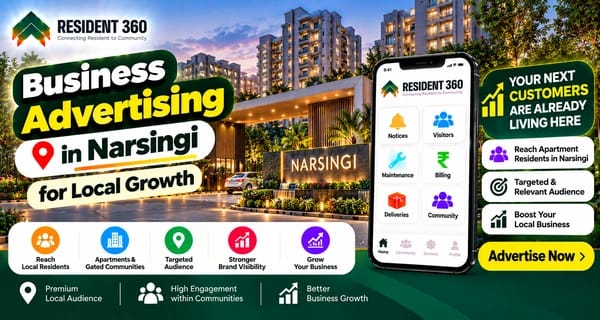
Businesses in Narsingi need local visibility that feels relevant to the people living and working nearby. Business advertising in Narsingi can become more effective when brands understand residential communities, communicate clearly, and present useful offers through organized local channels. Apartment complexes, gated communities, and RWAs bring together audiences with shared everyday needs, making them valuable environments for thoughtful promotion. The challenge is to reach residents without creating noise, confusion, or pressure. A clear message, suitable placement, and responsible coordination can help a local business build awareness while respecting the community’s routines and preferences.
For local brands, advertising is not only about being seen. It is also about reaching the right audience with information that is timely, understandable, and suitable for the residential setting.
Why Narsingi Businesses Need More Focused Local Advertising
Narsingi has a strong residential character, with apartment communities and gated developments where residents regularly look for nearby services, products, and convenience providers. This makes community-focused promotion useful for businesses that want to build awareness among households in a defined local area. A planned approach to advertising for residential communities can help businesses communicate more responsibly and make their message easier for residents to understand.
Local advertising also requires coordination. A society committee, facility manager, security team, or communication coordinator may need to review how an offer is shared. Businesses that respect these processes can create a more positive impression and avoid repeated or poorly timed promotions.
Common Challenges in Business Advertising in Narsingi
Local businesses may understand their products well but still struggle to connect with residential audiences. The following challenges often affect how promotions are planned and received:
- Reaching residents without relying only on broad digital advertising
- Identifying communities where the product or service is genuinely relevant
- Getting the right approval before sharing promotional material
- Avoiding repeated messages across multiple resident channels
- Explaining offers in a simple and transparent way
- Choosing suitable timings for announcements or campaigns
- Coordinating with committee members, facility staff, or communication teams
- Measuring whether residents noticed or responded to an advertisement
- Keeping promotional content separate from important society notices
- Building local trust without making unsupported claims
These issues show why local promotion needs more than a poster or a mass message. It requires a process that considers the community, the audience, and the purpose of the campaign.
How Business Advertising in Narsingi Can Become More Organized
Business advertising in Narsingi can be structured around audience relevance, community permission, message clarity, and follow-up. For example, a home cleaning service may be more suitable for apartment residents than a promotion unrelated to household needs. A local clinic, tutor, repair provider, food business, or fitness service may also benefit from carefully planned community outreach.
Businesses can begin by identifying the type of residents they want to reach and the problem their service solves. They can then prepare a short message with essential details, such as the service area, contact method, offer conditions, and validity period. A committee or authorized communication coordinator can decide whether the message is suitable for the community.
Resident communication tools can support this process by keeping approved information more organized. A Resident communication app may help communities separate important resident updates from optional promotional information, depending on how the community manages its communication workflow. Similarly, an Apartment Management App can provide a broader digital environment for apartment records, coordination, and resident-facing information.
Four Operational Areas That Support Local Advertising
Audience and Community Identification
A campaign becomes more relevant when a business understands which residential communities are likely to need its service. This does not require collecting unnecessary personal information. It requires identifying suitable community types and presenting a clear reason for the promotion.
- Define the service category and ideal local audience
- Select communities where the offer is genuinely relevant
- Prepare different messages for different resident needs
Approval and Communication Planning
Residential communities often have their own communication practices. A business should coordinate with the authorized contact before sharing an announcement, poster, brochure, or service introduction. Clear approval steps can reduce confusion and protect resident trust.
- Confirm who can approve promotional communication
- Share the final message before distribution
- Agree on the channel and timing of the promotion
Offer and Message Clarity
Residents are more likely to understand an advertisement when the message answers practical questions quickly. It should explain what is being offered, who can use it, how to respond, and whether any terms apply.
- Use a short headline and plain language
- Include relevant contact and service-area details
- Avoid unclear discounts, exaggerated claims, or hidden conditions
Response and Follow-Up
Advertising should not end when a message is published. Businesses can review enquiries, questions, and feedback to understand whether the campaign was useful. Follow-up should remain respectful and should not become repeated unsolicited communication.
- Track enquiries through an organized business process
- Note common questions from residents
- Improve future campaigns based on relevant feedback
Related Society Operations That Improve Advertising Coordination
Resident Records and Audience Relevance
A community’s resident and apartment records are primarily maintained for operational purposes, not unrestricted marketing. However, organized records can help authorized teams understand community structure and coordinate communication without sharing private information unnecessarily.
- Use only appropriate, permission-based information
- Avoid exposing resident contact details to advertisers
- Keep promotional outreach separate from confidential records
Community Announcements
Important society notices should not be buried under promotional content. A clear announcement process can help distinguish maintenance updates, safety notices, events, and optional business advertisements.
- Label promotional messages clearly
- Limit unnecessary repetition
- Keep urgent notices visible and prioritized
Complaints and Service Requests
Residents may have questions or concerns about a promotion, service visit, or business interaction. A defined complaint process can help the community direct concerns to the appropriate person instead of allowing issues to spread across informal groups.
- Provide a clear contact for advertising-related concerns
- Record recurring issues for committee review
- Respond respectfully and avoid defensive messaging
Committee and Facility Coordination
Advertising may involve common-area access, temporary displays, service personnel, or community events. Coordination with the authorized management team can help ensure that promotional activity does not interfere with security, maintenance, or resident routines.
- Confirm dates, locations, and access requirements
- Coordinate with security when service visits are involved
- Remove temporary material after the agreed period
Using Digital Society Tools to Support Local Brand Promotion
Digital society tools are not a substitute for a complete marketing plan, but they may help communities organize communication and operational coordination. A Society Management App can bring together several society activities, making it easier for authorized teams to manage resident information, requests, notices, and coordination in one place.
A Society Maintenance App is mainly relevant to maintenance operations, but organized maintenance communication can also help prevent promotional messages from being mixed with payment reminders or service updates. Businesses should respect the purpose of each channel and avoid treating every society notification space as an advertising platform.
Payment-related promotions should also be handled carefully. If a business shares pricing or payment instructions, residents should be able to verify the details independently and review the relevant payment information before making a transaction. Community communication can improve awareness, but it should not replace residents’ own checks.
Choosing the Right Advertising Approach for Different Communities
Small Residential Societies
Smaller societies may have fewer communication layers, but personal trust can matter more. A local business may benefit from a concise introduction shared through an authorized committee member, followed by a limited and clearly defined response process.
Apartment Communities
Apartment communities may include residents with varied needs, schedules, and preferences. Businesses should use specific messaging rather than assuming every household is interested in the same service. A focused campaign can be easier to manage than repeated general promotions.
Large Gated Communities
Large gated communities may require more coordination because of multiple entrances, facility teams, events, and resident groups. Advertising involving product demonstrations, deliveries, or service visits should account for access procedures and agreed timings.
RWAs and Community Associations
A Resident Welfare Association (RWA) may want to protect resident interests while considering useful local services. RWA representatives can define acceptable formats, approval steps, and communication limits. Businesses that follow these expectations may find it easier to maintain a professional relationship with the community.
How Resident360app Can Support Organized Community Coordination
Resident360app can be considered by societies and residential communities looking for a more organized approach to day-to-day coordination. Its relevant capabilities may include resident communication, maintenance and payment tracking, complaints and service requests, visitor and security coordination, resident records, and staff or facility coordination.
For a business campaign, these capabilities are useful mainly from the community-management side. An authorized team may be able to keep society updates, operational requests, and optional promotional information more structured. A visitor management system can also support coordination when an approved business representative, technician, or service professional needs to visit a community.
Communities evaluating rwa management software may consider whether the system can help committees manage records, communication, complaints, and routine operations in an organized way. This can create a clearer environment in which any local advertising is reviewed and communicated responsibly, without suggesting that the software itself guarantees marketing results.
Practical Criteria for Evaluating Local Advertising Campaigns
Businesses and communities should evaluate an advertising approach based on suitability rather than volume. The right process depends on the service, audience, community expectations, and communication method.
Relevance to Residents
Ask whether the offer solves a genuine local need. A relevant service is more likely to be viewed as useful rather than disruptive. The message should explain its value without making broad or unsupported promises.
Approval and Consent Process
Confirm whether the community permits promotional communication and identify the authorized contact. Do not distribute messages through resident groups or display areas without appropriate permission.
Message Quality
Review the wording, contact information, terms, and duration before publishing. The content should be easy to understand and should clearly identify the business or service provider.
Operational Impact
Consider whether the campaign could affect security, visitor movement, common areas, staff workload, or resident privacy. A promotion that creates unnecessary operational pressure may harm the business’s local reputation.
Follow-Up and Feedback
Set a reasonable method for receiving enquiries and concerns. Businesses can use feedback to improve their message, while communities can review whether future promotions should be adjusted, limited, or declined.
For businesses comparing nearby local markets, they may also review approaches to business advertising in Gachibowli and business advertising in Kondapur. These comparisons should be used for planning ideas rather than copied without considering Narsingi’s specific community context. A broader view of business advertising in Narsingi can help brands keep their campaigns locally focused and operationally practical.
A structured maintenance management system may also help communities keep service-related communication and operational requests organized, although advertising decisions still require human review and community approval. The goal is not to send more messages. It is to make relevant information easier to manage, easier to understand, and less disruptive for residents.
Conclusion
Business advertising in Narsingi can be more effective when it is locally relevant, clearly communicated, and coordinated with residential communities. Businesses should focus on useful messages, proper approval, respectful follow-up, and minimal disruption. Societies and RWAs can support this process through organized communication and operational records. With a thoughtful approach, local brands can build awareness while maintaining trust with residents and community teams.
Get Started with Resident360 Today
Resident360app can be considered by societies and residential communities looking for a more organized approach to society management. To learn more, visit Resident360app.
Download the Resident360app Today