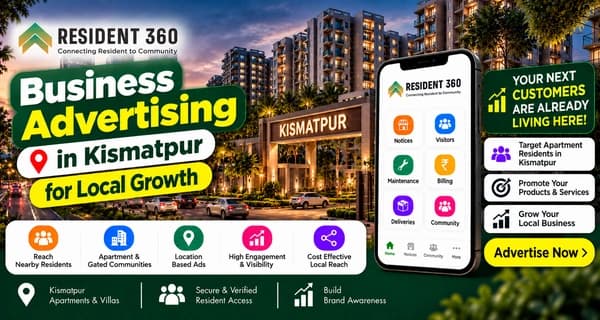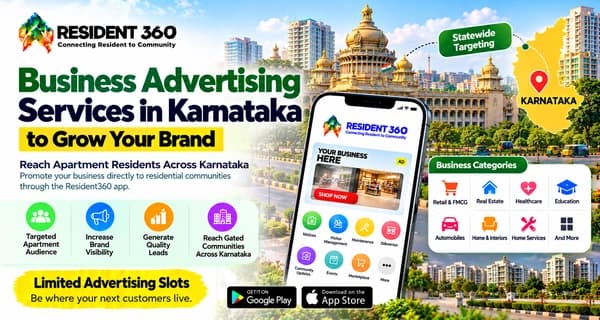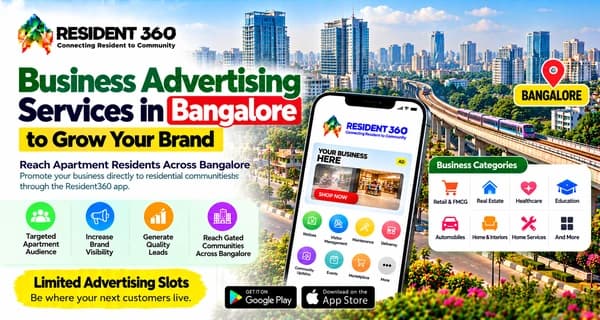
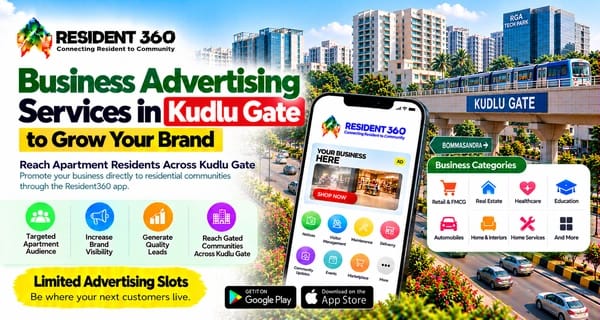
Business advertising in Kudlu Gate can help local brands reach nearby residents, apartment communities, offices, and everyday consumers with more relevant messages. The area has a mix of residential developments, businesses, service providers, and busy local movement, so advertising works better when it is planned around audience, timing, visibility, and trust. Instead of treating every channel the same, businesses can identify where residents spend time, what services communities need, and how an offer can be presented clearly. For a local business, this approach can make advertising more focused and easier to evaluate.
For societies and residential communities, well-organized advertising can also create useful connections between residents and nearby businesses. The right process can help communities review promotional requests, communicate approved offers, and keep advertising activity more organized.
Why Business Advertising in Kudlu Gate Needs a Community-Focused Approach
Business advertising in Kudlu Gate is not only about placing a message in front of as many people as possible. Local residents often respond better to offers and services that are relevant to their daily needs, such as home maintenance, food, education, healthcare, fitness, retail, transport, and household support. Residential communities can provide a practical setting for reaching people who live close to a business and may need its services regularly.
A community-focused approach can also make advertising more respectful. Societies may have their own communication routines, approval processes, notice areas, and resident channels. Businesses that understand these processes can present their offers more clearly instead of sending repeated or unsuitable promotions.
For community administrators, digital tools can support this coordination. A Society Management App may provide a more organized environment for resident communication and society operations, while businesses can use approved channels to share relevant information. The goal is not to flood residents with advertisements, but to connect the right service with the right audience.
Common Problems That Make Local Advertising Less Effective
Businesses and residential communities can face several practical challenges when advertising is handled informally. These issues may reduce visibility, create confusion, or make it difficult to understand whether a campaign is reaching the intended audience.
- Promotional messages may be shared with residents who have no need for the service.
- Businesses may not know which apartment communities are suitable for their offer.
- Advertising requests can be lost in personal messages or scattered conversations.
- Society committees may lack a clear process for reviewing promotional content.
- Repeated advertisements may irritate residents and reduce trust in the business.
- Offers may not include essential details such as service area, contact method, or validity.
- Local businesses may struggle to follow up with interested residents in an organized way.
- Offline posters and leaflets may not provide useful information about audience response.
- Community managers may find it difficult to separate genuine services from unsuitable promotions.
- Businesses may advertise at the wrong time, missing seasonal or community-specific demand.
These problems do not mean that local advertising is ineffective. They show why businesses need a clear audience, suitable messaging, and a practical communication process. Societies also benefit when promotional communication is relevant, limited, and easy for residents to understand.
How Business Advertising in Kudlu Gate Can Become More Organized
A structured local campaign usually starts with audience mapping. A business can identify whether its main audience includes families, working professionals, students, senior residents, tenants, homeowners, or facility managers. It can then choose a message that answers a specific need instead of using a broad statement that says very little.
For example, a home cleaning service may focus on convenience and service coverage, while a tuition provider may highlight age groups and learning formats. A restaurant may promote delivery availability and meal categories, whereas a repair professional may focus on response areas and appointment scheduling. Each message should give residents enough information to decide whether the service is relevant.
Society-focused tools can support the communication side of this process. A Society Maintenance App is primarily used for maintenance-related coordination, but the broader lesson is useful: resident-facing information works better when it is organized and easy to access. Similarly, an Apartment Management App can help communities centralize operational communication, creating a clearer environment for approved announcements and resident updates.
Businesses should also define how they will measure interest. Useful indicators may include enquiries, calls, appointment requests, offer redemptions, or resident questions. These indicators should be reviewed carefully rather than treated as guaranteed outcomes.
Four Operational Areas That Shape Local Community Advertising
Advertising in residential communities depends on more than the creative message. It also relies on how the request is introduced, reviewed, communicated, and followed up. The following areas can help businesses and societies create a more orderly process.
Audience and Area Selection
A campaign should begin with a clear description of the audience and service area. A business can select communities where its service is practical and accessible instead of approaching every society in the locality.
- Define the resident group most likely to need the service.
- Confirm whether the business serves Kudlu Gate and nearby areas.
- Match the offer to local routines and likely household requirements.
Message Approval and Relevance
A society may need to review promotional messages before they are circulated. Clear approval steps can help protect residents from confusing, excessive, or unsuitable advertising.
- Keep the message short and specific.
- Include contact details and important service conditions.
- Avoid claims that cannot be explained or supported.
Resident Communication
The communication channel affects whether residents notice and understand an offer. A Resident communication app can support centralized updates where such communication is part of the community’s process. Businesses should still respect the community’s preferences and avoid repeated messages.
- Use one approved message rather than multiple versions.
- Share information at a reasonable time.
- Make it easy for residents to ask questions or decline further communication.
Enquiry and Follow-Up Handling
Interested residents need a simple way to contact the business. A business should be ready to respond consistently, record enquiries appropriately, and explain next steps without pressuring residents.
- Use a dedicated phone number or enquiry method where practical.
- Respond with accurate service information.
- Review enquiries to understand which messages generated genuine interest.
Supporting Society Operations That Improve Advertising Coordination
Local advertising becomes easier to manage when the supporting society operations are organized. Businesses may not control these systems, but they can work more effectively when they understand how a community communicates and manages resident requests.
Resident Records and Audience Understanding
Communities may maintain resident and apartment records for operational purposes. Accurate records can help authorized administrators understand the size and structure of a community, although businesses should not expect access to private information. Advertising should always be based on appropriate communication practices rather than unsolicited use of resident data.
- Use aggregated audience understanding where possible.
- Avoid requesting private resident details unnecessarily.
- Coordinate with authorized community representatives.
Maintenance and Payment Communication
Residents already receive important updates about maintenance, dues, and services. A maintenance management software solution may help organize these operational messages, but promotional content should remain separate and clearly identified. This distinction can reduce confusion between society notices and business advertisements.
- Label promotional messages clearly.
- Do not make an advertisement look like an official society notice.
- Avoid placing promotional content inside urgent maintenance communication.
Complaints and Service Requests
Residents may have questions or concerns about a service after seeing an advertisement. A clear complaint process can help communities and businesses respond responsibly when a concern is raised. Businesses should identify a contact person and address service issues without shifting responsibility to the society.
- Provide a direct route for service-related concerns.
- Record recurring issues to improve the offer or message.
- Keep society administrators informed when a campaign creates repeated complaints.
Committee and Management Coordination
A business may need to communicate with a committee or authorized management team before promoting an offer inside a community. Clear coordination can help establish where, when, and how the message may be shared.
- Confirm the appropriate contact before sending material.
- Follow the community’s communication preferences.
- Keep approvals and campaign details organized.
Applying Local Advertising Across Different Residential Communities
The same advertising plan may not work equally well for every residential community. A small society may prefer a limited notice or one approved resident update, while a larger apartment community may need clearer categorization, timing, and coordination. Businesses should adapt the campaign to the community’s communication habits rather than assume that a single format will suit every audience.
In gated communities, access and security routines may influence how promotional teams, service personnel, or printed material are handled. A visitor management system is designed for visitor and entry coordination, not advertising performance, but it highlights why businesses should follow gate procedures and avoid sending unapproved representatives to a community.
RWAs may also coordinate communication across several residential blocks or areas. An rwa management software platform can support broader administrative coordination, while advertising decisions still need to follow the RWA’s own communication policies. Businesses should ask who can approve a campaign, which audience is suitable, and whether the offer provides genuine local value.
For apartment communities, the message may work better when it reflects common resident needs. For example, a service provider can explain coverage, appointment process, and expected response rather than relying only on a discount. In every community type, relevance and clarity are more sustainable than high-frequency promotion.
How Resident360app Can Support the Communication Around Local Offers
Resident360app can be considered by societies and residential communities that want a more organized approach to resident-facing operations. Its relevant capabilities may include resident communication, maintenance and payment tracking, complaints and service requests, visitor and security coordination, resident records, and staff or facility coordination. These functions are not a replacement for an advertising strategy, but they can support the communication environment in which approved local information is shared.
For example, a community may use organized communication for important notices while keeping promotional messages clearly separated. Maintenance and payment information can remain distinct from business offers, helping residents understand which updates relate to society operations. Where residents raise service questions, a structured approach to requests may make it easier for the appropriate people to review them.
A community may also use payment information as part of its regular operational communication, but businesses should not assume that a society platform processes advertising payments or commercial transactions. Any commercial arrangement should be handled through clearly defined and authorized channels.
The value of a platform in this context is organization. It can help reduce scattered communication, clarify responsibility, and give society administrators a better way to manage resident-facing information. Businesses still need to create accurate offers, respond professionally, and follow the community’s approval process.
What to Evaluate Before Choosing a Local Advertising Approach
Businesses should evaluate both the audience and the communication process before investing time or money in local community advertising. A suitable approach should be practical for the business, respectful of residents, and manageable for the society or RWA involved.
Consider the following questions:
- Is the target audience clearly defined?
- Does the business genuinely serve residents in Kudlu Gate?
- Is the message useful, understandable, and easy to verify?
- Who approves advertising inside the community?
- Which communication channel is appropriate for the offer?
- How will residents contact the business?
- Can the business respond to enquiries within a reasonable time?
- How will complaints or unsuitable responses be handled?
- Can the campaign be adjusted based on relevant enquiries?
- Is the frequency low enough to avoid communication fatigue?
Businesses should also distinguish between visibility and conversion. A message may be seen without generating an enquiry, while a smaller campaign may reach fewer people but produce more relevant conversations. Reviewing the quality of enquiries, resident feedback, and service fit can provide more useful direction than focusing only on the number of impressions.
A community’s internal tools can support administration, but they do not remove the need for consent, clarity, and responsible communication. Whether a society uses a general society management app, a dedicated communication platform, or a manual approval process, the advertising message should remain transparent and appropriate for the audience.
Conclusion
Business advertising in Kudlu Gate can become more useful when it is built around local relevance, clear messages, responsible community coordination, and practical follow-up. Businesses should understand the needs of residents, while societies and RWAs can maintain clear approval and communication processes. With an organized approach, local advertising can support genuine connections without creating unnecessary message overload or confusion for residential communities.
Get Started with Resident360 Today
Resident360app can be considered by societies and residential communities looking for a more organized approach to society management. To learn more, visit Resident360app.
Download the Resident360app Today