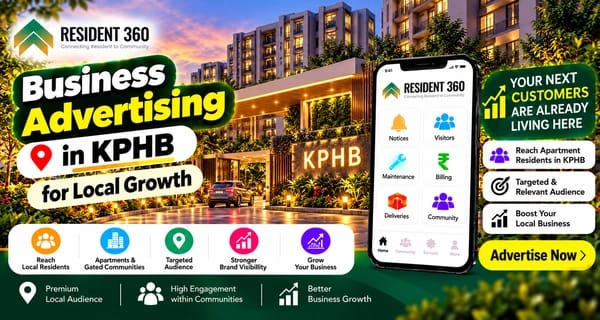
Business advertising in KPHB can help local brands reach customers who live, work, and spend time within a closely connected neighbourhood. From home services and education providers to grocery stores, clinics, restaurants, and professional consultants, businesses need ways to communicate with nearby audiences without wasting effort on people outside their service area. Residential communities are especially relevant because they bring together households with recurring needs and shared local preferences. For societies and advertisers, the challenge is to keep promotions useful, respectful, and easy to understand. A well-planned local campaign can introduce a business to residents through relevant messages, clear offers, and convenient contact information. The focus should not be on sending more advertisements, but on reaching the right community with information that genuinely supports everyday needs.
For advertisers, KPHB offers an opportunity to combine neighbourhood familiarity with organised digital communication. For apartment committees and residents, carefully managed advertising can introduce useful services while avoiding clutter and irrelevant messages.
Why Business Advertising in KPHB Needs a Community-Focused Approach
KPHB includes established residential areas, apartment communities, retail activity, offices, educational services, and a wide range of household businesses. This mix creates demand for local advertising, but it also means that a broad, untargeted campaign may not deliver meaningful results. A salon, tutor, home repair provider, diagnostic centre, or food outlet may be more relevant to residents within a few kilometres than to a general citywide audience.
Society-focused advertising can make local promotions more contextual. A resident may be more interested in a nearby electrician during a home repair issue, a daycare service before the school year, or a local restaurant offering convenient delivery. However, the advertising process should respect community rules and avoid interrupting important resident communication.
A structured advertising resource for residential communities can help businesses understand how local promotions fit into society communication. It can also help committees think about whether an advertisement is relevant, clearly presented, and appropriate for residents. The goal is a useful connection between local businesses and neighbourhood households.
Common Challenges in Local Business Advertising in KPHB
Businesses often know their ideal customer but struggle to reach that audience consistently. Residential communities, meanwhile, may receive promotional messages through scattered channels without a clear process for reviewing, sharing, or managing them.
Common challenges include:
- Reaching residents who are genuinely close to the business
- Choosing the right apartment or community audience
- Explaining the service clearly within a short message
- Avoiding irrelevant promotions that residents may ignore
- Managing approvals before an advertisement is shared
- Keeping business contact details accurate and visible
- Distinguishing a local offer from general online advertising
- Coordinating campaigns across several residential communities
- Following up on enquiries without creating confusion
- Measuring interest when responses arrive through different channels
These issues can make a small business campaign feel disorganised. They can also make residents less receptive when advertising is mixed with urgent notices, maintenance updates, or security communication. A clear process helps protect both the advertiser’s message and the community’s attention.
How Business Advertising in KPHB Can Reach Relevant Residents
Business advertising in KPHB becomes more practical when it is connected to a defined audience and a clear communication process. Instead of promoting every service to every society, a business can identify communities where its offering is genuinely useful. A home cleaning provider, for example, may focus on apartment residents, while a local coaching centre may communicate with families looking for educational support.
A campaign can begin with a simple message that explains the service, location, value, operating hours, and contact method. The advertiser can then coordinate with the relevant community representative or management process before sharing the promotion. This helps reduce repeated messages and gives residents enough information to decide whether to respond.
A society management app may support organised communication within a residential community. It should not be treated as a replacement for thoughtful advertising strategy, but it can provide a more structured setting for sharing approved local information. The same principle applies when a business wants to reach several communities: define the audience, prepare a concise message, and maintain a respectful frequency.
For advertisers, responses can also reveal which services are most relevant to a particular neighbourhood. Enquiries about repairs, food, learning, wellness, or household support may help a business improve future campaigns without relying on assumptions.
Four Operational Areas That Strengthen Local Advertising
Successful society-based advertising involves more than creating a promotional poster. It depends on coordination between the advertiser, residents, and the people responsible for community communication.
Audience Selection
A local campaign should begin by identifying the residents most likely to need the service. This can make the message more relevant and reduce unnecessary communication.
- Define the service area around KPHB
- Identify communities where the offering fits resident needs
- Adapt the message for families, professionals, students, or senior residents where appropriate
Message Approval
Residential communities may have their own preferences for promotional communication. A clear review process can help ensure that the advertisement is accurate, polite, and suitable for sharing.
- Include business name and service category
- Provide useful contact information
- Avoid unclear claims, pressure tactics, or excessive repetition
Resident Communication
Residents should be able to understand an offer quickly and decide whether it is relevant. Clear communication is especially useful when local businesses provide time-sensitive services or limited-period promotions.
- Use a short headline and direct description
- Explain the area served and availability
- Keep promotional information separate from urgent society notices
Enquiry Handling
A campaign can lose value if enquiries are not handled promptly or consistently. Businesses should decide who will respond, what information will be shared, and how requests will be recorded.
- Assign a contact person for resident enquiries
- Keep service details consistent across messages
- Follow up respectfully without sending repeated unsolicited messages
Society Operations That Support Better Advertising
Advertising works more smoothly when it fits into existing community operations rather than competing with them. The following areas can support a more organised approach for both societies and local businesses.
Resident Records
Accurate resident and apartment records can help a community understand where communication should be directed. Businesses should not assume access to private information; any outreach should follow the community’s approved process and respect resident choice.
- Use community-level communication rather than personal data without permission
- Share only information needed for the promotion
- Keep resident interests and privacy in mind
Maintenance and Service Needs
Many local advertisements are connected to recurring household needs, such as plumbing, electrical work, cleaning, pest control, or appliance repair. Understanding these categories can help communities consider useful services without turning every maintenance issue into a sales opportunity.
- Separate genuine service information from aggressive promotion
- Present service providers clearly for resident consideration
- Use relevant timing, such as seasonal repairs or routine upkeep
Payment Information
If an advertisement includes a paid service, the terms should be clear. Residents should know the price or quotation process, payment expectations, cancellation conditions, and who is responsible for delivery. General payment information can help readers understand why transparent payment communication matters, although businesses should provide their own complete terms.
- Avoid unclear charges or incomplete offer details
- State whether a quotation is required
- Provide a proper receipt or confirmation where applicable
Complaint and Feedback Handling
Not every resident will be satisfied with a service, and a community should not be expected to resolve private commercial disputes automatically. Businesses can still create a clear channel for feedback and respond professionally when a resident raises a complaint.
- Provide a direct business contact for service concerns
- Record recurring issues and improve the customer process
- Avoid asking residents to post sensitive details in public community channels
Choosing the Right Advertising Format for Different Communities
The right format depends on the size, communication habits, and operating structure of the residential community. A small apartment building may prefer a simple notice or one approved digital message. A larger gated community may need a more organised process because residents receive more updates and several businesses may request visibility.
In compact communities, a concise announcement with the business name, service area, contact details, and validity period may be enough. The advertiser should avoid sending repeated reminders if residents have already received the information. A committee member or designated coordinator can decide whether the message is relevant before sharing it.
In larger apartment communities, different resident groups may have different needs. A tutoring service may appeal to families, while a home maintenance provider may be relevant to most households. Segmenting the message by usefulness, rather than sending everything to everyone, can improve clarity.
Gated communities may also have separate operational considerations around visitors, deliveries, and service personnel. Businesses that send technicians or delivery staff should provide accurate identity and appointment details through the community’s accepted process. A society maintenance app or an apartment management app may be relevant to the wider operational environment, but advertising should remain clearly separated from maintenance requests and access decisions.
Where an RWA manages communication, advertisers should coordinate with the appropriate representative instead of approaching residents individually. This can support consistency while giving the RWA greater control over the type and frequency of promotions shared with the community.
How Resident360app Can Support Organised Community Communication
Resident360app can be considered by societies and residential communities that want a more organised approach to everyday coordination. Depending on the community’s needs, relevant capabilities may include resident communication, resident and apartment records, maintenance and payment tracking, complaints and service requests, visitor and security coordination, and staff or facility coordination.
For local advertising, the most relevant role is communication structure. A community may use an organised resident communication process to share approved information while keeping it distinct from essential notices. This can make it easier for residents to find community updates and decide whether a local service is useful to them.
A Resident communication app can support a centralised approach to announcements and updates. Businesses should still provide accurate information, respect community approval, and avoid assuming that every resident wants promotional messages. The platform or process is only one part of responsible advertising; relevance and consent remain important.
For communities with active administrative work, rwa management software may help organise records, communication, maintenance coordination, and other society operations. A management team can then decide how local business requests should be reviewed and communicated. If service personnel need access to a community, a visitor management system may support the separate process of coordinating visitor or delivery information. These operational tools should not be presented as advertising guarantees, but they can help keep community activities more organised.
How to Evaluate a Local Advertising Approach
Businesses and societies should assess an advertising approach based on practical fit rather than reach alone. The first consideration is relevance: does the business solve a need that residents in the selected KPHB community may reasonably have? A narrowly focused campaign can be more useful than a broad message with little connection to the audience.
Next, review the communication workflow. Consider who approves promotions, where they are shared, how often they appear, and how residents can respond or opt out. The process should protect urgent community notices from being buried under promotional content.
Businesses should also check message quality. A useful advertisement normally includes:
- A clear service description
- The business location or service area
- Contact details and operating hours
- Offer validity or quotation information
- Any relevant terms or limitations
For societies, recordkeeping and accountability matter as well. A committee or designated coordinator may want to maintain a simple list of approved advertisers, dates of communication, and resident feedback. A maintenance management software solution is designed for maintenance workflows rather than advertising, but its broader lesson is relevant: organised records make recurring processes easier to review and manage. business advertising in Miyapur, business advertising in Bachupally, business advertising in Kondapur .
Local businesses can also compare neighbourhood-focused options before planning a campaign. For nearby market context, advertisers may review business advertising in Miyapur, business advertising in Bachupally, and business advertising in Gopanpally. These locations should not be treated as identical markets; each campaign still needs its own audience, service area, and communication plan.
Conclusion
Business advertising in KPHB can become more useful when local brands focus on relevant residential audiences, clear messages, respectful communication, and reliable enquiry handling. Societies can support this process by using an organised approval workflow and keeping promotions separate from essential updates. With thoughtful targeting and practical community coordination, businesses can build local awareness while residents receive information that is genuinely useful.
Get Started with Resident360 Today
Resident360app can be considered by societies and residential communities looking for a more organized approach to society management. To learn more, visit Resident360app.
Download the Resident360app Today