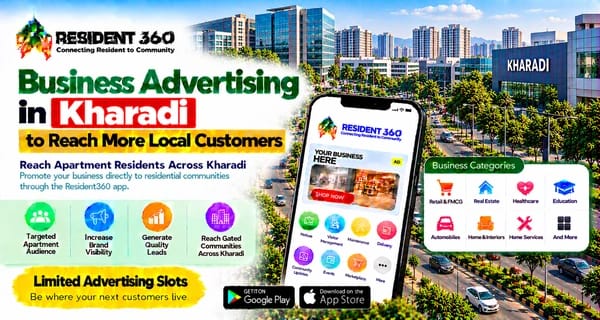
Businesses in Kharadi need more than broad online visibility to attract nearby customers. Business advertising in Kharadi becomes more effective when brands understand the area’s residential communities, daily routines, service needs, and local buying decisions. From neighbourhood retailers and clinics to tutors, home-service providers, restaurants, and professional firms, the right local message can help a business become more familiar to residents. Residential communities also offer a practical setting for relevant promotions because residents regularly need services, products, maintenance support, education, healthcare, food, and household assistance. A thoughtful approach focuses on usefulness, clear communication, and trust rather than repeated promotional messages.
For businesses, residential communities can provide a focused local audience. The key is to choose suitable communication channels, understand society processes, and present offers that genuinely match resident needs.
Why Kharadi Businesses Need More Focused Local Advertising
Kharadi has a mix of residential communities, apartments, gated developments, offices, and neighbourhood services. This creates opportunities for businesses that can reach people close to their homes, but it also makes relevance important. Residents are more likely to notice an advertisement when it addresses a familiar need and reaches them through an accepted community communication process.
Local advertising can help a business build recognition gradually. A home-cleaning service may be useful to new residents, while a nearby restaurant may benefit from communicating delivery options or limited-time menus. A coaching centre, salon, medical practice, or repair service can also create stronger awareness when its message is specific to the community audience.
Businesses should also respect the role of society committees and facility teams. Advertising should be clear, permission-based where required, and appropriate for the residential environment. Communities may use digital tools for announcements, records, visitor coordination, and resident updates, creating structured opportunities for relevant business communication.
For a broader understanding of how technology supports residential communities, businesses can also review this guide to society management and consider how local promotions may fit into existing community workflows.
Common Challenges in Business Advertising in Kharadi
Local advertising can appear simple, but businesses often struggle to reach the right residents without creating confusion or unnecessary disruption. Residential communities also have their own communication preferences and administrative processes. Common challenges include:
- Reaching residents who are genuinely likely to need the product or service
- Finding an appropriate channel for sharing local offers
- Getting communication approved by the relevant society contact or committee
- Avoiding repetitive messages that residents may ignore
- Explaining the service clearly within a limited amount of space
- Building trust when the business is not yet familiar to the community
- Connecting an advertisement with a simple enquiry or response process
- Keeping offers current when prices, timings, or availability change
- Coordinating with security, facility staff, or the community management team
- Measuring whether local advertising generates useful enquiries
A business may also lose opportunities when its information is scattered across posters, chat groups, phone calls, and informal recommendations. Residents may see an offer but forget the contact details, while committee members may find it difficult to manage repeated requests from different advertisers. A more organized approach can make local advertising easier to understand for both businesses and communities.
How Business Advertising in Kharadi Can Use Community Platforms
Business advertising in Kharadi can become more relevant when it is connected to organized resident communication rather than treated as a standalone promotion. A business can first identify the community audience, define the purpose of the message, and prepare concise information about its service. The society can then decide whether the message is suitable for residents and where it should be shared.
A residential platform may also help businesses understand the kind of environment in which their message will appear. A promotion for a cleaning service, grocery delivery provider, tutor, or healthcare practice should be different from a general brand advertisement. Useful details may include service coverage, operating hours, contact method, introductory information, and any terms residents need to know.
Community software is not an advertising guarantee, but it can provide a more structured setting for communication and coordination. A society management app may help committees organize resident information and community updates, while businesses can prepare messages that are more relevant to the audience. The focus should remain on permission, clarity, and resident value.
For example, a local appliance repair provider could communicate its service area and appointment process to a community that frequently needs household support. A nearby fitness studio could share class information suited to residents, while a childcare service could explain its operating hours and enquiry process. These examples work because the message connects a real local need with a clear next step.
Four Operational Areas That Strengthen Local Advertising
Audience Relevance
A local advertisement works better when it reflects the needs of the people receiving it. Businesses should identify the type of resident or household most likely to benefit before preparing a message.
- Define the service category and intended audience
- Use language that is clear to residents
- Avoid sending unrelated offers to broad groups
Community Approval
Residential communities may have internal processes for sharing external promotions. Businesses should provide complete information to the committee or authorized contact and allow the community to decide whether the message is appropriate.
- Share business details and contact information clearly
- Follow the society’s communication preferences
- Keep the message respectful and non-intrusive
Message Timing
Timing can affect whether residents notice and understand an advertisement. A service announcement may be more useful when residents have enough time to respond, while urgent or seasonal offers require a clearly stated validity period.
- Mention dates, hours, and service availability
- Avoid sending repeated reminders without a reason
- Coordinate timing with community communication practices
Enquiry Handling
An advertisement should make it easy for an interested resident to respond. Businesses should decide whether they will receive calls, online enquiries, appointment requests, or messages and should be prepared to reply consistently.
- Provide one clear contact method
- Respond with accurate service information
- Track enquiries without requesting unnecessary personal details
Society Operations That Support Better Business Outreach
Resident Communication
Residents need a reliable way to receive important community information, and businesses need to understand that promotional content should not compete with urgent notices. A Resident communication app can support organized resident updates, making it easier for communities to separate essential information from optional local offers.
- Keep promotional messages concise
- Use clear labels for external business information
- Avoid mixing advertisements with emergency announcements
Visitor and Security Coordination
Some businesses provide services inside residential communities, which means appointments may involve entry coordination. A visitor management system can help communities maintain a more organized approach to visitor information, while service providers should share appointment details through the process defined by the society.
- Confirm the resident and appointment before arrival
- Provide service personnel details when requested
- Follow gate and entry instructions set by the community
Payments and Service Information
When residents consider a local service, they may want to understand the payment process, service charges, cancellation terms, or receipt details. Businesses should present this information accurately and avoid vague claims. Communities can also direct residents to reliable sources for general payment information when payment-related questions arise.
- State charges or terms clearly where applicable
- Avoid promising benefits that cannot be verified
- Give residents a suitable way to ask questions
Complaints and Follow-Up
A local advertising effort should account for what happens after a resident responds. If a service issue occurs, the business should provide a clear support route rather than asking society staff to manage every concern. Communities may also use a structured complaint process for issues related to common areas or community operations.
- Separate business-service complaints from society complaints
- Provide a responsible contact for follow-up
- Record recurring concerns so communication can improve
Making Local Advertising Work Across Different Communities
The right approach can vary according to the size and structure of a residential community. In a smaller society, a committee member may coordinate external messages directly. The business may need to provide a short, well-designed description that can be reviewed quickly and shared only when relevant.
Apartment communities with many buildings may require more organized communication. A business should avoid assuming that one message suits every household. It may be more useful to define the service area, audience, and response method so the community can decide how to present the information.
Large gated communities may have several entry points, facility teams, resident groups, and recurring service requirements. Businesses offering home visits should understand the community’s visitor and security process. They should not ask residents or guards to bypass established procedures simply to complete a booking.
RWAs may also coordinate common communication for several residential blocks or neighbourhoods. In such cases, rwa management software may support administrative coordination, resident records, service requests, and community information. Businesses can make collaboration easier by giving the RWA one accurate information sheet instead of sending different versions to multiple contacts.
The same principle applies across communities: advertising should be useful, properly coordinated, and easy for residents to act on. Businesses should also review feedback and adjust the message when residents consistently ask the same questions.
How Resident360app Can Support Organized Community Advertising
Resident360app can be considered by residential communities that want a more organized approach to resident communication, service coordination, records, and day-to-day society management. These capabilities may help create a clearer environment in which community information is managed systematically, although the platform should not be treated as a substitute for an advertising strategy.
For businesses working with societies, understanding the community’s operating process can improve coordination. A society maintenance app may help a committee manage maintenance-related information, while a maintenance management software approach can support structured records and recurring processes. These operational areas matter because businesses often advertise services connected to repairs, cleaning, facilities, and household support.
An Apartment Management App may also help communities organize apartment records, resident communication, requests, and coordination. For a business, this can mean working with a clearer community contact instead of relying on scattered messages. Resident360app may support a more organized approach to these interactions through relevant society-management capabilities.
A committee can also use a management team approach to assign responsibility for reviewing external business requests, communicating with residents, and handling follow-up. This can help prevent advertising enquiries from being lost between committee members, facility staff, and security personnel. The exact process should always be decided by the community.
How to Evaluate a Local Advertising Approach
Businesses should evaluate more than the number of people who may see an advertisement. The quality of the audience, clarity of the message, community approval process, and ability to handle enquiries are equally important. A campaign that generates many irrelevant responses may create more work without producing useful results.
Consider the following questions before advertising through a residential community:
- Does the audience match the product or service?
- Is the message useful and easy to understand?
- Has the business provided accurate contact and service information?
- Is the community’s approval or communication process clear?
- Can the business respond promptly to resident enquiries?
- Are entry, appointment, and service-personnel requirements understood?
- Can the business distinguish genuine enquiries from general visibility?
- Is there a responsible person for complaints or follow-up?
- Will the campaign respect resident privacy and communication preferences?
- Can the message be updated when the offer or availability changes?
Businesses may also compare different local channels, such as community communication, neighbourhood search visibility, referrals, and location-based digital promotion. The objective is not to use every channel at once. It is to select channels that fit the service, the audience, and the community’s expectations.
A practical campaign can begin with a clear service description and a limited number of communities. After reviewing enquiries and resident feedback, the business can improve its message. This measured approach may help the brand build familiarity without overwhelming residents or society administrators.
Conclusion
Business advertising in Kharadi can be more effective when it is local, relevant, and respectful of residential community processes. Businesses should focus on useful messages, clear enquiry handling, responsible coordination, and accurate information. By understanding society operations and using organized communication thoughtfully, local brands can build awareness among nearby residents while supporting a better experience for committees, facility teams, and the communities they serve.
Get Started with Resident360 Today
Resident360app can be considered by societies and residential communities looking for a more organized approach to society management. To learn more, visit Resident360app.
Download the Resident360app Today