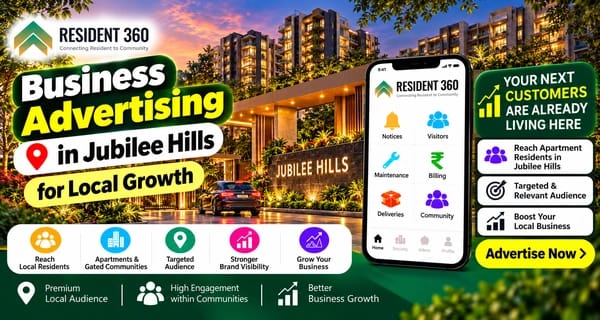
Businesses exploring business advertising in Jubilee Hills need more than broad visibility. They need a practical way to reach nearby residents, apartment communities, Resident Welfare Associations, and local decision-makers with useful, relevant messages. Jubilee Hills has a mix of residential properties, gated communities, apartments, offices, clinics, restaurants, retailers, and service providers. This makes community-focused advertising valuable, but only when it respects resident preferences and society processes.
For local brands, residential communities can offer a focused audience for services such as home maintenance, education, healthcare, fitness, food delivery, interior design, professional services, and neighbourhood retail. The right approach combines clear offers, appropriate communication channels, and coordination with the society management team.
Why Business Advertising in Jubilee Hills Needs a Community-Focused Approach
Jubilee Hills businesses often serve customers who live, work, or spend time within a relatively local area. Reaching these audiences through residential communities can help a brand communicate its services in a more relevant setting. However, advertising inside a society is different from placing a general outdoor or digital advertisement. It may involve approvals, communication preferences, visitor access, and careful coordination with residents and committees.
A local advertising plan should therefore consider how residents receive announcements, how promotional material is evaluated, and whether the message solves a genuine need. A salon promoting a neighbourhood offer, a tutor sharing a new batch, or a maintenance provider introducing a service may receive better attention when the communication is clear and relevant to the community.
Community advertising can also support trust when it is handled transparently. Businesses should avoid excessive messages, unclear claims, and unsolicited contact. Working through suitable society channels and respecting committee decisions can create a more organized experience for both residents and advertisers.
Common Challenges Businesses Face When Advertising Through Residential Communities
Advertising to apartment residents can be useful, but businesses may face operational challenges if communication is handled informally. A clear process helps prevent promotional messages from becoming a source of confusion for residents or additional work for committee members.
- Finding the right residential communities for a specific product or service
- Identifying whether a society permits local business promotions
- Reaching residents without sending repeated or irrelevant messages
- Coordinating with committee members before sharing an offer
- Explaining the value of an advertisement in simple language
- Managing enquiries after residents respond to a promotion
- Keeping promotional communication separate from urgent society notices
- Avoiding confusion between an official society announcement and a private advertisement
- Tracking which communities have received a particular campaign
- Maintaining a respectful process for residents who do not want promotional communication
These challenges become more noticeable when a business contacts several communities at once. A spreadsheet, scattered messaging groups, or manual follow-up may make it difficult to understand what was sent, who approved it, and whether residents received the intended information.
How Business Advertising in Jubilee Hills Can Become More Organized
A structured approach to business advertising in Jubilee Hills begins with audience selection. A business can identify communities where its service is locally relevant, prepare a concise message, and coordinate with the appropriate committee or facility contact. The objective is not to send the same promotion everywhere, but to match the offer with a genuine neighbourhood requirement.
For example, a home cleaning provider may prepare a short description of its service, service area, contact process, and applicable terms. A committee can then decide whether the information is suitable for residents. If approved, the message can be shared through an appropriate resident communication channel rather than mixed with security alerts or maintenance notices.
A society may also use a Society Management App to organize resident-facing communication and coordinate information more clearly. This does not turn every society message into an advertisement. Instead, it may help the management team maintain a clearer distinction between community notices, service updates, and permitted local promotions.
A practical campaign process may include:
- Define the local audience and service area.
- Prepare a short, accurate, and useful advertisement.
- Contact the appropriate society representative.
- Obtain permission before sharing promotional information.
- Use the approved communication route.
- Record campaign details and follow-up requirements.
- Review resident feedback without pressuring residents to respond.
This process can make local advertising easier to manage while keeping resident experience at the centre of the activity.
Four Operational Areas That Shape Community Advertising
Advertising in a residential community depends on more than the advertisement itself. The way a society manages communication, records, access, and resident requests can influence whether a local promotion is received positively.
Resident Communication and Announcements
Residents need to understand whether a message is an official society notice, a service update, or an approved business promotion. Clear labels and concise wording can reduce misunderstanding.
- Separate promotional messages from urgent notices
- Use clear subject lines and descriptions
- Avoid unnecessary repetition
A Resident communication app can support organized information sharing when a community wants a more central way to communicate with residents.
Committee Review and Approval
Committee members may need to review the relevance, timing, and format of a business promotion before it reaches residents. A simple review process can help the society apply consistent standards to different businesses.
- Record who approved the communication
- Confirm the intended audience
- Clarify whether the promotion is one-time or recurring
Visitor and Service Access
Some advertisements lead to service visits, demonstrations, deliveries, or appointments. The business and society should not assume that a promotional message automatically grants access to the premises. Visitor procedures still need to be followed.
- Share visitor details through the approved process
- Coordinate service personnel arrival in advance
- Keep promotional activity separate from gate security decisions
A visitor management system may help societies organize visitor-related information while maintaining a separate process for advertising approvals.
Enquiry and Follow-Up Handling
Residents may ask questions about price, availability, service area, or appointment timing. Businesses should provide a direct contact route and avoid making the management committee responsible for every enquiry.
- Provide one clear business contact
- Answer questions accurately
- Avoid collecting unnecessary resident information
Society Operations That Support Better Local Advertising
A community’s everyday operating processes can influence how easily it handles local business communication. Businesses should understand these processes before approaching a society, while committees can use them to reduce confusion and administrative effort.
Maintenance and Community Notices
Maintenance updates are usually more important than promotional messages, so advertising should not interfere with them. Societies using a Society Maintenance App may already have established routines for sending payment reminders, work notices, and facility updates. Any approved promotion should fit around those priorities.
A local advertiser can improve its chances of being considered by offering a concise message that does not compete with essential society communication.
Resident Records and Audience Relevance
A society may need to understand whether a promotion is relevant to its residents without exposing private resident information. Businesses should not expect access to resident databases or personal contact details. Audience selection should remain at the community or service-area level.
An Apartment Management App can provide a more organized approach to apartment records and community coordination, but advertising decisions should still follow the society’s permission process.
Complaints and Service Requests
Promotions can generate service requests, but they can also lead to complaints if the offer is unclear or the service experience is poor. Businesses should provide accurate terms, a responsive contact method, and a way to address customer concerns directly.
Societies can keep advertising-related concerns separate from essential facility issues. A structured complaint process may help clarify whether an issue concerns the advertisement, the service provider, or society administration.
Security and Facility Coordination
Some local businesses provide services inside homes or common areas. This requires coordination with security personnel and facility staff, especially when workers, equipment, or deliveries are involved.
A society may use maintenance management software to organize operational records, while advertising and visitor access remain subject to the community’s own rules. Clear coordination can reduce interruptions at the gate and prevent staff from receiving incomplete instructions.
Choosing the Right Community Advertising Model for Different Residential Communities
The right advertising approach depends on the type of residential community and the nature of the business. A small apartment building may handle a promotion through a committee conversation, while a larger gated community may need a more structured review and communication process.
Small Societies
In a small society, decision-making may be more direct, but committee members may have limited time. A short proposal with the business category, service area, offer details, and contact information can make review easier. Businesses should avoid assuming that informal familiarity is equivalent to permission.
Apartment Communities
Apartment communities may have different resident preferences and several communication needs operating at once. A business should make its message easy to distinguish from maintenance reminders, meeting notices, and security updates. The society may also decide whether the promotion should be shared once or made available through a community notice area.
Large Gated Communities
Large communities may include multiple towers, gates, facilities, and resident groups. A local campaign may need a single point of contact, a defined schedule, and clear instructions for any service visits. Advertising should not create additional work for gate staff or require them to make decisions that belong to the committee.
RWAs and Community Associations
A Resident Welfare Association (RWA) may coordinate several aspects of community administration, including resident communication, facility concerns, and service-provider interactions. Businesses approaching an RWA should explain the practical value of the promotion and respect the association’s internal review process. RWA management software may help organize broader RWA records and coordination, but it does not replace approval by the association.
Businesses serving multiple neighbourhoods can also compare their outreach plans across locations. For example, separate local pages about business advertising in Puppalaguda, business advertising in Khajaguda, and business advertising in Rajendranagar can help organize location-specific messaging without treating every community as identical.
How Resident360app Can Support the Coordination Behind Local Advertising
Resident360app can be considered by societies that want a more organized approach to resident communication and community operations. It should not be presented as an advertising marketplace or as a guarantee that a business promotion will be accepted. Its relevance lies in helping societies coordinate the operational information around resident life more clearly.
Depending on the community’s needs, relevant capabilities may include resident communication, maintenance and payment tracking, complaints and service requests, resident and apartment records, visitor and security coordination, and staff or facility coordination. These functions can help a society keep essential operations structured while deciding separately how local advertising should be reviewed.
For example, an advertisement may be approved by the committee, while a service visit still needs to follow the society’s visitor process. Resident communication can help share the approved information, while the management team can remain responsible for deciding timing, audience, and follow-up. Keeping these responsibilities clear may reduce confusion for residents and staff.
Payment-related communication should also remain precise. If an approved local service involves a community collection or shared activity, the society should explain the purpose and maintain suitable records. General payment information should never be presented as proof that a particular business or transaction is endorsed by the society.
How to Evaluate a Local Advertising Approach in Jubilee Hills
Before investing time or money in community-focused advertising, a business should assess whether the approach fits its audience and operating capacity. The goal is to find a responsible communication model rather than simply maximize the number of communities contacted.
Relevance to Residents
Consider whether the service solves a recurring or understandable local need. A nearby tutor, clinic, repair provider, childcare service, or food business may be more relevant to residents than a product with no local connection.
Permission and Communication Workflow
Ask who reviews local promotions, which communication channel may be used, and whether the message can be shared once or on a defined schedule. Written clarity can prevent later disagreement.
Message Quality
A useful advertisement should identify the service, service area, contact method, offer conditions, and any relevant limitations. Avoid unsupported claims, exaggerated language, or unclear pricing references.
Resident Experience
A campaign should not overwhelm residents or make them feel pressured. Businesses should provide an easy way to ask questions and should not use society communication for unsolicited individual follow-up.
Operational Coordination
If the campaign may lead to deliveries, appointments, demonstrations, or staff visits, clarify how those activities will be handled. A society’s gate, security, and facility processes should not be bypassed for promotional convenience.
Record Keeping
Keep a simple record of communities contacted, permissions received, messages shared, and follow-up dates. This can help prevent duplicate outreach and make future conversations more professional.
Conclusion
Business advertising in Jubilee Hills can become more useful when it is built around local relevance, clear permission, respectful resident communication, and practical society coordination. Businesses should tailor messages to each community instead of relying on repeated promotions, while RWAs and committees can keep advertising separate from essential notices and security processes. An organized approach can support visibility without compromising resident experience.
Get Started with Resident360 Today
Resident360app can be considered by societies and residential communities looking for a more organized approach to society management. To learn more, visit Resident360app.
Download the Resident360app Today