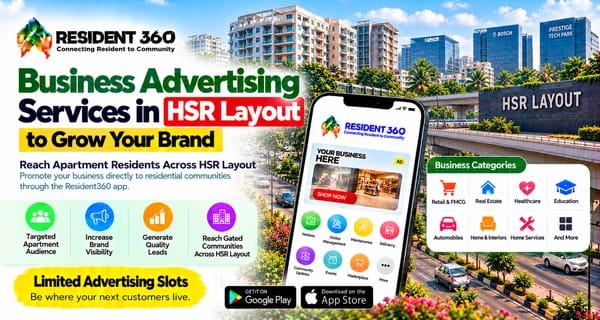
Businesses in HSR Layout need advertising that reaches people where they live, work, shop, and spend time. With apartments, gated communities, offices, restaurants, clinics, retailers, and service providers sharing the same local ecosystem, business advertising in HSR Layout can be more effective when it is planned around relevant neighbourhood audiences rather than broad, disconnected promotion. Residential communities are especially useful for local brands because residents regularly need services such as home maintenance, food delivery, education, fitness, healthcare, and daily shopping. A well-planned campaign can help a business introduce its offering, build familiarity, and create a clearer connection with nearby customers without relying only on traditional advertising.
For societies and brands, the focus should be on useful communication, suitable audience selection, and respectful frequency. Digital community channels can support this process when advertisements are relevant to resident needs and presented in an organised way.
Why HSR Layout Businesses Need More Targeted Local Advertising
HSR Layout is a diverse urban neighbourhood where customers may discover a business through a nearby apartment community, a local recommendation, a digital message, or a promotion shared at the right time. This makes local advertising different from a city-wide campaign. A salon, tuition centre, diagnostic clinic, café, interior service, or grocery brand may achieve better relevance by communicating with communities located close to its service area.
Residential communities also bring together audiences with recurring and practical needs. Advertising through suitable society communication channels can help businesses introduce services while allowing residents to evaluate whether the offer is useful for them. The campaign still needs clear consent, appropriate messaging, and coordination with the society's committee or management team.
For a broader view of how digital platforms can support communities and local outreach, businesses can explore the society management app approach. The goal is not to interrupt residents, but to make relevant local information easier to notice and understand.
Common Advertising Problems Local Businesses Face
Even a good product may struggle to reach the right audience if local promotion is unplanned. Businesses advertising in HSR Layout often need to manage several practical challenges at the same time:
- Reaching residents who are actually within the service area
- Choosing suitable apartment communities or neighbourhood audiences
- Explaining the offer clearly in limited space
- Avoiding repeated or irrelevant promotional messages
- Coordinating campaign approvals with society representatives
- Tracking which communities or channels received the communication
- Maintaining consistent branding across digital and offline material
- Providing a clear way for interested customers to respond
- Adjusting offers for different resident needs and local seasons
- Separating useful community information from aggressive sales messaging
A local campaign can lose effectiveness when businesses use the same content everywhere. A family clinic, for example, may need a different message from a home cleaning service or a weekend food brand. Audience relevance and timing matter as much as the advertisement itself.
How Business Advertising in HSR Layout Can Become More Organised
Business advertising in HSR Layout can become more structured when businesses define the audience, offer, channel, and response process before publishing a campaign. Instead of sending a general message to every available audience, a brand can identify the communities most likely to need its service and prepare concise information for them.
A practical campaign process may include:
- Define the local service area and the type of customer the business wants to reach.
- Select a useful offer, introductory message, or service explanation.
- Coordinate with the relevant society committee or authorised communication team.
- Share the advertisement through an appropriate channel and at a reasonable frequency.
- Provide a contact method, enquiry form, or clear next step.
- Review responses and improve the message for future campaigns.
For businesses working with apartment communities, an apartment management app can be part of a broader digital environment where resident information and community communication are organised. This does not replace marketing strategy, but it may make coordination between businesses and community representatives easier.
Four Operational Areas That Shape Local Advertising Campaigns
Audience and Community Selection
A campaign should begin with a clear understanding of whom it is meant to reach. A business serving families, working professionals, students, or senior residents may need different messages and different community choices.
- Identify the most relevant resident profile
- Group communities by service area or audience need
- Match the offer to a practical local requirement
Campaign Approval and Coordination
Advertising within a residential community should be coordinated through the appropriate society representative. Clear communication can reduce confusion about the campaign duration, message format, contact details, and any conditions associated with the promotion.
- Share campaign details before publication
- Confirm the intended dates and communication channel
- Keep a record of approvals and campaign instructions
A management team may also help maintain a consistent process when several communities or internal staff members are involved.
Offer and Message Design
Residents usually respond more easily to an advertisement that explains the service, local relevance, and next step without unnecessary detail. A concise message can mention the service area, key benefit, applicable offer, and contact route.
- Use a clear headline and simple language
- Mention local availability where relevant
- Avoid claims that cannot be supported
Response and Follow-Up
The campaign should make it easy to understand what happens after a resident shows interest. Businesses can use a phone number, enquiry form, website page, or service desk process, provided the method is appropriate and clearly communicated.
- Record enquiries by community or campaign
- Respond within a reasonable business process
- Review common questions and refine future advertisements
Society Operations That Support Better Local Promotion
Resident Communication
Advertising works better when it is placed within a communication process that residents already understand. A Resident communication app may help communities organise announcements, updates, and other information in one place. For advertisers, this can support clearer coordination, provided the campaign remains relevant and approved.
Community Payments and Offers
Some local promotions involve booking fees, service charges, or limited-time offers. Businesses should explain payment expectations clearly and avoid presenting unclear financial terms. Where a society shares payment-related information, accurate payment information should be communicated carefully and separately from promotional claims.
Complaints and Service Enquiries
A customer may have a question, service issue, or concern after responding to an advertisement. Businesses should maintain a clear process for handling a complaint, including who receives it and how the customer can follow up. This helps protect the relationship between the brand, residents, and the community.
Visitor and Service Coordination
Some businesses advertise home visits, demonstrations, installations, or appointment-based services. In such cases, residents and security personnel may need basic information about the expected service visit. A visitor management system can support more organised visitor and service-personnel coordination within a residential setting, subject to the community's own procedures.
Choosing the Right Local Audience Across Community Types
The approach to business advertising in HSR Layout may differ according to the type of residential community being approached. A small society may prefer a simple, carefully selected campaign shared through its existing communication process. The business may need to focus on one clear service and a limited number of messages so residents do not feel overloaded.
In a larger apartment community, the advertiser may need better planning for audience segments, campaign timing, enquiries, and service coverage. If the business receives many responses, it should have enough staff and a reliable follow-up process before starting the promotion.
Gated communities may require additional coordination for service visits, delivery access, demonstrations, or temporary promotional activity. The advertisement should not imply that a visitor will receive automatic entry. Any visit should follow the community's approval and security procedures.
RWAs may also coordinate communication across several buildings or residential clusters. In such cases, rwa management software may provide a more organised administrative environment for records, communication, and operational coordination. Advertisers should still work with the authorised RWA representatives and respect the community's communication preferences.
How Resident360app Can Support Community-Based Advertising
Resident360app can be considered by societies and residential communities that want a more organised approach to daily communication and coordination. For a business advertising campaign, the relevant value may come from clearer interaction between residents, committee members, facility teams, and other authorised participants.
Depending on the community's process, Resident360app capabilities that may support local promotion include resident communication, society records, service requests, visitor coordination, and facility-related coordination. These capabilities do not replace the advertiser's responsibility to create accurate content or follow local approval procedures. They can, however, help communities keep important information more structured.
For example, a society may use its communication process to share an approved local service announcement, while residents can review the details and contact the business directly. If a service visit is required, the resident and security team can follow the community's established visitor process. A society maintenance app or maintenance management software may also be relevant when the advertised service relates to repairs, upkeep, or recurring facility needs, although advertising and maintenance administration should remain separate workflows.
The same principle applies to resident records and apartment information. Communities should share only information that is appropriate for the intended communication and should avoid exposing private resident details to advertisers. A local campaign should support useful discovery, not create unnecessary access to personal information.
What to Evaluate Before Starting a Campaign
Businesses planning business advertising in HSR Layout should evaluate the campaign from both the advertiser's and community's perspective. A suitable channel is not simply one that reaches many people; it should also support relevance, clarity, and responsible communication.
Consider the following questions before publishing:
- Is the business genuinely available to residents in the selected area?
- Does the advertisement explain the service without exaggerated promises?
- Has the campaign been approved by the relevant society representative?
- Is the message short enough for residents to understand quickly?
- Are the offer terms, contact details, and service conditions clear?
- Can the business manage enquiries after the campaign begins?
- Does the campaign avoid collecting unnecessary personal information?
- Is the frequency reasonable for the community audience?
- Are service visits handled according to security procedures?
- Can the business review responses without making unsupported conclusions?
Businesses may also compare nearby campaign opportunities, such as business advertising in Kudlu Gate, business advertising in Electronic City, and business advertising in Sarjapur Road. These nearby areas may have different audiences, service patterns, and community structures, so the same advertisement may need local adjustments.
A clear campaign plan should also define who manages enquiries, who updates the advertisement, and how resident feedback is handled. Businesses that want to understand the broader role of community-based promotion can review the advertising solutions for residential communities page as part of their planning process.
Conclusion
Business advertising in HSR Layout can become more meaningful when it connects the right local service with the right residential audience. Clear messaging, community approval, organised communication, responsible follow-up, and respect for resident privacy all contribute to a stronger campaign process. With suitable planning and a structured digital environment, local businesses and residential communities can make advertising more relevant, useful, and easier to coordinate.
Get Started with Resident360 Today
Resident360app can be considered by societies and residential communities looking for a more organized approach to society management. To learn more, visit Resident360app.
Download the Resident360app Today