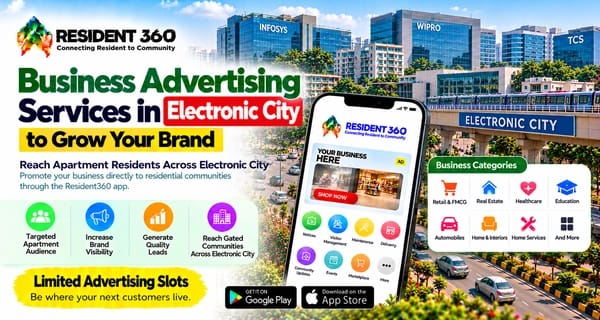
Business advertising in Electronic City can help local brands reach nearby residents, apartment communities, and working professionals with more relevant messages. For businesses serving homes and residential societies, visibility is not only about being present online; it is also about appearing where people already discuss services, maintenance, security, repairs, education, wellness, food, and daily needs. Electronic City has a strong mix of apartment communities, gated developments, employees, families, and local service providers. A focused advertising plan can help businesses communicate their offering more clearly, choose suitable channels, and build awareness without relying on broad, untargeted promotion.
Residential communities can offer useful local touchpoints for businesses that understand the needs of residents and respect community communication practices. The right approach combines clear messaging, consistent follow-up, and relevant offers rather than repeated promotional content.
Why Electronic City Businesses Need a More Local Advertising Approach
Electronic City businesses often serve customers within a practical neighbourhood radius. A home cleaning provider, tutor, clinic, restaurant, repair professional, interior service, or fitness centre may gain more value from reaching nearby communities than from showing the same message to a much wider audience. Local advertising can make the connection between a business and its potential customer more understandable.
Residential societies also have their own communication preferences and operating processes. A business may need to work with committee members, facility teams, security staff, or resident communication channels before sharing promotional information. Understanding this environment can help advertisers plan more responsibly and avoid creating noise for residents.
A useful local advertising plan can focus on:
- Reaching residents who are likely to need the service
- Explaining the service area and operating hours clearly
- Using community-relevant language and offers
- Choosing suitable digital and offline touchpoints
- Building familiarity through consistent communication
- Respecting society approval and communication practices
Common Challenges in Business Advertising in Electronic City
Advertising to residential communities requires more than placing a message in front of a large audience. Businesses need to understand how residents receive information, who manages community communication, and how promotional content can remain useful rather than intrusive.
Common challenges include:
- Reaching the right apartment communities instead of a broad and unrelated audience
- Finding appropriate contacts within societies and gated communities
- Explaining the value of a service in a short and clear format
- Avoiding repeated messages across resident groups and channels
- Building trust when residents do not know the business
- Coordinating promotions with committee members or facility teams
- Keeping offers relevant to the needs of different communities
- Measuring whether enquiries came from a particular campaign
- Communicating service areas, pricing conditions, and availability accurately
- Maintaining follow-up without pressuring residents
Businesses that serve residential communities may also need better internal coordination. For example, a campaign could generate enquiries about a repair visit, maintenance service, delivery, or appointment. If the business cannot respond consistently, a promising advertising effort may not lead to a useful customer experience.
How Business Advertising in Electronic City Can Become More Organized
Business advertising in Electronic City can become more effective when promotion is connected to a clear local process. Instead of sending a generic message to every community, a business can identify the type of residents it serves, prepare a focused message, and select a communication route that fits the society's preferences.
A practical process may include:
- Define the service area, customer profile, and community types the business wants to reach.
- Prepare a short message that explains the service, benefit, contact method, and relevant conditions.
- Identify whether the society uses notices, digital announcements, events, vendor directories, or other approved channels.
- Coordinate with the appropriate committee or management team before sharing promotional material.
- Track enquiries, appointments, and common questions to improve future campaigns.
A society management app may help communities organize resident-facing information, while a business can use those organized communication processes more respectfully. Similarly, an Apartment Management App may support the structured handling of resident and apartment information, although businesses should always follow the community's communication rules before promoting a service.
For example, a pest-control business can create separate messages for seasonal inspections, emergency support, and annual service plans. A tutor may highlight classes, age groups, location, and scheduling. A local restaurant can focus on delivery coverage and community-friendly ordering information. Each message becomes more useful when it matches a real local need.
Four Operational Areas That Strengthen Local Business Advertising
Community Audience Planning
Advertising becomes easier to manage when a business knows which communities and resident groups are most relevant. Audience planning should be based on service suitability rather than simply collecting as many contacts as possible.
- Group societies by distance, service demand, or community profile
- Prepare different messages for families, professionals, and property owners
- Review which campaigns generate genuine enquiries
Promotional Message Preparation
A clear message can reduce confusion and help residents decide whether a service is relevant. It should avoid exaggerated claims and provide enough detail for a resident to take the next step.
- State the service and local coverage clearly
- Include a simple enquiry or booking method
- Mention important conditions, availability, or service limitations
Enquiry and Follow-Up Coordination
An advertising campaign may create questions before it creates bookings. Businesses need a dependable way to respond, assign follow-ups, and record what residents are asking for.
- Keep enquiry details organized
- Set realistic response expectations
- Track repeat questions to improve campaign content
Community Permission and Communication
Residential communities may have specific processes for announcements, vendor promotions, and external communication. Following these processes can help preserve trust with committee members and residents.
- Confirm the approved communication route
- Share only relevant and necessary information
- Avoid sending repeated or unsolicited promotional messages
Society Operations That Support Better Advertising Outcomes
Resident Communication
Resident communication is central to any community-focused advertising plan. An approved announcement or vendor introduction is more likely to be noticed when it reaches residents through a channel they already use for important updates. A Resident communication app can support organized information sharing within a society, while businesses can provide concise content for approved publication.
- Use clear subject lines and short descriptions
- Separate urgent society updates from optional promotions
- Provide one reliable contact route for interested residents
Maintenance and Service Needs
Many local businesses advertise services connected to property upkeep, repairs, cleaning, landscaping, electrical work, or equipment servicing. Understanding recurring maintenance needs can help a business prepare more relevant campaigns for communities rather than sending generic advertisements.
- Identify recurring service categories
- Explain response areas and scheduling clearly
- Coordinate service visits with the relevant society process
Payment Information and Transaction Clarity
Residents may need clear payment information before choosing a service. Businesses should explain what is included, how invoices or receipts are handled, and whether additional charges may apply. Communities that organize payment information can also make it easier for residents to understand financial communication, though every business remains responsible for providing accurate transaction details.
- State service charges and conditions plainly
- Provide appropriate payment or receipt information
- Avoid unclear discounts or time-limited claims
Complaints and Service Feedback
Advertising does not end when a resident makes an enquiry. Businesses should have a process for handling questions, service concerns, and follow-up requests. A documented complaint process can help the business review recurring issues and improve its communication.
- Record service concerns and response status
- Assign responsibility for follow-up
- Use feedback to refine future promotions
Adapting Advertising to Different Residential Communities
Small Societies
Small societies may value direct, limited communication because residents often know the committee and local service providers personally. A business can focus on one clear service message, transparent contact information, and reliable follow-up. Overly frequent promotions may be unnecessary when the community has a smaller communication volume.
Apartment Communities
Apartment communities may have a wider mix of residents, needs, and schedules. Businesses can prepare advertising content around practical categories such as home services, food, education, healthcare, fitness, mobility, and repairs. It may help to provide a short introduction that residents can understand without opening a long brochure.
Large Gated Communities
Large gated communities may have several access points, facility operations, resident groups, and service requirements. A business should confirm how promotions are approved and whether service visits require prior coordination. Clear staff instructions and appointment details can reduce confusion when enquiries become service requests.
RWAs and Resident Associations
A Resident Welfare Association (RWA) may coordinate communication, facilities, vendors, and resident interests. Businesses approaching an RWA should present relevant information, explain how residents may benefit, and respect the association's review process. An rwa management software solution may help associations organize internal operations, but it does not replace the need for responsible advertising conduct.
How Resident360app Can Support Community-Focused Advertising
Resident360app can be considered by societies and residential communities that want a more organized approach to resident communication and community operations. In the context of advertising, organized communication can help a society separate important notices, service information, resident requests, and optional business promotions.
Relevant capabilities may include:
- Resident communication for sharing approved community information
- Maintenance and payment tracking for society operations
- Complaints and service requests for recording resident concerns
- Resident and apartment records for better information organization
- Visitor and security coordination when an approved service provider needs to visit
- Staff and facility coordination for operational follow-up
A society management app can provide a more organized approach to community information, while a society maintenance app may help societies manage maintenance-related communication and records. These functions are not advertising replacements, but they can support the operational environment in which local businesses interact with residential communities.
For societies that receive frequent vendor enquiries, organized records may make it easier to review which services are relevant, communicate decisions, and direct residents to approved information. Businesses, in turn, should keep their promotional material accurate and coordinate with the appropriate society contact instead of assuming that every resident channel is available for marketing.
How to Evaluate a Local Advertising Approach
Relevance to Residents
The first question is whether the service solves a genuine need for the communities being approached. A relevant campaign is more useful than a broad message that does not match residents' daily requirements.
- Define the problem the service addresses
- Use examples that fit residential life
- Avoid unrelated promotional content
Clarity of Communication
Residents should be able to understand the service, service area, next step, and important conditions quickly. If a message requires several follow-up questions before its basic purpose is clear, it may need revision.
- Use plain language
- Keep the main benefit easy to identify
- Provide one clear enquiry route
Community Coordination
The business should know who can approve or share promotional material. This may involve a committee member, facility contact, or another authorized person. Respecting the community process can help prevent confusion and protect the relationship with the society.
- Ask before sharing promotional content
- Follow the society's communication schedule
- Coordinate visits and demonstrations appropriately
Record Keeping and Improvement
A campaign can be reviewed more meaningfully when the business records enquiries, service categories, responses, and outcomes. A maintenance management software platform may support society maintenance workflows, while businesses should maintain their own appropriate records for advertising enquiries and customer service.
- Compare enquiries by community or campaign
- Note common questions and objections
- Improve messages based on actual responses
Visitor and Service Coordination
Some advertising campaigns lead to demonstrations, inspections, deliveries, or service visits. A visitor management system can help a community organize visitor-related processes, while the business should provide accurate visitor details and follow gate instructions.
- Share staff or technician details in advance when required
- Confirm appointment timing
- Ensure service personnel understand community procedures
Long-Term Communication Value
Local advertising works better when it is treated as an ongoing communication relationship rather than a single announcement. Businesses can build familiarity by providing useful information, responding responsibly, and avoiding excessive contact. Societies can also make their expectations clear so that residents and service providers understand how promotional communication should work.
Conclusion
Business advertising in Electronic City can become more useful when it is local, relevant, and coordinated with the way residential communities communicate. Businesses should focus on clear messages, responsible outreach, accurate follow-up, and genuine resident needs. Societies can support a more organized environment by managing approved information and service coordination carefully. With the right process, local advertising can help businesses become more visible without making community communication difficult.
Get Started with Resident360 Today
Resident360app can be considered by societies and residential communities looking for a more organized approach to society management. To learn more, visit Resident360app.
Download the Resident360app Today