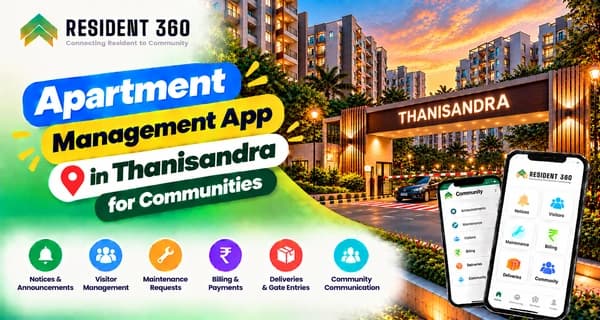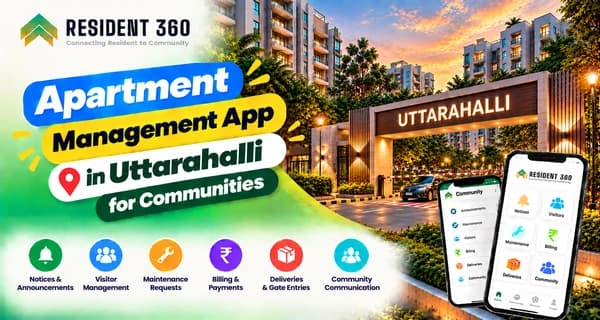
What is a Resident Management System? A Resident Management System is a digital platform that helps apartment associations, gated communities, and residential societies manage residents, maintenance, complaints, visitors, and communication from one centralized system. Instead of depending on spreadsheets, paper registers, and multiple communication channels, associations can manage daily operations digitally.
Download the Resident360app Today
A resident management system typically includes:
- Resident Database: Store and manage resident, owner, tenant, and flat details in one centralized database.
- Visitor Records: Record visitor entries, staff details, delivery personnel, and other security-related information.
- Complaint Management: Residents can raise complaints digitally, while management teams can assign, track, and resolve issues efficiently.
- Maintenance Tracking: Manage maintenance charges, payment information, dues, and billing records digitally.
- Communication: Send notices, announcements, updates, and important information directly to residents.
For Hyderabad apartment communities, this makes everyday society management more organized, transparent, and efficient.
Benefits of a Resident Management System for Apartment Associations
Managing a residential community manually can involve considerable paperwork and repetitive administrative work. A digital resident management system helps apartment associations simplify these processes.
Less Paperwork
Resident information, maintenance records, complaints, visitor details, and notices can be maintained digitally, reducing dependency on physical registers and documents.
Better Transparency
Residents and association members can have clearer visibility into maintenance records, complaints, notices, and other important community activities.
Faster Issue Resolution
Digital complaint tracking allows management teams to monitor pending issues, assign responsibilities, and follow up until complaints are resolved.
Digital Records
Important resident and apartment information can be stored systematically instead of maintaining multiple spreadsheets or physical files.
Easy Reporting
Association members and administrators can access organized reports for residents, maintenance, complaints, visitors, and other community activities.
Resident360 Workflow
Resident360 simplifies apartment management through a structured digital workflow:
Resident Registration → Flat Allocation → Maintenance Setup → Complaint Tracking → Visitor Entry → Reports
1. Resident Registration
Resident and family details can be added to the system to create an organized resident database.
2. Flat Allocation
Residents can be associated with their respective flats, blocks, and apartment units.
3. Maintenance Setup
Association administrators can configure maintenance requirements and manage billing and payment-related information.
4. Complaint Tracking
Residents can raise complaints while management teams can monitor, assign, and track their progress.
5. Visitor Entry
Visitor information can be recorded digitally to support better security and visitor management.
6. Reports
Administrators can use reports to understand maintenance, resident, complaint, and other community-related information.
Key Modules of Resident360
Resident360 brings important apartment management functions together in one platform.
| S.No | Module | Purpose |
|---|---|---|
| 1 | Residents | Manage the resident and member database |
| 2 | Visitors | Support visitor and security management |
| 3 | Maintenance | Manage maintenance billing and payment records |
| 4 | Complaints | Track and manage resident issues |
| 5 | Notices | Share announcements and community communication |
| 6 | Reports | Access financial and operational insights |
By bringing these modules together, Resident360 can help apartment associations reduce manual work and manage community operations from a centralized platform.
Why Digital Resident Management is Better Than Excel
Many apartment associations still use Excel spreadsheets to maintain resident details, maintenance records, and other information. While Excel can be useful for basic data entry, it becomes difficult to manage as the community grows.
A dedicated resident management system offers several advantages.
No Duplicate Records
A centralized resident database helps reduce duplicate entries and keeps important information organized.
Cloud Backup
Digital cloud-based records can reduce the risk of losing important information due to damaged files, misplaced documents, or computer issues.
Multi-User Access
Authorized administrators and association members can access relevant information without depending on a single computer or spreadsheet.
Mobile Accessibility
A mobile app allows residents and management teams to access important features from their smartphones.
Better Security
Dedicated login systems and controlled access can provide better protection for resident and apartment information compared with sharing spreadsheets across multiple users.
Excel vs Resident360
| S.No | Feature | Excel | Resident360 |
|---|---|---|---|
| 1 | Data updates | Manual updates | Automatic digital updates |
| 2 | Searching records | Difficult for large files | Instant search |
| 3 | Notifications | No built-in notifications | Push notifications |
| 4 | Security | Limited access controls | Secure login |
| 5 | Mobile accessibility | Limited | Dedicated mobile app |
| 6 | Complaint tracking | Manual | Digital tracking |
| 7 | Visitor management | Separate/manual records | Integrated visitor management |
| 8 | Reporting | Manual preparation | Organized digital reports |
For growing apartment communities, moving from spreadsheets to a dedicated resident management platform can make daily administration more efficient and easier to manage.
Why Choose Resident360 for Apartment Management in Hyderabad?
Resident360 is designed to help residential communities manage their day-to-day operations through a centralized digital platform. From resident records and maintenance management to complaints, visitor entries, notices, and reports, the system brings essential apartment management activities together. For apartment associations in Hyderabad, a digital solution can help reduce administrative workload, improve communication, maintain organized records, and provide residents with a more convenient way to interact with their community management.
Conclusion
A Resident Management System in Hyderabad can help apartment associations move away from manual paperwork and scattered Excel sheets toward more organized digital community management. With features for resident records, maintenance, complaints, visitor management, communication, and reporting, Resident360 provides a centralized approach to managing residential communities. For apartment associations looking to simplify daily operations and improve resident communication, Resident360 can be a practical digital solution for smarter apartment management.
Simplify Your Apartment Management with Resident360
Ready to move beyond Excel, paperwork, and manual processes? Resident360 helps apartment associations manage residents, maintenance, complaints, visitors, notices, and reports from one easy-to-use platform.Make your Hyderabad apartment community smarter, more transparent, and easier to manage.
Download the Resident360 App