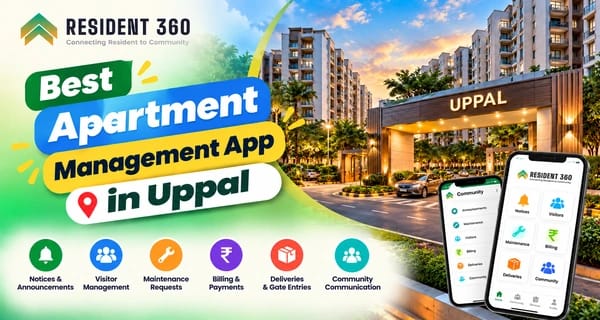
Apartment communities in Uppal manage a steady flow of maintenance requests, visitor entries, resident communication, staff duties, shared facilities, and monthly payments. As communities grow, informal methods such as notebooks, scattered messages, and personal follow-ups can make routine work harder to track. An Apartment Management App can bring these activities into a more organized process, helping Resident Welfare Associations (RWAs), residents, security teams, and facility managers coordinate with greater clarity. For Hyderabad apartments, the right digital approach can support quicker updates, better record keeping, and more consistent daily administration without replacing the people who manage the community.
A practical system works best when it matches the size, facilities, and working style of the apartment community. It should make routine tasks easier for residents and committees while keeping information accessible to authorized users.
Why Uppal Apartments Need an Apartment Management App
Uppal has a mix of established apartment buildings, newer residential communities, and gated developments with different management needs. Committees often balance resident expectations, vendor coordination, security processes, staff supervision, and financial administration alongside their regular responsibilities.
A digital management process can help bring these activities together. Instead of depending on separate spreadsheets, chat groups, paper registers, and repeated phone calls, an apartment community can use a clearer workflow for notices, service requests, visitor details, and follow-ups. This can reduce avoidable confusion while giving residents a more convenient way to stay informed.
Common Problems Faced by Apartments and Societies in Uppal
Apartment management challenges are usually practical rather than complicated. They arise when information is spread across too many channels or when responsibility for a task is unclear.
- Maintenance requests may be reported through calls, messages, or in-person conversations, making them difficult to track.
- Security staff may maintain visitor details manually, which can slow entry coordination during busy periods.
- Residents may miss important notices when updates are posted across multiple informal groups.
- Committee members may struggle to know whether a repair has been assigned, started, or completed.
- Monthly dues and other payment-related records may require repeated manual reconciliation.
- Staff duties, attendance, and task allocation can become difficult to review consistently.
- Shared facilities may be overbooked when residents use separate registers or messaging groups.
- Complaints can remain unresolved when there is no clear owner or follow-up date.
- Vendor communication may become scattered across personal phones and unrelated conversations.
- Community records may be difficult to retrieve when they are stored in paper files or individual devices.
These issues affect everyone. Residents may not know the status of their requests, committee members spend more time collecting updates, and facility teams may repeat work because instructions are not recorded clearly. A structured Society Management App can help centralize routine information, while a suitable Society Maintenance App can support more consistent service tracking.
How an Apartment Management App Solves These Problems
An Apartment Management App can connect common administrative activities through one organized platform. The aim is not to add complexity, but to make everyday information easier to submit, assign, review, and close.
For example, a resident can record a plumbing issue with relevant details instead of explaining it repeatedly to different people. A committee member or facility manager can review the request, assign it to a staff member or vendor, and update its status. Residents can then receive a clearer view of progress without making several follow-up calls.
A broader Apartment Management App can also support notices, resident information, facility coordination, payment records, and community-level administration. Communities comparing solutions may also review this detailed guide to the apartment management app platform to understand how different functions can fit together.
For repair-heavy communities, maintenance management software can help organize requests by category, priority, assigned person, and completion status. This gives the committee a clearer operational view while allowing residents to report issues through a consistent process.
Maintenance, Visitor, Security, and Complaint Management
These functions are closely connected in apartment operations. A repair request may involve staff access, a vendor visit, security coordination, and resident updates, so keeping related information organized can make follow-up easier.
Maintenance Management
Maintenance work often includes electrical repairs, plumbing, lifts, housekeeping, pest control, generator support, and common-area upkeep. Without a clear workflow, urgent requests can get mixed with routine tasks.
An organized approach can help communities:
- Record the issue, location, and preferred access time.
- Assign work to an appropriate staff member or vendor.
- Track whether a request is pending, in progress, or completed.
- Keep notes about materials, visits, and follow-up requirements.
- Review recurring problems across buildings or facilities.
This does not remove the need for human judgement. It gives the committee and facility team a shared record that can support better decisions.
Visitor Management
Apartment communities in Uppal may receive guests, delivery partners, domestic workers, drivers, contractors, and service technicians throughout the day. A visitor management system can help structure how entries are requested, confirmed, recorded, and communicated.
Useful processes may include resident pre-approval, delivery coordination, staff entry records, and visitor history. Security personnel can then follow a more consistent procedure instead of relying only on verbal confirmation or handwritten registers.
Security Management
Security coordination depends on clear communication between residents, guards, committee members, and facility staff. A digital process may help maintain visitor records, communicate temporary access instructions, and share approved notices with the relevant people.
For example, a resident expecting a technician can provide details in advance, while the security desk can verify the visit at arrival. This can reduce unnecessary calls and help create a more organized access trail, subject to the community's privacy and security policies.
Complaint Management
Residents need a simple way to report issues, while committees need a practical method to review and close them. A structured complaint process can capture the subject, location, date, priority, and responsible person.
Clear status updates are also useful. Even when a repair takes time, telling residents that the issue has been received, assigned, or scheduled can reduce uncertainty and repeated follow-ups.
Resident Communication, Staff, Facility, and Record Management
Apartment administration depends on reliable information moving between residents, committee members, staff, vendors, and security personnel. Organizing these exchanges can help reduce missed notices and make routine responsibilities easier to review.
Resident Communication
Residents may need updates about water supply, lift servicing, power interruptions, planned repairs, meetings, rules, and facility availability. A Resident communication app can give committees a more focused channel for notices and community updates.
Communication works better when messages are timely, relevant, and easy to find later. Communities can also separate general announcements from individual service requests so important information does not disappear in a busy chat thread.
Staff Management
Housekeeping teams, security guards, maintenance workers, gardeners, and supervisors may have different responsibilities and schedules. A digital record can help the facility manager organize assignments, review pending work, and communicate changes to the right people.
The goal is not surveillance for its own sake. It is to create clearer expectations, reduce duplicated instructions, and make it easier to identify tasks that need attention.
Facility Management
Clubhouses, gyms, swimming pools, visitor parking, multipurpose halls, and play areas need rules, schedules, cleaning routines, and occasional repairs. A structured process can help communities coordinate bookings and record maintenance needs for shared facilities.
Residents benefit when availability and usage guidelines are clear. Committee members also gain a better overview of which facilities require regular attention or additional planning.
Record Management
Notices, resident details, maintenance histories, vendor information, meeting records, and payment references should be organized carefully. Access should be limited according to the role of the user, especially for personal or financial information.
Communities can also direct residents to reliable sources for payment information when explaining digital payment processes. Keeping records in a structured system may make future reviews, committee handovers, and routine administration more manageable.
Apartment Management App for Small Apartments and Gated Communities
A small apartment in Uppal may have fewer residents, limited facilities, and a committee that handles several responsibilities directly. Its priorities may include basic maintenance requests, notices, dues, staff coordination, and visitor records without a large administrative team.
A larger gated community may need more detailed workflows for multiple towers, extensive facilities, several security points, vendors, housekeeping teams, and high volumes of resident requests. It may require role-based access, stronger coordination between departments, and clearer records for recurring work.
The same platform can serve both types of communities if it is flexible enough to support different processes. Smaller apartments may start with communication and maintenance tracking, while larger communities may use additional tools for visitor coordination, staff tasks, facility bookings, and administration.
For communities comparing local requirements, resources such as Apartment Management App in Tarnaka, Apartment Management App in Tolichowki, and Apartment Management App in SR Nagar can offer useful location-focused context for Hyderabad residential management.
How Resident360app Simplifies Apartment Management
Resident360app can help apartment communities bring common administrative activities into a more organized digital workflow. The value depends on how the RWA, residents, security team, and facility staff use the platform in daily operations.
It may support communities by helping them:
- Share notices and updates with residents through a focused channel.
- Record and follow up on maintenance requests.
- Coordinate visitor and service-provider access.
- Organize resident, staff, facility, and community records.
- Keep payment-related communication more structured.
- Give committee members a clearer view of pending tasks.
- Reduce dependence on scattered registers and personal message threads.
A community can introduce the platform gradually, beginning with the activities that create the most repeated work. Clear guidelines, responsible access, and resident orientation can help improve adoption without making the transition unnecessarily difficult.
How to Choose the Right Apartment Management App
The right platform should fit the community's actual working style rather than simply offering a long list of features. Committee members can begin by identifying the tasks that consume the most time and the information residents most often request.
Consider the following areas before making a decision:
- Usability: Residents, guards, staff, and committee members should be able to understand the main workflows without extensive training.
- Management requirements: The platform should match the community's needs for maintenance, visitors, communication, facilities, records, and payments.
- Resident adoption: Simple reporting and clear updates can make it easier for residents to participate consistently.
- Scalability: The system should remain useful as the community adds residents, facilities, staff, or buildings.
- Communication: Notices, targeted updates, and service-related messages should be easy to send and retrieve.
- Maintenance: Requests should be assignable, trackable, and reviewable from one organized process.
- Record organization: Resident details, notices, work histories, and administrative information should be stored with suitable access controls.
It is also useful to understand how a rwa management software solution fits committee responsibilities, handovers, and recurring administration. A community may separately review a Maintenance management system if repair coordination is its main concern. Before adoption, the committee should discuss roles, privacy expectations, support needs, and the process for introducing the app to residents.
Conclusion
For apartment communities in Uppal, organized administration can make everyday work easier to follow and easier to communicate. An Apartment Management App can support maintenance tracking, visitor coordination, resident updates, complaint follow-up, facility planning, and record organization in one practical workflow. With clear responsibilities and gradual adoption, Resident360app can help RWAs and facility teams manage community operations with greater consistency.
Get Started with Resident360 Today
Resident360app can be considered by apartment communities looking for a more organized approach to apartment management. To learn more, visit Resident360app.
Download the Resident360app Today