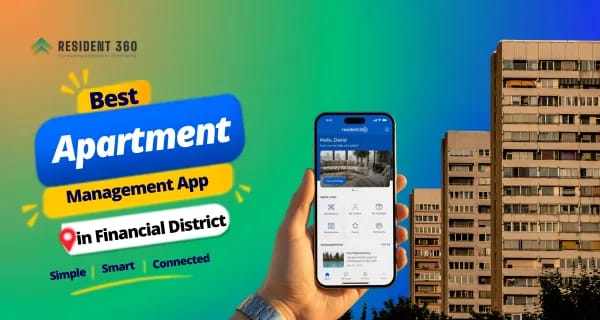
Apartments in Hyderabad’s Financial District bring together busy professionals, families, tenants, owners, security teams, housekeeping staff, and facility vendors. Managing this mix through spreadsheets, paper registers, messaging groups, and scattered payment records can make routine work harder than it needs to be. An Apartment Management App can help a Resident Welfare Association (RWA) organize maintenance requests, visitor information, notices, complaints, and shared facilities in one accessible process. For communities near offices, commercial areas, and major residential developments, better coordination can support quicker communication and more consistent day-to-day administration.
The right digital process does not replace the committee or facility staff. It gives them a clearer way to record work, share updates, and follow up on tasks while residents get a more convenient channel for common requests.
Why Financial District Apartments Need an Apartment Management App
Hyderabad’s Financial District has a strong concentration of apartments and gated communities with varied occupancy patterns. Some residents leave early for work, some work from home, and many communities have regular movement of domestic workers, delivery personnel, guests, tenants, and service providers. These conditions create a need for organized coordination rather than relying only on informal conversations.
An Apartment Management App can help an RWA maintain a common flow for requests and updates. Residents may be able to raise a maintenance issue, check a notice, submit visitor details, or review payment information without searching through multiple chat messages. Committee members can also use a shared record when reviewing pending work, vendor follow-ups, or recurring community concerns.
For committee members comparing digital options, this guide to a Society Management App can offer a useful starting point for evaluating features and daily usability.
Common Problems Faced by Apartments and Societies in Financial District
Communities in the Financial District may differ in size, but many face similar operational pressures. The following challenges can affect resident satisfaction, staff productivity, and the committee’s ability to keep work visible.
- Maintenance requests may be shared in different WhatsApp groups or communicated verbally.
- Residents may not know whether a repair request has been assigned or completed.
- Visitor details can be difficult to locate when registers are handled manually.
- Delivery personnel and service providers may arrive when residents are unavailable.
- Notices about water supply, lifts, parking, or planned work may be missed.
- Monthly dues and other payment records may require repeated clarification.
- Committee members may lack a single view of open complaints and pending actions.
- Staff duties may overlap when instructions are given through separate channels.
- Facility bookings and common-area schedules may create avoidable conflicts.
- Important resident, vendor, and asset records may be spread across files and notebooks.
These issues can lead to repeated calls, delayed follow-ups, and unnecessary pressure on volunteers. Residents may feel that their concerns are not being tracked, while staff may receive duplicate instructions. A structured Society Maintenance App can help communities bring routine maintenance activities into a more manageable workflow.
How an Apartment Management App Solves These Problems
An Apartment Management App can bring separate activities into one organized system. Instead of treating maintenance, visitors, notices, payments, and complaints as unrelated tasks, an RWA can establish clear processes for each area and give the right people access to relevant information.
For example, a resident can submit a plumbing request with details about the issue. The committee or facility coordinator can review it, assign it to a staff member or vendor, and update the status after inspection. This creates a basic trail of action that is easier to review than scattered messages.
A community may also use the app to share scheduled maintenance notices, coordinate access for technicians, and maintain records of recurring work. A committee evaluating the broader capabilities of an Apartment Management App can consider how these functions fit its own size, rules, and resident expectations.
The goal is not to digitize every activity without purpose. It is to reduce avoidable follow-ups, make responsibilities clearer, and give residents a consistent way to interact with the association.
Maintenance, Visitor, Security, and Complaint Management
Daily apartment operations depend on timely handling of repairs, visitors, security coordination, and resident concerns. A connected process can make these activities easier to record and follow without adding unnecessary complexity.
Maintenance Management
Maintenance requests often include electrical faults, plumbing leaks, lift issues, air-conditioning concerns, painting work, and common-area repairs. When requests are recorded in one place, the committee can review priorities and identify issues that need urgent attention.
Useful practices may include:
- Recording the location and nature of each issue.
- Assigning requests to a staff member or service provider.
- Adding status updates such as open, in progress, or completed.
- Keeping notes about inspection, materials, and follow-up work.
- Reviewing recurring problems in shared areas.
Communities looking for a structured approach may compare maintenance management software with their existing registers and spreadsheets. The right system should support practical tracking rather than create more administrative work.
Visitor Management
A busy residential community may receive guests, delivery agents, domestic workers, drivers, and technicians throughout the day. An organized visitor management system can help residents and security staff coordinate expected visits and maintain clearer entry records.
Depending on the community’s process, useful features may include pre-approval, visitor details, resident confirmation, delivery coordination, and entry history. Security staff can then follow a consistent procedure instead of relying on memory or unstructured phone calls.
Security Management
Security coordination involves more than recording a visitor’s name. It can include communicating access instructions, confirming service personnel, noting vehicle details, and sharing alerts with the relevant residents or committee members. A digital record may help security teams refer to past entries when a question arises.
The RWA should also define who can view or update information. Clear access roles, simple instructions, and regular review of security procedures can help the technology support—not replace—the judgment of trained security staff.
Complaint Management
Residents need a dependable way to report concerns involving noise, parking, water supply, cleanliness, common areas, or staff coordination. A structured complaint process can help categorize issues, record the date received, assign responsibility, and document follow-up.
This approach can reduce duplicate reports and make it easier for the committee to identify unresolved matters. It also gives residents a clearer expectation about how their concern will be reviewed, even when the final resolution requires time or vendor involvement.
Resident Communication, Staff, Facility, and Record Management
Apartment administration depends on accurate information being available to the people who need it. A shared digital process can support communication, staff coordination, facility planning, and record organization while allowing the RWA to retain its established rules.
Resident Communication
Residents may miss important notices when updates are distributed through multiple groups or posted only on a physical board. A Resident communication app can help committees share notices, reminders, maintenance schedules, emergency information, and community updates through a more consistent channel.
Communication should remain purposeful. Separate categories for notices, requests, and general discussions can help reduce confusion and make important information easier to find later.
Staff Management
Housekeeping, security, gardeners, technicians, and other staff members often have recurring duties across different blocks and facilities. A committee can use digital records to clarify assignments, note attendance-related information where appropriate, and track tasks that require supervision.
A management team can also review pending work during regular meetings instead of depending entirely on verbal updates. Staff coordination should be handled respectfully, with clear responsibilities and access to only the information needed for their role.
Facility Management
Shared facilities such as clubhouses, gyms, play areas, swimming pools, meeting rooms, and parking zones require schedules and maintenance attention. A digital process may help residents understand booking rules, view availability, and receive updates about closures or repairs.
For the committee, facility records can support planning for cleaning, inspections, vendor visits, and recurring maintenance. Rules should be visible and applied consistently so that residents understand how shared resources are managed.
Record Management
RWAs handle many types of records, including resident information, notices, maintenance details, vendor contacts, payment information, and meeting-related documents. Keeping these records organized can reduce time spent searching through paper files or old messages.
An RWA may also use rwa management software to review how different administrative functions can be brought together. Access controls, accurate updates, and sensible data-retention practices remain important regardless of the software selected.
Apartment Management App for Small Apartments and Gated Communities
A small apartment may have fewer residents and facilities, but it still needs a practical way to manage dues, repairs, notices, visitors, and staff instructions. The committee may be small, and members may personally handle many tasks, so a simple interface and low administrative effort can matter most.
A larger gated community may require stronger coordination across multiple towers, entrances, amenities, vendors, and security shifts. It may need separate workflows for different blocks, higher volumes of maintenance requests, and clearer access permissions for committee members and facility teams.
The same Apartment Management App should not be expected to work in exactly the same way for every community. Before adoption, an RWA can map its resident count, facilities, staff structure, maintenance process, communication habits, and record requirements. This helps the committee choose functions that solve real problems instead of paying attention only to a long feature list.
Communities in different parts of Hyderabad may also have different administrative needs. Resources such as an Apartment Management App in ESI Hospital, an Apartment Management App in Erragadda, and an Apartment Management App in Dilsukhnagar can help readers compare location-focused considerations while planning their own approach.
How Resident360app Simplifies Apartment Management
Resident360app can be considered as a digital platform for bringing common apartment activities into a more organized process. Its usefulness for a Financial District community depends on how well the RWA configures the workflows and encourages residents, staff, and committee members to use them consistently.
The platform may support areas such as:
- Recording maintenance requests and monitoring follow-up.
- Sharing community notices and resident updates.
- Coordinating visitor information and entry-related communication.
- Organizing payment-related details and administrative records.
- Supporting complaint reporting and status visibility.
- Managing information for facilities, staff, and recurring tasks.
A community may also use the platform to direct residents toward relevant payment information while maintaining its own approved payment procedures. The RWA should clearly communicate payment rules, verify transaction records, and avoid sharing sensitive information in open groups.
The practical value comes from consistent use. A committee can begin with a few high-frequency workflows, review what residents find useful, and gradually organize additional records or facilities as the community becomes comfortable with the process.
How to Choose the Right Apartment Management App
Choosing an Apartment Management App should begin with the community’s daily requirements. A tool that looks comprehensive may still be difficult to use if residents cannot understand the interface or if staff members are asked to follow complicated steps.
Consider the following factors before making a decision:
- Usability: Residents, security staff, committee members, and facility teams should be able to use relevant functions without extensive training.
- Management requirements: List the community’s actual needs, such as maintenance, visitor coordination, notices, payments, complaints, and facility bookings.
- Resident adoption: Plan how the RWA will introduce the app, explain its purpose, and support residents who need help getting started.
- Scalability: Check whether the process can support changes in occupancy, additional facilities, new staff, or more complex community administration.
- Communication: Review how notices, reminders, alerts, and resident requests are shared and recorded.
- Maintenance: Look for clear assignment, status updates, escalation, and history of work completed.
- Record organization: Consider how resident information, vendor details, notices, and payment-related records are stored and accessed.
- Security and access: Confirm that different users can receive suitable permissions and that sensitive information is handled responsibly.
It can also be useful to compare a broader Maintenance management system with the complete requirements of the RWA. The final choice should support the committee’s operating style, resident expectations, and ability to maintain accurate information over time.
Conclusion
For apartments in Hyderabad’s Financial District, organized administration can make everyday coordination easier for residents, committee members, security teams, and facility staff. An Apartment Management App may help bring maintenance, visitors, complaints, communication, payments, facilities, and records into a clearer workflow. By choosing practical features and encouraging consistent use, an RWA can support more visible follow-up and smoother community operations.
Get Started with Resident360 Today
Resident360app can be considered by apartment communities looking for a more organized approach to apartment management. To learn more, visit Resident360app.
Download the Resident360app Today