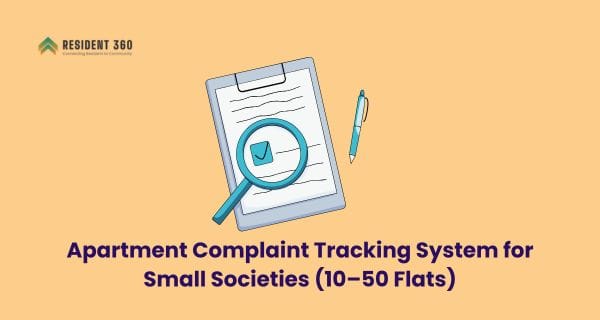
Complaintsts are a natural part of any apartment community. Whether it’s maintenance issues, noise disturbances, parking conflicts, or common-area usage, residents regularly raise concerns that require timely attention. In small apartment societies with 10–50 flats, these complaints are often handled informally—through WhatsApp messages, phone calls, or in-person conversations. While this may seem manageable at first, it quickly becomes difficult to track, prioritize, and resolve issues efficiently as the number of complaints grows.
Without a proper complaint-tracking system, even minor issues can lead to misunderstandings, repeated complaints, and resident dissatisfaction. This is why having a structured approach to complaint management is essential, even for smaller communities.
Common Complaint Tracking Issues
1. No Proper Record of Complaints
In many small societies, complaints are not formally recorded. A resident may send a message or inform a committee member verbally, but there is no centralized system to store or track these issues.
As a result, complaints can easily be forgotten or overlooked, especially when committee members are managing multiple responsibilities.
2. Repeated Complaints
When complaints are not properly tracked, the same issue is often raised multiple times by different residents.
For example, a recurring plumbing issue or a malfunctioning lift may be reported repeatedly because residents are unaware whether it has already been addressed or is still pending. This creates frustration and unnecessary workload for the committee.
3. No Status Updates
One of the biggest concerns residents have is not knowing the status of their complaints.
- Has the issue been acknowledged?
- Is it being worked on?
- When will it be resolved?
Without clear updates, residents may assume that their concerns are being ignored, even if action is being taken behind the scenes.
4. Miscommunication Between Residents and Committee
Informal communication channels like WhatsApp can lead to confusion. Messages get buried in group chats, important details are missed, and there is no structured way to follow up.
This often results in:
- Delayed responses
- Misunderstood issues
- Unnecessary conflicts
5. Dependence on a Few Individuals
In small apartment societies, complaint handling is often handled by one or two committee members.
If they are unavailable or busy, the entire process slows down. Without a system in place, there is no continuity or Accountability.
Managing your apartment society doesn’t have to be complicated.
Resident360 helps you:
- Track maintenance easily
- Manage complaints efficiently
- Communicate with residents in one place
Download the Resident360 App and simplify your society management today.
Why Tracking Complaints Properly Matters
1. Improves Accountability
A proper complaint tracking system ensures that every issue is recorded and assigned. This makes it clear who is responsible for resolving it and reduces the chances of complaints being ignored.
2. Faster Resolution of Issues
When complaints are organized and prioritized, they can be resolved more efficiently.
For example:
- Urgent issues like water leakage can be addressed immediately.
- Routine issues can be scheduled systematically.
- This leads to better time management and quicker resolutions.
3. Enhances Resident Satisfaction
Residents feel valued when their concerns are acknowledged and addressed promptly. Even if a solution takes time, regular updates build trust and reduce frustration.
A transparent complaint-tracking system demonstrates that the committee is proactive and organized.
4. Reduces Conflicts and Misunderstandings
Clear records and communication help avoid unnecessary disputes. When residents can see the status of complaints and actions taken, there is less room for assumptions or blame.
5. Helps in Long-Term Maintenance Planning
Tracking complaints over time helps identify recurring issues.
For example:
- Frequent electrical complaints may indicate outdated wiring.
- Repeated plumbing issues may require a permanent fix.
- This data helps committees make better decisions for long-term improvements.
Better Way to Track Complaints
Managing complaints doesn’t have to be complicated. The key is to move from informal handling to a simple, structured system.
1. Centralized Complaint Recording
All complaints should be recorded in one place instead of scattered across chats or calls.
A centralized system ensures:
- No complaint is missed.
- Easy access to records
- Better tracking and organization
You can explore a simple solution on the Free Apartment Management App page: https://resident360app.com
2. Categorization of Complaints
Complaints can be categorized based on type, such as:
- Maintenance
- Security
- Cleaning
- Parking
This helps in assigning the right person or vendor to handle the issue quickly.
3. Status Tracking and Updates
Each complaint should have a clear status, such as:
- Open
- In Progress
- Resolved
Residents should be able to see updates so they are aware of what’s happening. This reduces the need for repeated follow-ups and builds transparency.
4. Assigning Responsibility
Every complaint should be assigned to a specific person—whether it’s a committee member or a vendor.
This ensures Accountability and avoids confusion about who is responsible for resolving the issue.
5. Regular Communication
Keeping residents informed is just as important as resolving the issue.
Simple updates like:
- “Vendor scheduled for tomorrow”
- “Issue resolved, please confirm”
can significantly improve resident satisfaction.
Apartment Management in Hyderabad (10–50 Flats)
- Apartment management solutions for small societies across Hyderabad, including Miyapur, Kukatpally, Gachibowli, Kondapur, Madhapur, and Hitech City.
- Designed to simplify daily operations like communication, maintenance tracking, and expense management for smoother community living.
- Helps small apartment societies improve transparency, reduce conflicts, and manage everything efficiently with a simple, centralized system.
How Resident 360 Simplifies Complaint Tracking
For small apartment societies, using a digital tool can make complaint management much easier without adding complexity.
Resident 360 is designed specifically for communities with 10–50 flats and offers:
- Centralized complaint tracking
- Easy status updates for residents
- Clear assignment and Accountability
- Simple and user-friendly interface
Most importantly:
- Lifetime free
- No ads
- No broker involvement
You can also explore how apartment management works in your city here:
https://resident360app.com/apartment-management-hyderabad
And check out related guides for small societies:
https://resident360app.com/blog/how-to-manage-complaints-in-small-apartment-societies
https://resident360app.com/blog/communication-in-small-apartment-societies
https://resident360app.com/blog/record-keeping-for-small-apartment-societies
Conclusion:
Complaint management is one of the most important aspects of running a smooth apartment community. In small societies, where interactions are frequent and issues are immediately noticeable, handling complaints efficiently becomes even more critical. Relying on informal methods may work temporarily, but it often leads to confusion, delays, and dissatisfaction over time. A simple complaint tracking system can bring structure, transparency, and Accountability to the process. By adopting the right approach and using tools designed for small communities, apartment societies can ensure faster resolutions, better communication, and a more harmonious living environment for everyone.